homeschool

FREE Unit Study: Before the 4th of July

Before the 4th of July Unit Study
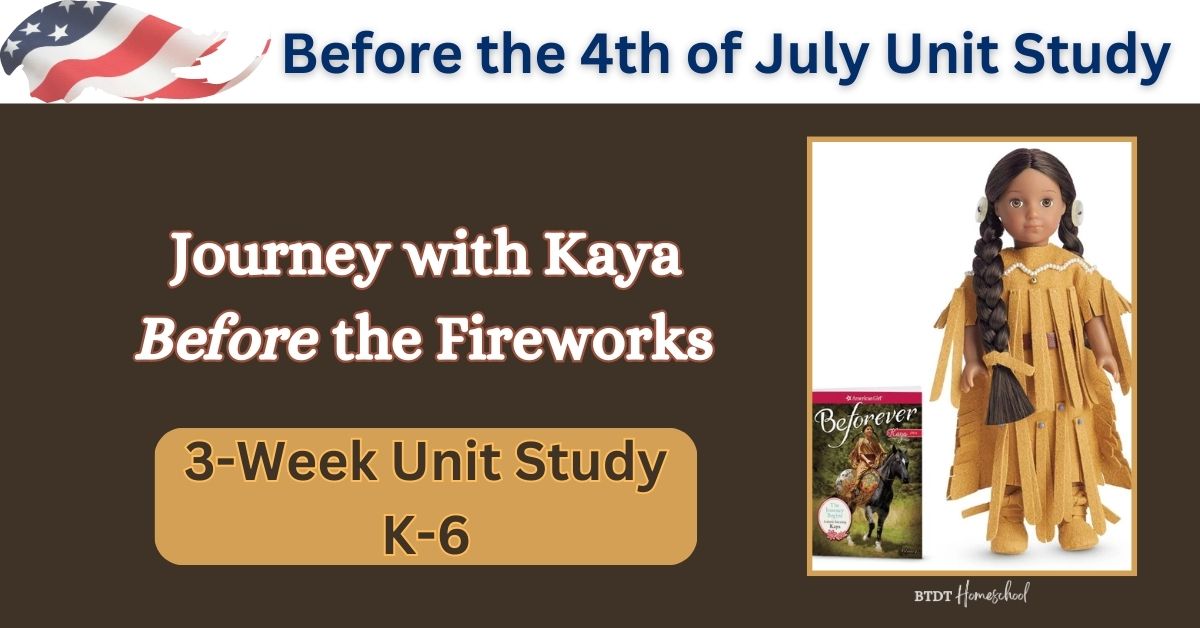
This 3-week Unit Study is an American Girl history exploration with Kaya to help your child understand what it was like to live as a Native American in the 1700’s.

As we gather to celebrate the Fourth of July, it’s crucial to recognize that the roots of this significant occasion extend far beyond the year 1776 when the colonists declared their independence. The land we now call America was and continues to be inhabited by a remarkable and diverse array of Indigenous peoples, whose vibrant cultures and deep connections to the land shaped the very fabric of this nation. Within this context, we embark on a captivating journey with Kaya, an extraordinary American Girl doll who represents the rich tapestry of Native American heritage.

Kaya 2014 Mini Doll & Book (American Girl)

Kaya stands as a unique figure among the American Girl dolls, as she embodies the spirit and resilience of the Indigenous peoples who inhabited this land long before European settlers arrived. As we explore Kaya’s life, it’s important to remember that the sight of a European person in her world would have been an unexpected and unfamiliar encounter. Through the exploration of her story, we gain a profound understanding of the profound influence Indigenous cultures have had on America’s history and identity.

Throughout this homeschool unit study, we will begin on an enlightening adventure, honoring the legacy of the Indigenous peoples while celebrating the significance of the Fourth of July. We will discover the intricacies of Kaya’s life and the astonishing diversity of Indigenous cultures that thrived and continue to thrive across this vast land. By understanding and appreciating the Indigenous heritage that predates the birth of the United States, we deepen our connection to the collective narrative that shaped this nation.

Join us as we journey through the pages of history, weaving together the stories of Indigenous peoples, the struggles for freedom, and the rich cultural tapestry that makes America truly unique.

START HERE:

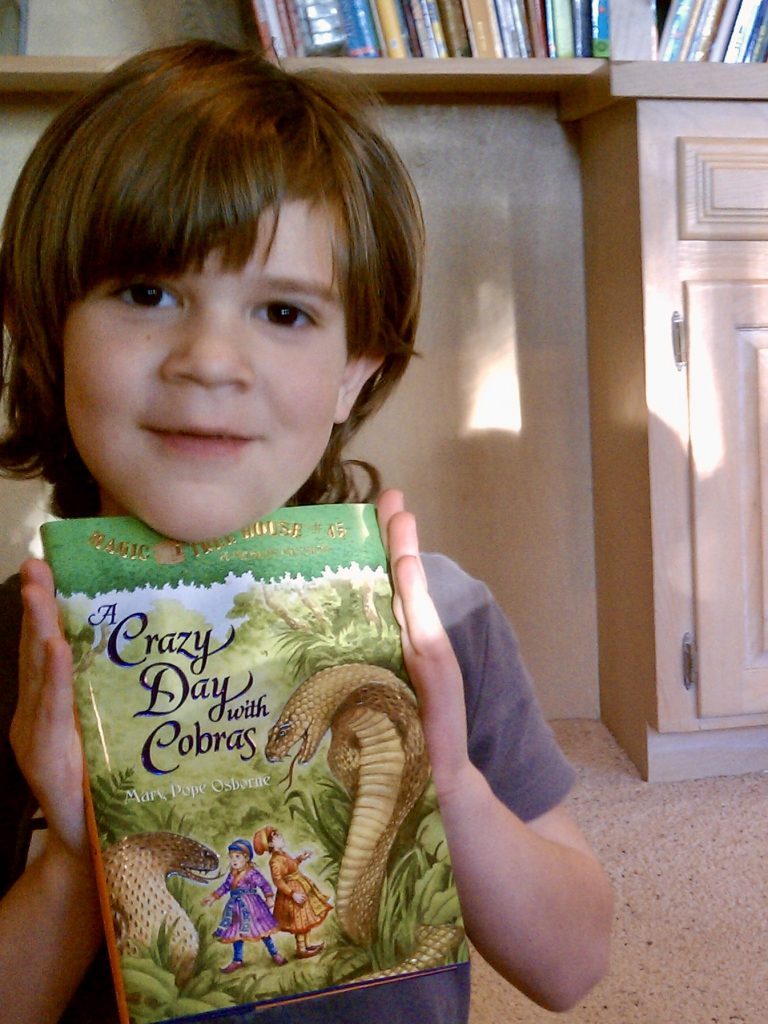
Begin to read Kaya: An American Girl: 1764:

You don’t need to complete all the books before beginning this unit study. Read 1-2 chapters a day to your children. There’s a good chance they may love them so much that they want to keep reading all the way through the 8-book set. This set will take you and your children on an incredible journey through history as you explore Kaya’s life and learn about elements of Nez Perce customs and language.

Incorporate Play:

Kaya’s Paper Dolls

Have fun with Kaya and her friends with outfits to cut out and scenes to play:

6 pc Horse Play Set

Have fun with these detailed miniature toy horses while you read about Kaya’s life.

The narrative of the story immerses readers in Kaya’s character, providing an authentic depiction of her Native American culture in the year 1764. As the story unfolds, Kaya undergoes significant personal growth, evolving into a compassionate individual who gains wisdom from her errors. Her cherished horse assumes a vital role, symbolizing an inseparable bond with Kaya’s existence. Ultimately, “Meet Kaya” imparts a valuable lesson about transcending youthful arrogance and discovering redemption through acts of selflessness. The very source of pride, embodied by the swift and magnificent horse, becomes the catalyst for a remarkable rescue.

Week 1

  1. Map: Mark Kaya’s home on the map. Explain that, unlike later girls, we don’t know exactly where Kaya lived. In fact, she probably didn’t have homes in the traditional sense, since the Nez Perce were a nomadic people who moved around to follow hunting opportunities. Explore an interactive map of Native American tribes across the United States.
  2. Timeline: Find 1764, as well as 1754, the year Kaya was born and record in the Book of Centuries. Check out the internet to find other events happening in America at about that time and record those too. The most significant of these for Kaya would have been more and more European settlers coming to the Northwest. Discover important events in Native American history on this timeline and record them in your Book of Centuries to help gain perspective of these events.
  3. Craft: Choose a craft to work on while you’re studying Kaya. Consider either a leather craft or beading, both of which would have been popular among the Nez Perce. Remind your child that beads would have been very valuable and obtained by trading with European settlers. So much of the beautiful beading was so intricate and may be difficult for your young child. This natural clay bead kit would be a good alternative for young hands.
Leather Bag Craft Kit

BTDT Homeschool was created with a heartfelt mission: to empower and give back to the secular homeschool community.

Through our informative podcasts, blog posts, daily inspiration, and a wide range of free printable tools, we aim to empower you on your homeschooling journey.

New to Homeschooling>>>

Week 2

  1. Introduce the Founding Fathers, the Founding Mothers, and their contributions. Remind your child that Kaya would not have heard of these people.
  2. Explore and Learn about the Lewis and Clark Expedition from an Indigenous perspective. Remind your child that Kaya may have heard of Lewis and Clark, who came through the Northwest when Kaya was much older. Go outside and explore and teach your child to respect the natural world they encounter.
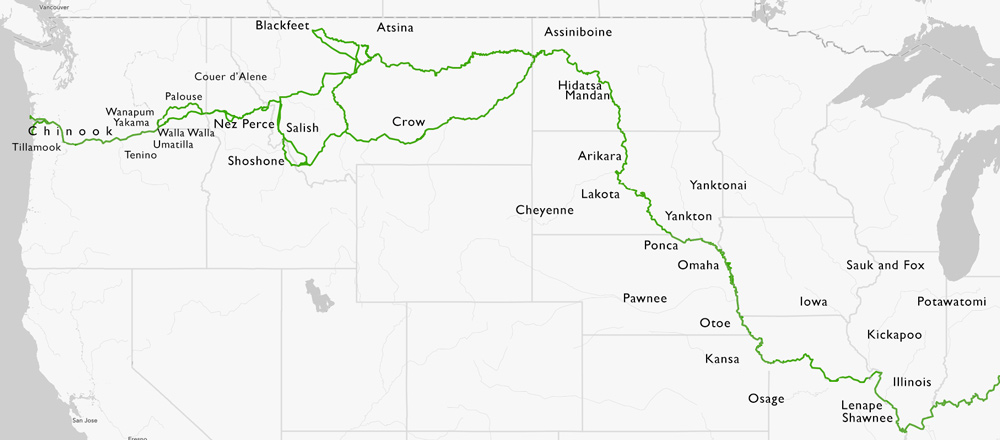
  3. Native Nations: Explore this map and all the Native American Nations that were encountered on the Lewis and Clark expedition.
  4. Act It Out: Have your children choose a scene or event from one of the books to act it out together.
Explore Native American Nations encountered by Lewis and Clark

Week 3

  1. Animals: Animals were a very important part of Kaya’s life. Have you child consider how the life of your pet is different from the animals in Kaya’s tribe. Learn about the unique relationship between Native Americans and their animal counterparts.
  2. Video: Watch this 2 min YouTube video on How Appaloosa Horses Keep Nez Perce Traditions Alive. See their horses and meet a a Nez Perce Family and see their traditional clothing and the pride of a young girl wearing her great grandmother’s dress.
  3. Nez Perce Today: Learn more about the Nez Perce Tribe and the Nimiipuu people that live in north-central Idaho with more that 3,500 citizens.
  4. Learn More: Visit The Nex Perce Museum in person or on their website and learn more about the objects they made and used over the past 10,000 years. Basketry, beadwork, ceremonials, toolmaking, language, their daily rhythms and cycles and how they were attuned to the land, and more!
Nez Perce Dugout Canoe and Tipi
20 Best Tips for Teaching Reading and Spelling

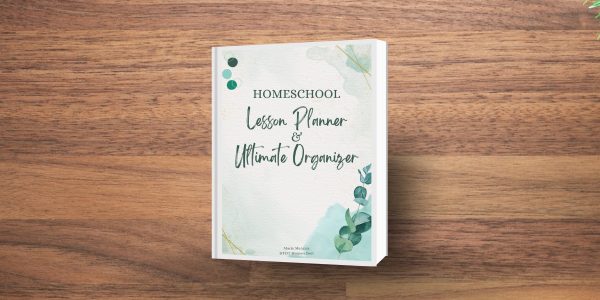
Homeschool Lesson Planner and Ultimate Organizer

BTDT Homeschool Lesson Planner and Ultimate Organizer

We’re excited to introduce the BTDT Homeschool Lesson Planner & Ultimate Organizer—your go-to companion for a smoother, more organized homeschooling experience! With 187 pages designed to adapt to your unique needs, this planner is all about making your homeschooling journey more manageable and enjoyable.

Think of this planner as your personal assistant, crafted specifically for homeschooling families like yours. Whether you’re teaching one child or juggling a bustling household, this tool helps you stay organized and track your progress with ease.

No more scattered records or forgotten tasks! Our planner brings everything together in one place, so you can access all your important information throughout the school year. It’s user-friendly and flexible, whether you prefer a child-led unschooling approach or a more scheduled routine.

With our planner, you can focus on what really matters—educating your children—while staying on top of your homeschooling schedule. It’s designed to help you track anything and everything, from your lessons and grades to extracurricular activities and budget, giving you a clear overview of your children’s progress every step of the way.

See a Video Walk-Through:

Page by Page view of the BTDT Homeschool Lesson Planner & Ultimate Organizer

What is included in this planner?

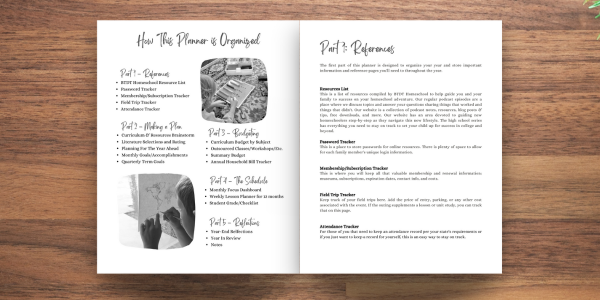
We’ve taken the time to include detailed instructions on how to use this planner effectively, but let me give you a friendly overview of how it’s organized: 

PART 1: REFERENCES  

  • Resources list – Including: Homeschool Podcast Episodes, 10 steps to Getting Started, Tips & Inspiration, 12 Steps to Homeschooling High School, Free Downloads including Transcript Templates, and more to help in your homechool journey.  
  • Password Tracker 
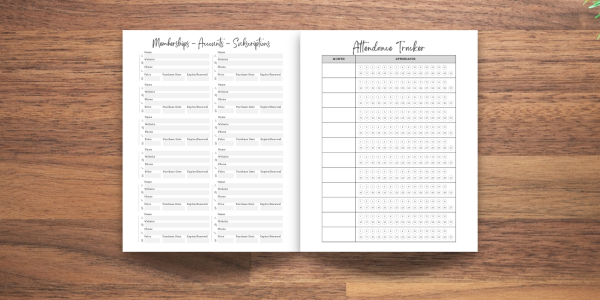
  • Membership/Subscription Tracker 
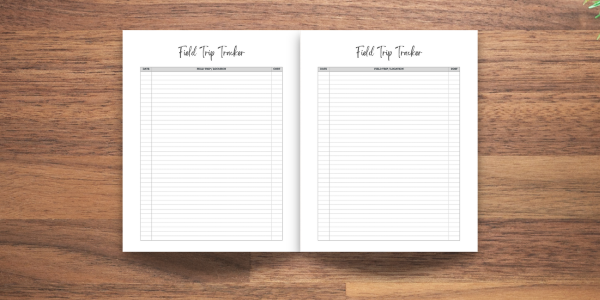
  • Field Trip Tracker 
  • Attendance Tracker 

BTDT Homeschool was created with a heartfelt mission: to empower and give back to the secular homeschool community.

Through our informative podcasts, blog posts, daily inspiration, and a wide range of free printable tools, we aim to empower you on your homeschooling journey.

New to Homeschooling>>>

APPLESPOTIFYAMAZONYOUTUBE

PART 2: MAKING A PLAN  

  • Curriculum & Resources Brainstorm 
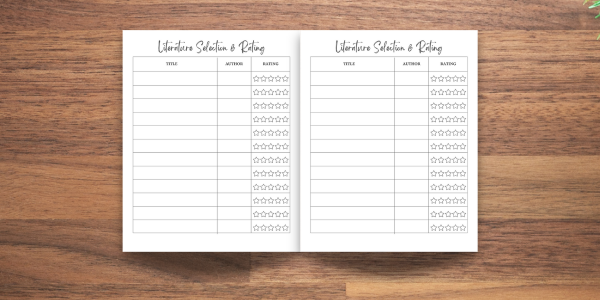
  • Literature Selections and Rating 
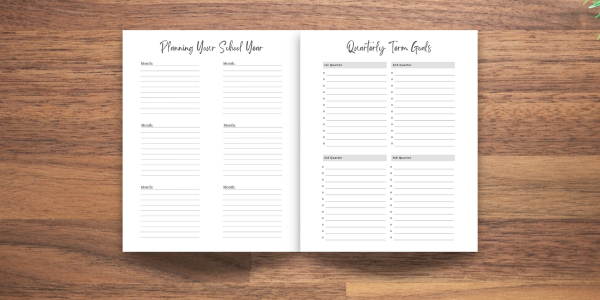
  • Planning For the Year Ahead 
  • Monthly Goals and Accomplishments 
  • Quarterly Term Goals 

PART 3: BUDGETING  

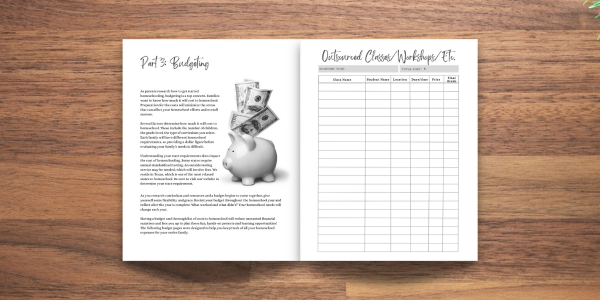
As parents research how to get started homeschooling, budgeting is a top concern. Families want to know how much it will cost to homeschool. Preparation for the costs will minimize the stress that can affect your homeschool efforts and overall success.  

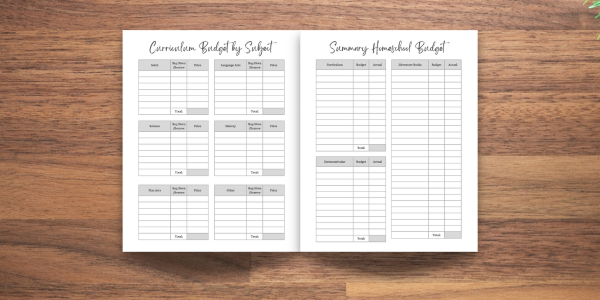
Several factors determine how much it will cost to homeschool. These include the number of children, the grade level, the type of curriculum you select. Each family will have different homeschool requirements, so providing a dollar figure before evaluating your family’s needs is difficult. Your Homeschool Budget is listed in an organized way so you can stay on track and not bust the bank:  

  • Curriculum Budget by Subject  
  • Outsourced Classes/Workshops/Etc.  
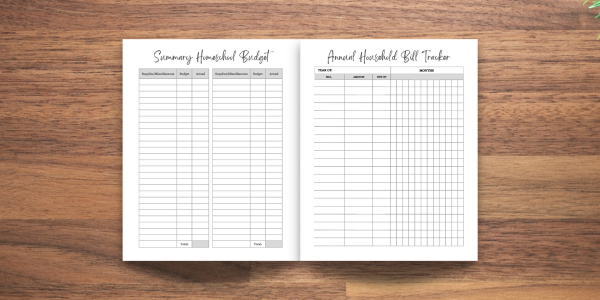
  • Summary Budget  
  • Annual Household Bill Tracker  

PART 4: THE SCHEDULE  

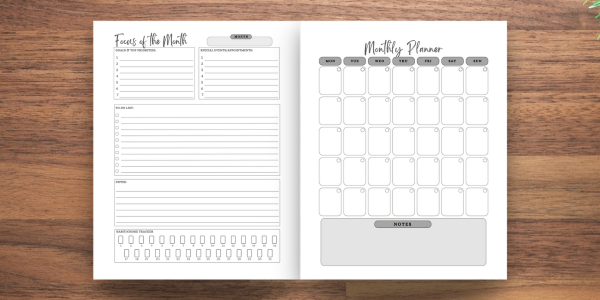
  • Monthly Focus Dashboard 
  • Monthly Schedule 
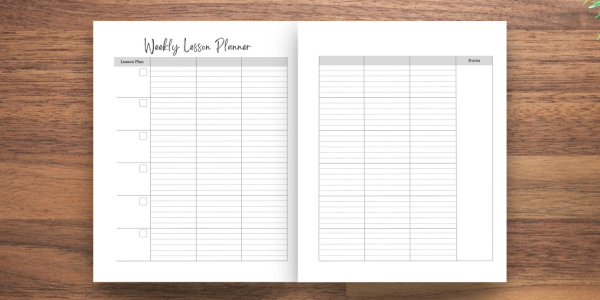
  • Weekly Lesson Planner for 12 Months 
  • Grade Tracker/Student Checklist 

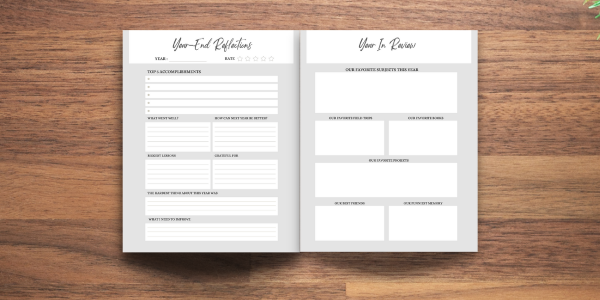
PART 5: REFLECTIONS  

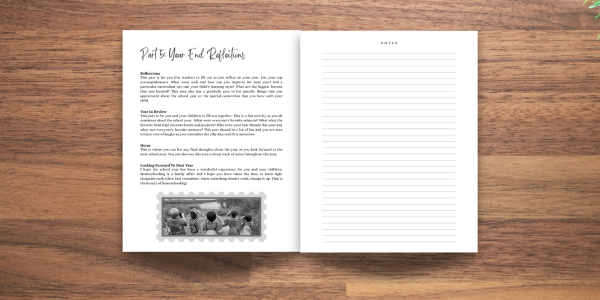
  • Year-End Reflections 
  • Year In Review 
  • Notes 

Get yours today!

Transform your homeschooling journey by staying organized and on track with the ultimate organizer! With 187 pages, staying on top of your schedule has never been easier, giving you the freedom to focus on what truly matters – educating your children.

Homeschool Lesson Planner and Ultimate Organizer

$11.95

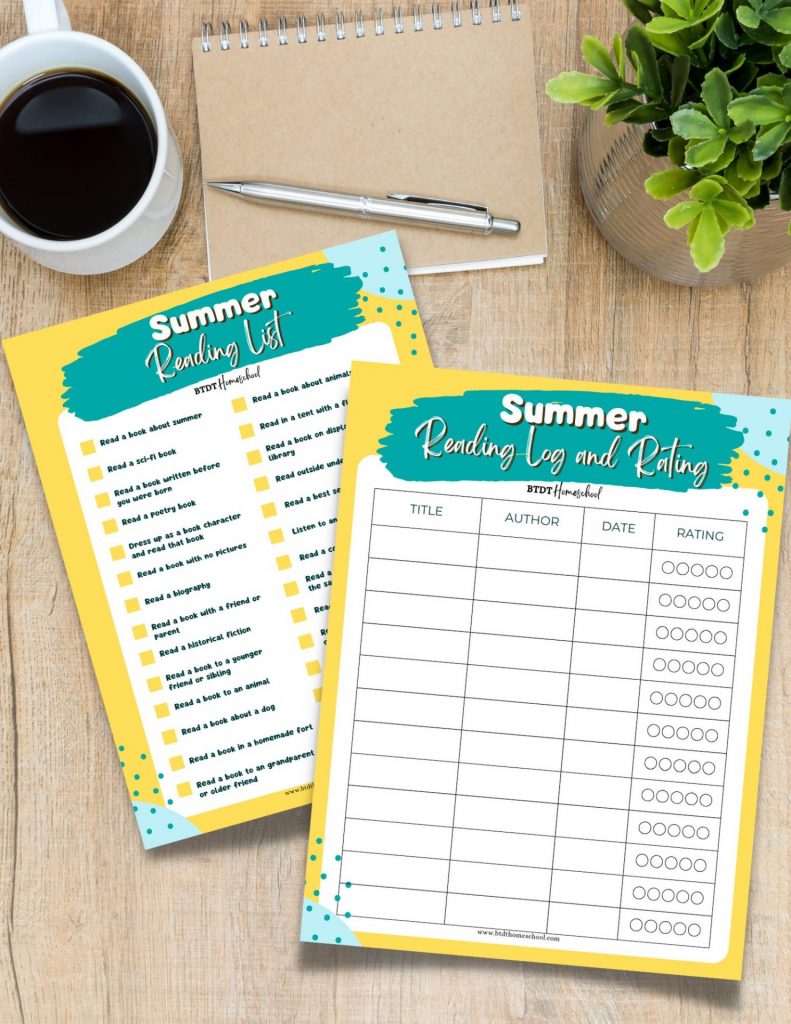
Free Summer Reading Challenge Bundle

Summer Reading List

Stay motivated throughout the summer with this FREE Summer Reading Challenge List and Reading Log, complete with a Book Rating column!

Ensure that your kids fall in love with reading and maintain their reading skills by marking off each task on their summer reading list.

For those of you that take the summer off and don’t homeschool year-round, here’s a fantastic method to keep your kids actively engaged and allow their imagination to soar. Regular reading not only fosters a love for books but also helps children maintain and enhance the reading skills that you have diligently nurtured. By encouraging consistent reading habits, we can encourage their joy in reading and ensure that new readers, in particular, retain the valuable skills they have acquired through your dedicated efforts.

To get your kids excited about reading, we’ve put together a winning combination of suggestions that is sure to inspire them. They just may never put the books down! One of our favorites is Calvin and Hobbes:

See our TOP 50 Books for New Readers.

Reading

BTDT Homeschool was created with a heartfelt mission: to empower and give back to the secular homeschool community.

Through our informative podcasts, blog posts, daily inspiration, and a wide range of free printable tools, we aim to empower you on your homeschooling journey.

New to Homeschooling>>>

APPLESPOTIFYAMAZONYOUTUBE
Books for New Readers

Learn How to Teach Your Child To Read>>

FREE PRINTABLE

Summer Reading List
Free Summer Reading Bundle

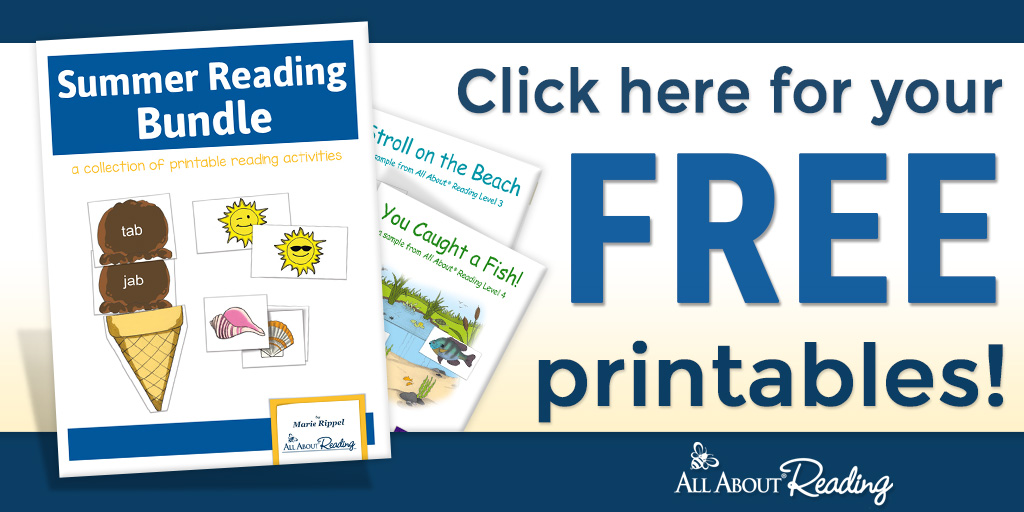
Also, get your free reading bundle from All About Reading:

Summer Reading Bundle

033. Homeschool Conferences and Conventions

Homeschool Conference

Homeschool Conferences & Conventions

Why Should I attend a homeschool conference?
What should I expect at a conference?
Why is the Texas Homeschool Expo different?

Mark your calendars for June 9-10, 2023 in Grapevine, Texas:

Join us at the amazing TEXAS HOMESCHOOL EXPO, where we’re transforming traditional homeschool conventions. On Saturday at 4 PM, we’ll be hosting a special BTDT Homeschool Session on planning your four-year high school journey. Don’t miss out on the chance to visit our booth and get free resources! We’re excited to see you at the expo and have a fantastic time together. Explore all the booths, enter exciting giveaways, and be surprised by a new offering from BTDT Homeschool!
Drop by, say hello, and register for a chance to win!

Episode 031:

Show Notes

Are you wanting to see curriculum and resources up close and find homeschool connections? Or are you a long time homeschooler looking to renew or refresh your homeschool? Homeschool conventions are events that bring together homeschooling families, educators, and experts to provide a wealth of knowledge and support. They offer an incredible opportunity to connect with the homeschooling community, gather valuable resources, and gain insights into various aspects of homeschooling. They typically offer a variety of workshops, seminars, keynote speeches, and vendor exhibits, providing attendees with a treasure trove of information, practical tips, and inspiration for their homeschooling journey.

If you are brand new to homeschooling, be sure to visit the Getting Started Page

Different Types of Homeschool Conferences

Regional Homeschool Conferences: These conferences are organized at a regional level and cater to homeschooling families in a specific geographic area.

National Homeschool Conferences: National homeschool conferences are larger-scale events that attract attendees from across the country. They feature renowned speakers, a wide range of workshops covering various topics in homeschooling, with typically a diverse selection of vendors.

Online Homeschool Conferences: In the digital age, online homeschool conferences have gained popularity. These virtual events offer the flexibility of attending sessions and accessing resources from the comfort of your own home. Online conferences typically include live webinars, pre-recorded sessions, discussion forums, and digital vendor exhibits.

Faith-Based Homeschool Conferences: Faith-based homeschool conferences focus on incorporating religious values into homeschooling. They often feature speakers and workshops that address the integration of faith and academics, curriculum options aligned with specific religious beliefs, and resources for homeschooling from a faith-based perspective.

Secular Homeschool Conferences: Secular homeschool conferences cater to homeschooling families who follow a secular approach to education. These conferences typically focus on academic subjects, curriculum choices, teaching methodologies, and resources that are free from religious affiliations or doctrines.

Unschooling Conferences: Unschooling conferences cater to families who follow the unschooling philosophy, which emphasizes child-led learning and the exploration of personal interests. These conferences provide workshops, discussions, and resources that are specifically tailored to unschooling approaches and philosophies.

Informal Local Meet-ups:  Sometimes local co-ops or groups will host a homeschool 101 or other type of info session that is like a small scale homeschool conference. You may get to hear parents speak about different homeschool styles and philosophies and people bring their curricula and programs so that others can look at the resources.  This is a great way to learn a little and be able to get your hands on things you are interested in in a no-pressure, no-sale environment.

Why should I attend a homeschool conference? (5:17)

Let’s explore some of the benefits of attending a homeschool conference.

Get Energized and Inspired:

Homeschool conferences are like supercharged batteries for your homeschooling journey! You’ll be surrounded by enthusiastic speakers, workshops, and sessions that will reignite your excitement. Say goodbye to burnout and hello to fresh ideas, new approaches, and a renewed passion for homeschooling!  You’ll also gain encouragement and inspiration from other parents who are experiencing the same challenges and achievements as you are.

Make Connections:

One of the coolest things about homeschool conferences is the chance to meet and mingle with other homeschooling families. It’s a fantastic opportunity to make friends, swap stories, and build a support network. Homeschooling can sometimes feel like a solo mission, but at a homeschool conference, you’ll find your people! Surround yourself with like-minded individuals who understand the joys and challenges of homeschooling. Share your victories, seek advice, and find the support and encouragement you need to keep rocking your homeschooling journey. You’ll be amazed at how much you can learn from others who share your homeschooling adventure. 

What is a Homeschool Lifestyle?

Discover Resources:

Forget about hours of online searching! At homeschool conferences, you’ll find so many resources all in one place! From awesome curriculum options to hands-on materials, educational games, and even online courses, it’s really exciting for me to explore the vendor exhibits. It’s like being a kid in a candy store, but with educational goodies!

Level Up Your Skills:

As a homeschooling parent, you’re always looking for ways to improve your teaching skills. Homeschool conferences offer workshops and sessions designed to help you level up as an educator. Learn new teaching techniques, discover educational trends, and gain valuable insights into child development – all geared towards making your homeschooling experience even more awesome.

What to expect at a homeschool conference? (7:48)

It’s easy to get overwhelmed at a homeschool conference. Here are some super handy tips to help you navigate your way through like a pro.  With a little bit of planning and a whole lot of enthusiasm, you’ll make the most out of this incredible opportunity. 

Find a Homeschool Convention Near you

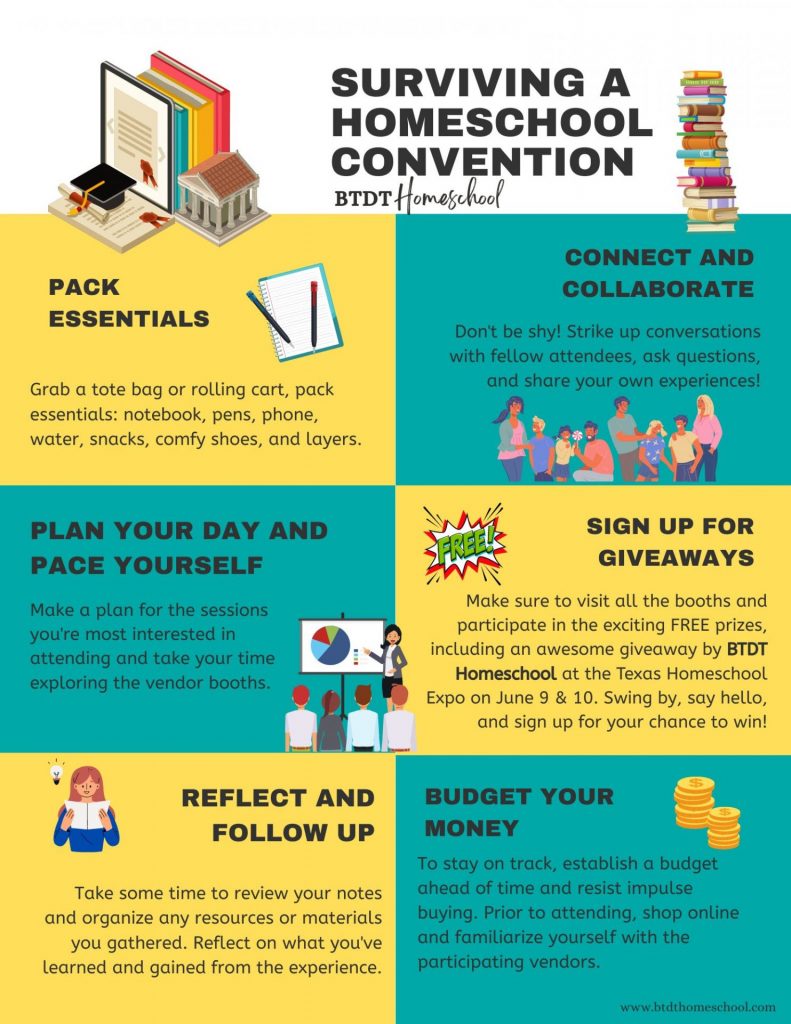
  1. Decide which conference you want to attend and do Your Pre-Conference Homework:

Take a look at the conference schedule and highlight the sessions, workshops, and speakers that catch your eye. Make a game plan of what you want to attend and prioritize your top choices. This way, you won’t miss out on any must-see sessions.  Are you going alone, with a friend, or bringing your family (a lot of conventions are family friendly with family activities and sessions).

  1. Pack Your Essentials:

When attending a homeschool conference, it’s important to come prepared. Pack a backpack or tote bag with essentials such as a notebook, pens, ipad or digital device to take notes, a water bottle, snacks, and a comfortable pair of shoes and layers- sometimes venues are either too hot or too cold!. You’ll be doing lots of walking, taking notes, and engaging in exciting conversations, so being prepared will keep you focused and energized throughout the day.

  1. Connect and Collaborate:

One of the best parts of a homeschool conference is the opportunity to connect and collaborate with other homeschoolers. Don’t be shy! Strike up conversations with fellow attendees, ask questions, and share your own experiences. You just may find your new best friend!

  1. Take Breaks and Pace Yourself:

Homeschool conferences can be exhilarating, with so much to see and do. But remember, it’s okay to take breaks and pace yourself. Find a quiet corner to relax and recharge. Take a breather outside or grab a snack to refuel. Giving yourself time to rest will ensure you have the energy to fully enjoy the conference without feeling overwhelmed.  Be flexible with your schedule.  Some of the sessions you may want to attend may be at capacity.  Have a couple choices, and ask for an updated schedule when you arrive in case things have changed.

  1. Sign up for giveaways:

We are going to have one in our booth so be sure to stop by! A lot of exhibitors have gone to a virtual sign up using something like a QR code, but some people have actually pre printed some labels with contact information for signing up. Also, bring a tote or something to carry goodies away in! Some vendors will be giving things like this away too. Remember that a lot of the vendors and speakers are often homeschoolers themselves, or were homeschooled.  Bring all your questions and ask away! 

  1. Budget your money:

Set a budget in advance, and try not to make impulse purchases.  Shop online and know which vendors will be there before you  so you have a list of things you want to look at.  Also, ask vendors if they will ship free so you don’t have to carry things around!

  1. Follow Up and Reflect:

After the conference, take some time to follow up and reflect on your experience. You can connect with the speakers and presenters you enjoyed and thank them for their valuable insights. Review your notes and organize any resources or materials you collected. Reflect on what you learned and think about how you can implement those ideas into your homeschooling journey.

Why is the Texas Homeschool Expo different? (13:30)

Texas Homeschool Expo

We’ve mentioned it before, but wanted to talk about this exciting upcoming event. The highly anticipated Texas Homeschool Expo Conference is just around the corner, and we couldn’t be more thrilled! It’s a fantastic opportunity to gather valuable insights, connect with like-minded families, and explore an array of resources. This 2 day event will take place June 9th and 10th at the Grapevine Convention Center in the DFW metro area.  

At the expo, you’ll find a variety of workshops, speaker sessions (including ours!), and exhibits (including ours!) that cater to different homeschooling styles and approaches. From curriculum choices to teaching methods to local activity purveyors, there’s something for everyone. Whether you follow a structured curriculum or embrace a more eclectic approach, the Texas Homeschool Expo is going to have resources and support to meet your needs.

Unlike other homeschooling events, the Texas Homeschool Expo is committed to inclusivity and secular education. It’s important to note that this event is not affiliated with any political, religious, or government entity. That means it’s a safe and welcoming space for homeschoolers from all walks of life, regardless of their beliefs or backgrounds. The Texas Homeschool Expo is all about celebrating the diversity within the homeschooling community. It’s a place where families can come together to share their experiences, learn from one another, and explore a wide range of secular educational resources. The focus is on providing a well-rounded education that meets the needs of each individual child, free from any specific religious or political agenda.

Secular homeschoolers can sometimes feel like they are a minority within a minority. So, if you’re searching for a homeschooling event that embraces inclusivity, secular education, and celebrates the diverse homeschooling community in Texas, you’ll find it at the Texas Homeschool Expo. This event is all about empowering families to make informed choices about their children’s education.

We’re going to be hosting a BTDT Homeschool Session on Saturday at 4 PM and it’s going to be invaluable for your high school journey. We’re going to be giving away a super handy high school course planning tool to everyone who comes to our session. So make sure to join us at our session and snag this fantastic resource. Also be sure to drop by the BTDT Homeschool booth. We’ll be there to give you some extra support and heaps of inspiration. Mark your calendar and make sure to join us at the conference. 

We hope you will consider attending a homeschool conference or convention and gain valuable insights, connect with like-minded families, and access a wealth of resources to enhance your homeschooling journey. It’s an opportunity to learn, grow, and find support, ultimately enriching your homeschooling experience and fostering a strong sense of community.

Lorem ipsum dolor sit amet, consectetur adipiscing elit. Ut elit tellus, luctus nec ullamcorper mattis, pulvinar dapibus leo.

Lorem ipsum dolor sit amet, consectetur adipiscing elit. Ut elit tellus, luctus nec ullamcorper mattis, pulvinar dapibus leo.

Lorem ipsum dolor sit amet, consectetur adipiscing elit. Ut elit tellus, luctus nec ullamcorper mattis, pulvinar dapibus leo.

Lorem ipsum dolor sit amet, consectetur adipiscing elit. Ut elit tellus, luctus nec ullamcorper mattis, pulvinar dapibus leo.

032. College Entrance Exams

College Exams Homeschool

College Entrance Exams

Curious about what the TSI and Accuplacer tests are all about? Not sure how the PSAT, SAT, and ACT differ from each other? And how do you best prepare your child for entrance exams? Join us this week as we explore these questions and more, providing you with the information and tips you need to help your child succeed!

College Exams Homeschool

Episode 032:

Are you just starting your homeschooling journey? We’re here to help! Begin with our Get Started in Homeschooling page and Homeschooling FAQ to make the transition smoother. If you’re guiding a young child, explore our How to Homeschool Kindergarten. to make those first steps special. For middle schoolers, don’t miss our Middle School page packed with tips and advice. And if you’re heading into the high school years, our Essential Steps to Homeschool High School will guide you every step of the way!

Show Notes

There are often misconceptions surrounding homeschoolers and their performance on College Entrance Exams. People tend to believe that homeschoolers lack the necessary structure and resources to excel in these exams but that’s far from the truth! Homeschoolers are rocking these exams. It’s time to shatter those stereotypes and uncover the unique strengths of homeschoolers that make them stand out in the admissions process. But why?

If you’re new to homeschooling high school, be sure to check out the Essential Steps to Homeschool High School. This episode is part of our High School series, offering expert advice, comprehensive documentation, and resources like Free Transcript Templates to help you stay organized.

12 Steps to Homeschooling High School
top 5 reasons homeschoolers are performing so well on exams:
  1. Personalized learning: Homeschoolers tailor their education to their strengths and interests, focusing on subjects they’re passionate about.
  2. Independent thinking: Homeschooling fosters critical thinking skills and problem-solving abilities which gives them an edge on the challenges of these exams.
  3. Freedom to explore: Homeschoolers are not bound by a standardized curriculum, allowing them to go beyond the basics and develop a deeper understanding of subjects.
  4. Individualized attention: With one-on-one instruction or small groups, homeschoolers receive personalized feedback and guidance to address their weaknesses and improve.
  5. Genuine love for learning: Homeschooling encourages a love for learning, making the study process more enjoyable and resulting in a deeper understanding of the material.

In a world that’s obsessed with multiple-choice exams and bubble sheets, homeschoolers really do have the opportunity to break free from the shackles of standardized testing and embark on a truly personalized learning journey. They have the luxury of learning at their own pace.

One of the biggest benefits to homeschooling is not being subject to standardized tests and assessments.  Of course, as you get into the high school years, and college looms in the future, standardized testing becomes a reality. For many homeschoolers, this may be their very first standardized test.   As a homeschool parent, you should carefully plan your college testing strategy based on your student’s needs and their academic goals. No matter which one(s) your family chooses, it is important to prepare your student for them, in order to help them achieve the best results possible and to eliminate the stress involved. Testing can be very stressful for some students and adequately preparing them for them is a key to success. Scoring well on these tests can open the door to scholarships and entering your programs of choice in many colleges.

Homeschoolers often utilize a variety of resources and strategies to tackle these exams. They can take advantage of online courses, tutoring services, or study groups – there are even 

some specifically designed for homeschoolers. Additionally, many homeschooling families encourage their children to engage in extracurricular activities, volunteer work, and internships – and these are going to provide valuable real-life experiences that enhance their overall knowledge and aptitude.

It’s important to note that colleges and universities are increasingly recognizing the unique qualities and strengths that homeschoolers bring to their campuses. Admission officers are looking beyond traditional measures of success and embracing the diversity of educational backgrounds. They understand that homeschoolers often possess remarkable qualities such as self-motivation, independent thinking, and a strong sense of responsibility.

What is the TSI/Accuplacer test? (9:58)

So, you may have heard about the TSI and Accuplacer Tests. The TSI (Texas Success Initiative) is a placement test used by colleges and universities in Texas to assess students’ readiness for college-level courses. (We live in Texas, so this is the exam our kids take.) The TSI covers three main areas: reading, writing, and math. It helps determine if you’re ready to jump right into college-level classes or if you might need some extra support in certain areas. 

The Accuplacer is another common placement test used by many colleges and universities across the US. Similar to the TSI, the Accuplacer assesses your skills in reading, writing, and math. It helps colleges determine which courses are the best fit for you based on your skill level.  Both the TSI and Accuplacer are usually taken before starting college to ensure you’re placed in appropriate courses. They’re not something to stress too much about. They’re designed to help colleges provide the right support and resources to set you up for success in your academic journey. 

Sections of the Accuplacer test can be used for the TSI (Texas Success Initiative). The TSI test assesses students’ readiness for college-level courses in Texas, and it may include sections from the Accuplacer test. The specific sections used for the TSI can vary depending on the institution and their requirements. So, when preparing for the TSI, it’s a good idea to familiarize yourself with the content and format of the Accuplacer test, as the TSI may include similar sections. By practicing and reviewing material related to reading, writing, and math covered in the Accuplacer, you can better prepare yourself for the TSI and increase your chances of success.

For both of these tests, if you don’t score high enough in certain areas, you might have to take “pre” (not for college credit) classes in reading, writing or math before you can enroll in the college level classes (or you can go home and study a little more and retake the test until you get a high enough score).   Dual credit students aren’t often eligible for Pre or remedial courses, so sometimes not passing a section of this test may not limit you from school entry, but may mean you can’t take all available classes.  The Accuplacer and TSI can be taken as many times as you like, though there may be a charge.    

One cool thing about the TSI  is you don’t have to take every part at the same time. You have the flexibility to take each section separately and this can be beneficial especially for younger students wanting to start dual enrollment courses so they’re not overwhelmed with the one big long exam. 

Often in the public schools, students take this sometime during the spring or summer of their sophomore year so they can start dual enrollment classes during their junior years. But many homeschoolers are taking this exam younger and younger.  Some students take this exam following graduation if they don’t want to do dual enrollment in high school or if they plan to enter community college after they graduate. We talk about dual enrollment in depth in our last high school series episode so check that out if you want to find out more information about that.

Cost is minimal (Somewhere around $15 per section or $29, depending on the testing center).  Some offer it for free.  Some charge an additional $25 reservation fee.  Check with your institution’s  testing center for the particular school for which you’re taking the test.

Where to Find More Information and Practice Links: https://accuplacer.collegeboard.org/

difference between the PSAT, SAT, ACT, and CLT? (15:26)

One aspect of applying for college is submitting a college entrance exam score. A college entrance exam measures your achievement in core academic areas important for your college and career success. In addition to giving you an indication of your college readiness, your score can help match your interests with different majors and allow more educational and financial opportunities. These tests can be a very important part of the admissions process and can open the door to more educational and financial opportunities. Often time scholarships and merit aid are attached to test scores.  While many schools have transitioned to test optional admission, especially during Covid, that might not always apply to homeschooled students.

       
Let’s start with the PSAT. The Preliminary Scholastic Aptitude Test is a good preparation for the SAT and can sometimes yield college scholarships for top scorers.  The exam comes in 3 forms- the PSAT 8/9, the PSAT/NMSQT and the PSAT 10.  The latter 2 are actually the same test, they are just taken at different times of the year.  The PSAT 8/9 acts as a baseline for college readiness, while the other two are more progress based.

PSAT 8/9, 10

If you’re a homeschooler in the 8th, 9th, or 10th grade, consider registering for the PSAT 8/9 or PSAT 10. Check with local schools or test centers to find out about registration procedures and test dates in your area. 

PSAT/NMSQT

The PSAT (Preliminary SAT) //NMSQT (National Merit Scholarship Qualifying Test) is like a warm-up for the big SAT exam. It’s a test that high schoolers usually take in their sophomore or junior year. Think of it as a practice round to get you ready for the real deal. But here’s the cool part: the PSAT/NMSQT also gives you a shot at the National Merit Scholarship Program. If you do really well on the test, you might just qualify for some awesome scholarships. So, it’s not just a practice run, it’s also a chance to score some serious cash for college.

The test is about 2 hours and 45 minutes long and covers reading, writing, language, and math. It’s a great opportunity to see where you stand and what areas you need to work on. Plus, you’ll get valuable feedback to help you improve for the SAT.

Homeschoolers can usually participate in the PSAT/NMSQT by reaching out to local schools or testing centers. They are sometimes legally obligated to accommodate homeschool students but can be tricky, so don’t hesitate to inquire about available test dates and registration procedures. You may also want to find out from other local homeschoolers if there is a preferred method for this- I know some of our friends have had better luck working through local private schools for this. Colleges do not see these scores, so they are just for students to gain testing experience and identify what areas they need to work on before they take the SAT. 

Cost: The cost of the PSAT/NMSQT varies, so it’s best to contact the school where you plan to take the exam to get accurate fee information.  It typically runs in the $18 range, but since you must order through a school, it may depend on the overall cost the school is incurring. They have to order the test for you. 

Test Dates: The PSAT/NMSQT is typically administered once a year in October. However, it’s essential to confirm the exact test dates and registration deadlines with the school where you are taking it.

Scoring: Scoring range is between 320 and 1520

More Info: For more comprehensive information, check out the College Board’s PSAT/NMSQT page. They offer detailed insights into the exam and related resources.

The Parents Guide to PSAT/NMSQT

National Merit Scholarship Program

How Does the National Merit Scholarship Program Work?

National Merit Scholarship Program: The PSAT/NMSQT serves as the qualifying test for the National Merit Scholarship Program. If you achieve exceptional scores, you can be considered for prestigious scholarships.  The program recognizes students who have demonstrated outstanding academic ability and potential. If you’re among the top scorers in your state, you’ll earn the prestigious title of National Merit Semifinalist. As a Semifinalist, you’ll have the opportunity to move forward and compete for the Finalist status. This involves submitting additional information, such as your academic record, extracurricular activities, and an essay. Then from the pool of Finalists, around 7,500 students are selected as National Merit Scholarship winners. These winners receive scholarship awards that can be used toward their college education. The scholarship amounts vary, but they can range from a one-time payment to renewable awards covering multiple years. 

Test takers who score in the top 1% of the PSAT become Semifinalists, a significant accomplishment. Each year the NMSC awards semi finalist status to around 16,000 high school students. So some homeschool advisors do recommend taking an honest assessment here though- if you think your child has a great chance to do well on the test, go for it.  If, on the other hand, you are fairly certain your kiddo is not going to score that high, you may be better off forgoing this test, and putting some time and money into solid test prep for the SAT/ACT later.  

Visit the National Merit website to learn more about eligibility criteria, benefits, and the selection process.

SAT vs. ACT

Most college-bound students take either the SAT or the ACT. Both the SAT and ACT exams are important for college admissions, and some students choose to take both to have more options. They have their own unique formats and scoring systems, so it’s a good idea to familiarize yourself with the specific requirements of the colleges you’re interested in. Remember, these exams are just one part of your college application. They give colleges a snapshot of your academic abilities, but they don’t define your worth or potential.  We talked a lot in our record keeping episode about other things that go into your college documents.

SAT (Scholastic Aptitude Test)

The SAT runs around 3 hours and features three subject areas – Math, Reading, and Writing. Each of the three sections is scored on a scale from 200-800. The test may include an optional 30-minute essay. SAT registration for homeschoolers is available online at the college board website.  SATs are offered on school day testing and Saturday testing. Starting in the Spring of 2023 the SAT will be moving to digital format.

Unlike the accuplacer/TSI, the SAT has to be taken all at once, and in a fairly strict, monitored and stressful environment.   It can be taken multiple times.  Most colleges consider a student’s best section scores across all administration dates (a process called superscoring). Some may require you to send all scores; others may ask for just one. Be sure to visit the website of the college that’s right for your student and check their score policy.

When: Usually taken spring of your junior year in high school or in the fall of your senior year.   We like to start in the junior year to give our students time to retake the test if they want to improve their grades, 

Cost:  $60 with the essay (many colleges want to see the essay- you can check and see if it is required).  

How to Sign-up:  You sign up for the SAT through the College Board website.   The test is only given on certain dates, and in certain locations (usually at a local high school), and there are registration deadlines a couple of weeks in advance of the test. 

Where to Find More Information and Practice Links:  the College Board website.  

ACT-American College Testing

The ACT (American College Testing) is a standardized exam that covers four main sections: English, Math, Reading, and Science. The ACT exam does have an optional writing section, which includes an essay. While the essay is not a mandatory part of the ACT, some colleges and universities may require or recommend it as part of their admissions process. So, it’s worth checking the requirements of the colleges you’re interested in to see if they require the ACT essay.

Each section is designed to assess different skills. In the English section, you’ll tackle grammar, punctuation, and writing style. Math will put your problem-solving and mathematical reasoning to the test. The Reading section involves comprehending passages and answering related questions. And the Science section examines your ability to analyze and interpret scientific data.

Now, here’s the cool part: you don’t lose points for wrong answers! So, even if you’re not sure about a question, it’s worth taking a guess. 

Test Dates: The ACT exam is administered multiple times throughout the year. Check the official ACT website (www.act.org) for upcoming test dates.

When: Typically taken during their junior or senior year. It’s advisable to plan ahead and consider your college application timeline. Many students choose to take the ACT in the spring of their junior year to allow for potential retakes if desired.

Where: ACT exams are held at designated test centers across the United States and in various international locations. You can find a nearby test center by using the test center search tool on the ACT website.

Duration: The ACT exam typically takes approximately 3 hours and 35 minutes to complete, including the optional Writing section.

Scoring: Scoring range is between 1 and 36

Cost: The basic registration fee for the ACT without the optional Writing section is $66. If you choose to include the Writing section, the fee increases to $91. However, keep in mind that costs may vary, so it’s best to refer to the ACT website for the most up-to-date pricing information.

Traditionally, the ACT exam has been administered on paper. The test booklet and answer sheet are provided to students, and they fill in their responses on the answer sheet using a pencil. However, starting in September 2020, the ACT introduced an online version of the exam called the “ACT Online.” This online version allows students to take the test on a computer at designated test centers. This online version provides an alternative for test takers who prefer or require a digital format. 

For more detailed information: registration instructions and resources to prepare for the ACT, visit the official ACT website. 

The Princeton Review- What is the ACT?

Comparing Both Exams

SAT and ACT remain the preferred testing choices by most colleges, but how do you decide which one to take? The SAT had long been seen as more of an aptitude test whereas the ACT has been more closely associated with testing students on their understanding of their high school curriculum. While some students take both tests, experts say that isn’t always necessary, and preparing for both presents a challenge due to the differences in each test. Each requires different strategies, and it’s best to become well-versed in one instead of going back and forth between the two. To help students make their decision, you can begin by taking a full-length practice test for each exam and see which is best suited for them.

It’s easy to say take both and see what you score better on but what I would say is take both and see what you prefer.  The two exams may appeal to different types of students, experts say, though it’s important students understand possible misconceptions. Because the ACT includes a science section, some say that typically leads students who excel in science and math to favor that test. The science section, however, is a combination of reading comprehension and data interpretation, experts say, adding that similar questions are embedded in other sections on the SAT. So your reading still has to be pretty high for you to understand the science in that section. One test may not be stronger for one set of kids versus another. 

Also, for both tests, some students avoid the writing test, because they do not think that they are adequate writers. The reality of applying to colleges is that providing a personal writing sample will occur at some point. Even if they don’t require the writing portion of the test, colleges may require a writing test during new student orientation, or somewhere along the college application process.

SAT EXAM

  1.  More time per question
  2. (170 questions, 3 hours and 20 minutes)
  1.  May have tricky questions
  2.  Nine short sections, plus essay
  3.  Experimental section
  4. No trigonometry
  5.  No science section
  6.  Vocabulary questions
  7.  Guessing penalty
  8. The SAT tests critical thinking and problem solving skills

ACT EXAM

  1. Less time per question
  2. (215 questions, 2 hours and 55 minutes)
  3. Straightforward questions
  4.  Four long sections, plus essay
  5. No experimental section
  6.  Trigonometry questions
  7. Science section
  8.  No vocabulary questions
  9.  No guessing penalty
  10. The ACT is a content-based test

CLT-Classic Learning Test 

The CLT is a relatively new college entrance exam that’s gaining some buzz. The CLT is designed to assess a student’s critical thinking, logic, and reading comprehension skills. It takes a unique approach to testing, focusing on classical literature, history, and philosophy rather than the traditional content covered in other exams. The CLT is gaining popularity among homeschoolers and students who appreciate a more classical approach to education. It’s a great option if you have a strong foundation in liberal arts and want to showcase your critical thinking abilities to colleges that recognize the CLT.

CLT8, CLT10, and CLT

The CLT8, CLT10, and CLT exams are tailored to different grade levels, with the content becoming more advanced as students progress through school. If your student is in 8th grade, the CLT8 tests your skills at a level suitable for the age and grade. For 10th graders, there’s the CLT10, which is a bit more challenging to match progress in high school. The standard CLT exam is for 11th and 12th graders, covering a wide range of subjects and assessing readiness for college.

The CLT is entirely computer-based, which means they will be taking the test online. This can be a good option for students that prefer digital interfaces and typing over traditional paper and pencil exams. The CLT exam consists of three sections: Verbal Reasoning, Grammar/Writing, and Quantitative Reasoning. There are passages to read, questions to answer, and even some essay writing. It’s a comprehensive test that challenges your student’s ability to think critically and articulate your thoughts effectively.

When: Typically taken in junior and senior years. However, it can also be taken by motivated students in lower grades who wish to challenge themselves with CLT8 and CLT10.

Test Dates: Offered multiple times throughout the year. You can check the official CLT website for upcoming test dates and registration deadlines.

Location: Designated test centers across the United States and select international locations. Visit the CLT website to find a test center near you.

Duration: The CLT exam consists of multiple sections, and the total testing time varies based on the level of the exam. Generally, it takes around 2-3 hours to complete.

Scoring: The CLT exam scoring ranges from 0 to 120. The scores are percentile-based, meaning they reflect how you performed in comparison to other test takers.

Cost: The CLT cost $54, the CLT 10 costs $44, and the CLT8 costs $34. 

Sign-up: To sign up for the CLT exam, visit the official CLT website and create an account to select desired test date and location, complete the registration process, and pay the exam fee.

Visit the official website for information about upcoming test dates, registration fees, and test preparation resources. 

How do I prepare my child for exams? (37:54)

BEFORE THE TEST

You might be wondering about the best way to study and when to start studying for a college readiness assessment. There are four things you should consider doing when it comes to studying for a college readiness assessment. These practices will help you build confidence leading up to the test and prevent cramming or burnout.

  1. Take a practice test—Taking a practice test allows you to familiarize yourself with the format and types of questions asked. After you take a practice test, note your strengths but, more importantly, identify areas for improvement.
  1. Plan your practice and study time—Set aside small amounts of time for studying over an extended period. Keep a calendar of your schedule, but make sure to keep it flexible for surprise homework assignments, extracurricular activities, and fun.
  2. Keep a positive attitude—Practice positive thinking: imagine yourself sitting in the quiet test room, bubbling your answers on the scantron, meeting the challenge of the exam.
  3. Take a look at test prep options—They can help you become more familiar with the test format, gain confidence, and be ready on test day.

PREPARING 

Helping your child practice for the specific test they will be taking is a great way to help them improve their test scores. There are many resources available to help your student prepare. There are a lot of tests available, each with their own test dates and necessary prep. 

All of the tests we have mentioned today have corresponding test study guides and books with practice tests.  Khan Academy has free test prep.  There are also a wide variety of test prep companies and tutors out there that can help provide services to teach your student strategies to use for the tests. 

One of the best ways to help your student feel confident on test day is to make sure that they know what to expect for the test. Different tests are organized in different ways, so students need to understand the structure of the test they will be taking. 

Khan Academy Test Prep

Number 2 Online

What is an Adaptive Test?

Students should also be aware of whether or not the test they will be taking is an adaptive test. Adaptive tests are customized for each student with questions that get easier or harder depending on whether or not the student is answering the questions correctly.

Adaptive tests can seem very difficult, even when students are doing very well. Students need to be prepared for this, so they don’t get frustrated by the more difficult questions on an adaptive test.

Pricing can range from free for some of the prep to being quite expensive. Don’t be intimidated if you have a small budget, you can get test prep books from the library, or even pick up these used books. 

STUDY SKILLS

Homeschool parents can help their students learn study skills and strategies for success on the specific test that they will be taking.

Crash Course has an entire “Study Skills” playlist

TEST DAY

To help your student be successful on testing day, there are a few things they should keep in mind.

BE PREPARED – Make sure you know exactly where the test center is located and how to get there before test day. You may need to arrive early, so make sure you leave enough time for unexpected delays.

SLEEP – Make sure you get a good night’s sleep before test day, so you are well-rested and energized during the test.

BREAKFAST – Eat a good breakfast before the test. This ensures that your brain is receiving all the nutrients it needs to function properly when test-taking. Eating something with protein like peanut butter is the best way to help you stay full and think clearly during the test.

CLOTHING – Choose your clothes carefully for test day. You want to make sure your clothes are comfortable and won’t be distracting. Wear layers so that you can adjust to the temperature of the room.

SUPPLIES – Make sure you bring all the supplies that you will need. Copy of registration, ID, permitted calculator, watch, pencils, snacks or drink.  Bring a sharpened No. 2 pencil with a good eraser.

HYDRATE – Bring a water bottle. This can be helpful if you get thirsty during testing. If the test doesn’t allow for easy access to water bottles, make sure to take frequent water breaks anyway, as staying hydrated is important.

NO RUSHING – When test day comes, get to the test center early and take some deep breaths to relax before the test begins. Once you are on the test, Pace yourself—don’t spend too much time on a single question. Eliminate as many incorrect answers as you can, then make an educated guess.  Remain calm and confident- you’ve prepared for this!

We hope we’ve given you some helpful tips and information about all the different test options out there and how to prepare your student.  

It’s a step towards building confidence, evaluating your progress, and preparing for future college entrance exams.

Freebies This Week:

031. Planning Your Homeschool Year

Planning Your Homeschool Year

Episode 031:

Are you just starting your homeschooling journey? We’re here to help! Begin with our Get Started in Homeschooling page and Homeschooling FAQ to make the transition smoother. If you’re guiding a young child, explore our How to Homeschool Kindergarten. to make those first steps special. For middle schoolers, don’t miss our Middle School page packed with tips and advice. And if you’re heading into the high school years, our Essential Steps to Homeschool High School will guide you every step of the way!

Show Notes

We are getting to that time of year! Some of us are bored with our current curriculum or program and ready to move on to the next level or try something new. Some of you might be brand new to the idea of homeschooling and organizing your school year. If you follow a traditional homeschool schedule, you may be counting down the days until summer break. Some of us may be stressed out because our friends are asking which class we all want to do together in the fall, and we are still thinking about next week.

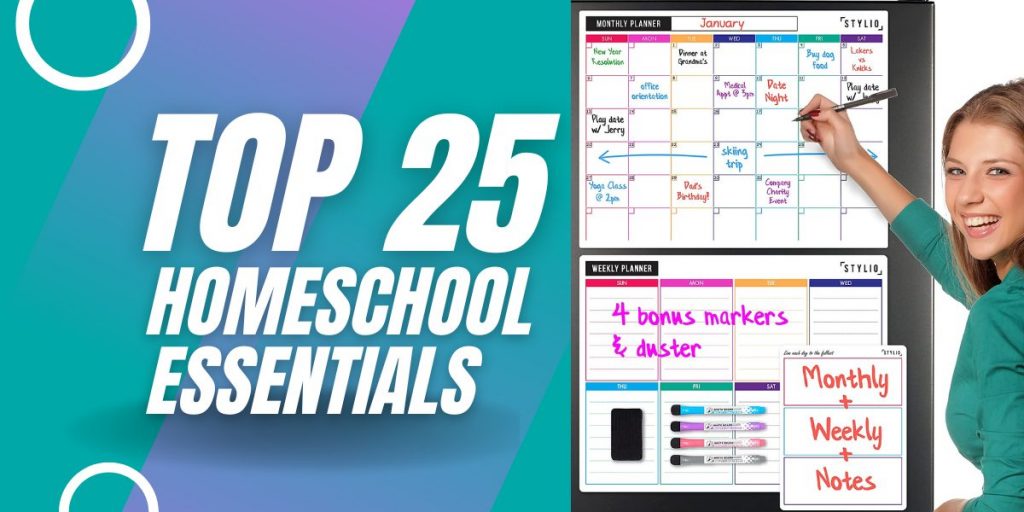
Top 25 Homeschool Essentials
TOP 25 Homeschool Essentials List that you should incorporate in your homeschool space to kick off your school year.

Homeschool planning can seem like an overwhelming endeavor—especially if you’re not sure where to start. In this episode, we are going to help you to feel confident as you embark on your homeschool journey and help you to organize your year. We’ve compiled some helpful insights to make this process more simple and stress-free to create a solid homeschool plan for the upcoming school year.

 Here are some great ways to jump into your planning in a simple, non-stress way:

1. Create a Mission Statement

Before you dive deep into creating an entire homeschool plan, we encourage you to reflect on the reason you chose homeschooling for your family. From there, you should develop a mission statement, which is a long-term overarching vision for your homeschooling journey. This statement should be rooted in your key values and apply to everyone involved. For example: “To instill creativity, curiosity, and a love of learning through meaningful educational experiences both at home and in the world.”

2. Set Student Goals

Now that you’ve established your “why” for homeschooling, you can move on to setting goals for each child. Goals are more specific, measurable, and time-bound objectives that you want your kids to accomplish in the year ahead. It’s easy to become overly ambitious when homeschool planning. Having goals will help you prioritize your lessons and keep your students on the right track. 

BTDT Amazon Wishlist
We’ve compiled all our favorite things:
Complete BTDT Homeschool Amazon Wishlist>>

Here are a few quick tips for successful goal-setting:

* Focus on each child’s individual strengths, weaknesses, and interests

* Pick no more than three goals to pursue (too many can get overwhelming)

* Be sure to track progress and revisit goals on a regular basis

Knowing your goals will help you with the next phase of homeschool planning—selecting subjects.

How do you create lifelong learners? How do you create habits that work for the entire family? How do you create an environment that inspires learners? Learn How to Create A Complete Learning Lifestyle

3. Choose Your Subjects

Once you have your goals in mind for each student, you’re ready to choose which subjects to focus on this year. While this may be dictated by the homeschooling laws in your state, there’s usually some room for discretion. Using your state’s regulations and your goals as a guide, write down a list of the subjects you plan to teach each student.

Some people like to stick to the basics: reading, writing, and arithmetic and build from there.  If you have high schoolers, you may want to go back to look at your 4 year plan and check off credits.  

4. Select Materials

The next step in the homeschool planning process is deciding what educational materials you’re going to use. Before you opt for the first curriculum a friend or group recommends, though, be sure to consider your mission statement, your homeschool style, and your child’s learning style. Having these in mind will help you find the best fit for your family.

7 Steps to Choosing Curriculum
Choosing the right curriculum can be overwhelming. Avoid wasting time and money on materials that don’t fit your family. Follow our 7 STEPS to Choosing Curriculum to find what works best and set your homeschool up for success.

We’re going to be diving into choosing curriculum and walking you through that process, but for today as we discuss making a plan and organizing your school year, these are basic things to consider before settling on any school materials: 

  • Would you prefer a prepackaged, “open-and-go” curriculum from a single publisher?
  • Do you work from home? How much parent involvement does the curriculum require?
  • What is your child’s learning style? Does your child work well independently? Are they easily distracted and need you there to refocus them?
  • Will you find free resources from the internet or library, or adopt an eclectic approach?
  • Are there outside opportunities, such as a co-op, online class, or college dual-enrollment that would be a good fit for your child?
  • Are you looking for an online school versus traditional homeschooling? This is a good fit for some people.  But it can also be restrictive if you want a more flexible schedule to do some of those daytime homeschool activities with friends when you need to be online. Most younger children are typically going to learn better with hands-on interactive learning so you may want to consider limiting too much computer time with those younger years. 
  •  If you are new, you also want to consider your worldview as well as homeschooling style, this will help narrow down choices immensely.  We talk about this in our getting started episode.
  • If you really want to see the curriculum in person, see if local friends have it, visit a homeschool store. Most people have a lot of luck on YouTube. Almost every curriculum has a YouTube review or you can see it up close
We wish we had known so much when we started homeschooling. If you’re a new homeschooling parent, navigating this journey can feel overwhelming. When we began, we knew nothing about homeschooling, which made it daunting.
Top 10 Things We Wish We Knew Before Homeschooling.

Remember, if you feel that a certain curriculum doesn’t meet your child’s needs, feel free to switch to something out at any point during the school year! You don’t have to stick with any materials that aren’t working for you. We also suggest choosing flexible curricula so that you can modify the materials however you see fit. I’ve often skipped parts of a lesson that I know was a skill already mastered. So don’t waste time on unnecessary filler. And on the flipside, when something from the lesson really piques your child’s interest, run with it! Spend extra time on that and dive deeper. They are going to enjoy learning and retain information when they are really interested. Remember, one of our ultimate goals is to create lifelong learners. Those moments of curiosity are opportunities. 

5. Organize Your Supplies

One of the biggest hindrances to a smooth-running school day is having to waste time looking for necessary supplies. The key to avoiding this? Have a specific spot where all of your school materials are neatly organized.

We encourage you to pick a place in your home that can be the designated “school supply area.” This can be an office space, closet, or even just a corner of the dining room. Then, get a shelf and storage bin for each student so they can easily grab their materials at the start of each day and return them once finished.

6. Develop a Schedule

Creating a schedule is another key aspect of homeschool planning. This ensures that you stay on track and maintain consistency throughout the year. There are a number of questions that you should ask yourself while developing your schedule, including:

  • Do you plan on homeschooling year-round, following a traditional academic year, or doing something else entirely?
  • How many days will you be schooling each week? Five days? Four?
  • Will you be teaching all subjects each day or adopting a loop schedule?
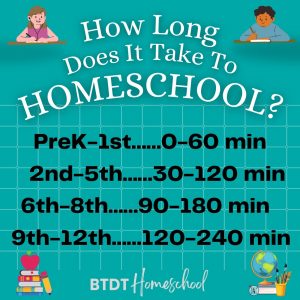
  • How many hours do you want to spend doing school work each day? Most people with a traditional school setting tend to be overly ambitious with this. When you have such a small student/teacher ratio you don’t have to spend as much time schooling.

We recommend:

how long does it take to homeschool

Keep in mind any important obligations, like extracurricular activities or jobs, when establishing your homeschool schedule. Be sure to make room for your non-negotiable fun things, like park days or clubs.  Consider your schedule’s big picture, too.  I knew that I was always going to have a hard time reining kids in after hiking group or co-op, so those days needed to be otherwise clear, or have one easy thing after.  The beauty of homeschooling is having that ability to manage your own time.  If you want to stack Monday and hit it hard in order to have a better week, go for it. 

7. Embrace Spontaneity

One of the greatest gifts that homeschooling offers is the flexibility to adjust your schedule as you wish. That said, it’s helpful to plan for spontaneity by allocating some breaks in your homeschool plan. Last-minute opportunity for a trip? Go for it! Kids feeling burnt out? Play some hooky and get back into schooling tomorrow—or even next week!  If you plan ahead for those spontaneous scenarios, it will allow you the freedom to enjoy some time off or handle unexpected life events without school-related stress.  This is one of the reasons that I really love to do school year round.  There is no pressure to stick to a calendar.

100 Awesome Homeschool Field Trip Ideas
Download your FREE Field Trip Pack

When should I plan for the next school year? (13:21)

The great news is that your homeschool plan doesn’t have to be fully fleshed out before you can get started. Of course, your goals should be planned before the start of the school year, but try not to get too hung up on this. You are the administrator and can adjust as circumstances change. Having your subject and curriculum plan in advance is also ideal, as it gives you time to become comfortable with your materials. On the other hand, one of the main benefits of homeschooling is having the ability to add or change subjects and curriculum during the school year. So, if you haven’t found that perfect writing program yet, just wait and add that subject in a bit later rather than make an impulsive decision.

When the actual lesson planning happens is a personal decision and that’s up to you. While it isn’t necessary to plan all of your lessons for the year in advance (as things will undoubtedly change), having a rough idea of what you want to cover at certain points throughout the year can be helpful. We suggest doing the actual lesson planning one week in advance. That way, you can easily make adjustments based on appointments, friend hang-outs, field trips, extracurriculars, and so on. 

My family is really project-based. Whether I created a curriculum myself or bought it, I always kept a running list of supplies that will be needed on my phone. Sometimes you’ll be too busy to pre-organize and there’s nothing worse than sitting down Sunday night to quickly write out your week and realize that you’re short of an ingredient or a supply for a project or activity. So when I’m at the store, doing my normal shopping, I will glance at my list to make sure I didn’t forget a supply for the upcoming week. 

I’m an all or nothing person- sometimes if I plan too much in advance and then get off schedule, I am likely to bag the whole thing!  So, rather than do too much and then get all frazzled, taking things in smaller chunks is a better method for me.  And you can have a long term plan and short term plan.. Whatever works for you.

The point is, don’t let homeschool planning be a source of anxiety. Take a deep breath and take it one step at a time. One week at a time. You’ve got this!

If you are new to homeschooling, you do have a couple considerations to make as you begin planning.  The first thing you’re going to need to do is familiarize yourself with your state’s homeschool requirements.  Are there subjects that you are required to teach?  Do you need to keep records or work towards an end of year test or portfolio evaluation?  Some states have strict requirements, some like ours are very vague.  

So you will need to decide if you will (or need to) follow the state’s curriculum outlines or do your own thing. 

Are you new because you have an up and coming homeschooler? As you planned, obviously the age of your child is going to matter. If you have a very young student (3-5), learning happens through life and play. This age should be non-pressure, non-stress for learning and is ideal to pick some simple goals – things like life skills, language development, large motor skills (climbing on the playground) and some basic fine motor skills (how to hold a crayon.). 

If you’ve not checked out our preschool page, be sure to do that. From there, you can listen to our preschool episode and the page has tons of ideas for facilitating learning through play in your home. We also have a lot of free resources you can download including morning and evening, routine charts, a nature scavenger hunt, and more!

Next, regardless of age or experience, consider putting together a general overview of what you will teach and learn throughout the year. Consider what subjects you want to make sure you cover – like core subjects-math, reading, and writing and what things you personally consider as extras. Involve  your child! Ask them and consider their interests and curiosities.

Think about what topics you would like to learn through a unit study. Unit studies are a great alternative, or a complement to a curriculum. They give you an opportunity to pursue an interest or curiosity to wherever it takes you, and this is where some of the best learning happens. I have always favored unit studies. We would incorporate them through the school year but before high school we have always schooled year round with short days and lots of breaks. When our main curriculum was complete, we would deep dive into all kinds of topics. Over the years, some of the unit studies we’ve done: 

penguins, civil rights leaders, volcanoes, the light spectrum, space, native American tribes, human anatomy, and more.  

Make sure that your goals are developmentally appropriate and personalized to your child. A vision board can be a great way to plan in a creative way and get your kids involved. A lot of homeschoolers like to create a vision board for the year. Involve your kids in this activity! Your child can cut/paste pictures or words of things they want to accomplish or attempt throughout the year. If you don’t want to do a vision board, just brainstorm together on a whiteboard or piece of paper. You can divide it up into sections to focus on, like academics, unit studies, social, physical fitness, financial, personal, etc. This is a great way to see what their goals are, and to help them figure out what steps they need to take to get there. If your child is needing inspiration, they can go to outschool.com and look through courses. 

You can go to our electives page on our website and look through some of the “out of the box” ideas for electives. Write a list of favorite topics or subjects they are curious about, then see how you can use these in your school year. 

What kind of extracurriculars do you want to be involved in? Board game group, scouts, co-ops, music, lessons, robotics club, book clubs. Does your teenager want to get their driver’s license, a part-time job, a volunteer job? What about an apprenticeship? What about social meet ups? And friend time? 

Sometimes I like to do a theme for the entire year. I talked about unit studies a minute ago and this is like an entire school year of unit study. One year we I did an entire American music history year. We learned about American music from the early native, to swing and ragtime to modern hip-hop. We made a leather skinned drum, read books about the Beatles and Scott Joplin, watched Jamie Foxx in the motion picture Ray and visited the rock ‘n’ roll Hall of Fame and Graceland. It was an entire year of a unit study I put together. We still did math, but almost everything else we learned was themed for the year. It’s by far our favorite school year ever. 

Homeschooling offers the opportunity to approach learning and teaching differently than the traditional school system. There are lots of educational methodologies that we can choose from – even that we can mix and match from – to provide a very well rounded, thorough learning experience for our child. 

Choosing curricula is the one step that tends to overwhelm, panic, and stress people out and can be one of the hardest steps to take while homeschool planning. There are SO many choices out there. There can be too many choices. Going online and searching homeschool curriculum is going to give you over one million results. That’s why we really recommend having some things (like worldview, homeschool style, what kind of materials you prefer) locked down in advance.  This will definitely help narrow your options.

We are going to have an episode specifically guiding you on how to choose curricula and we’re also going to be spending a lot of time reviewing and making curriculum suggestions. But in today’s episode, we really want to focus on organizing your calendar and setting up your child for success throughout the school year. You want to spend time figuring out WHAT you want to teach and HOW you want to teach it and this can help narrow down those options.

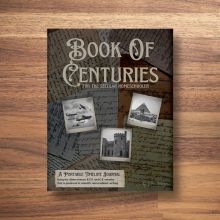
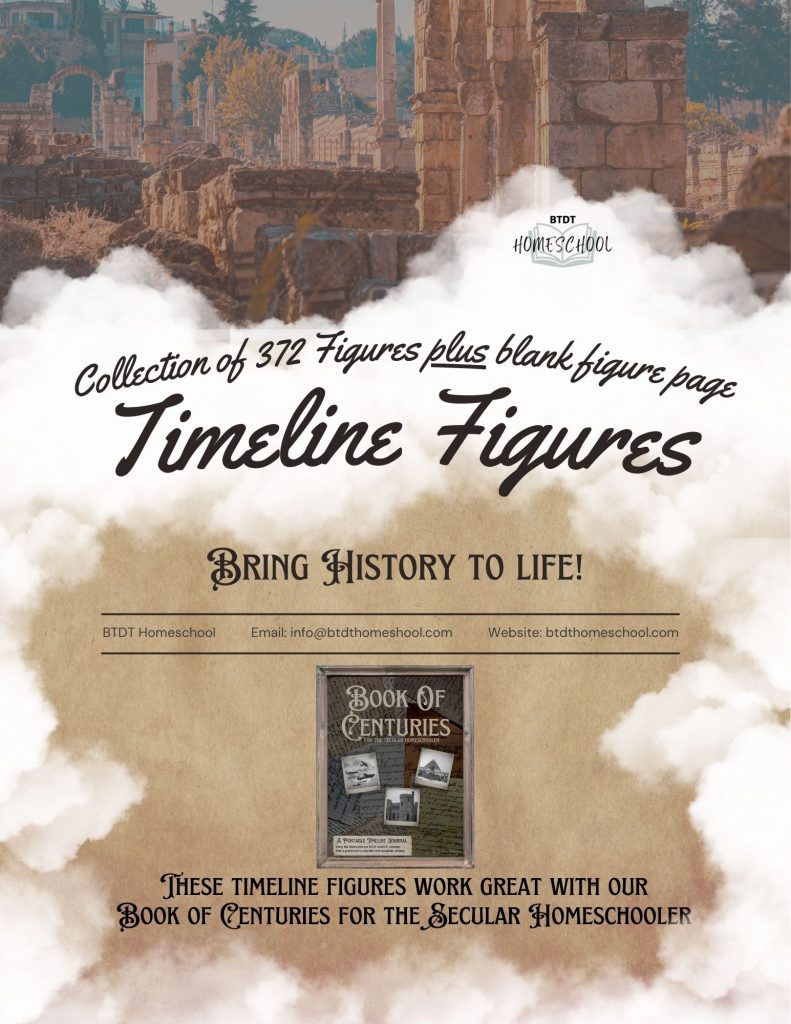
Timelines have long been used as a visual representation of historical events. Relate subjects together and view historical events as interrelated in your homeschool with our Book of Centuries and Timeline Figures. They are the perfect combination to make history come alive!

book of centuries
Book of Centuries

Get creative with their courses, projects and hands-on learning. There are also a lot of amazing classes and programs, digital and printable resources, and other unique options to choose from like Outschool or in your community.  

We have our own super cool Book of Centuries and timeline figures– those can be a fun way to add in history.  On our website, you can find all kinds of resources to help you plan from reading logs, to field trips writing review sheets, and high school documents. Most of it is totally free.

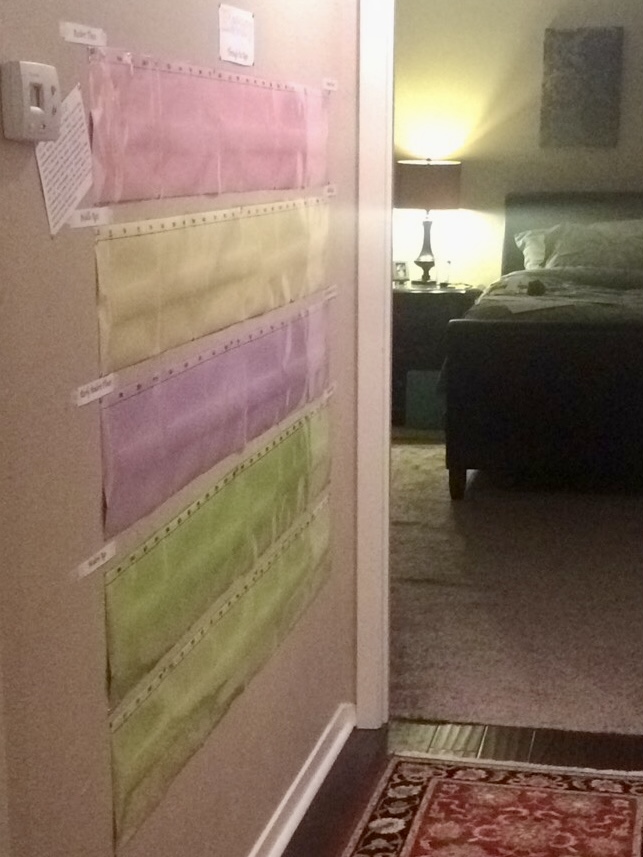
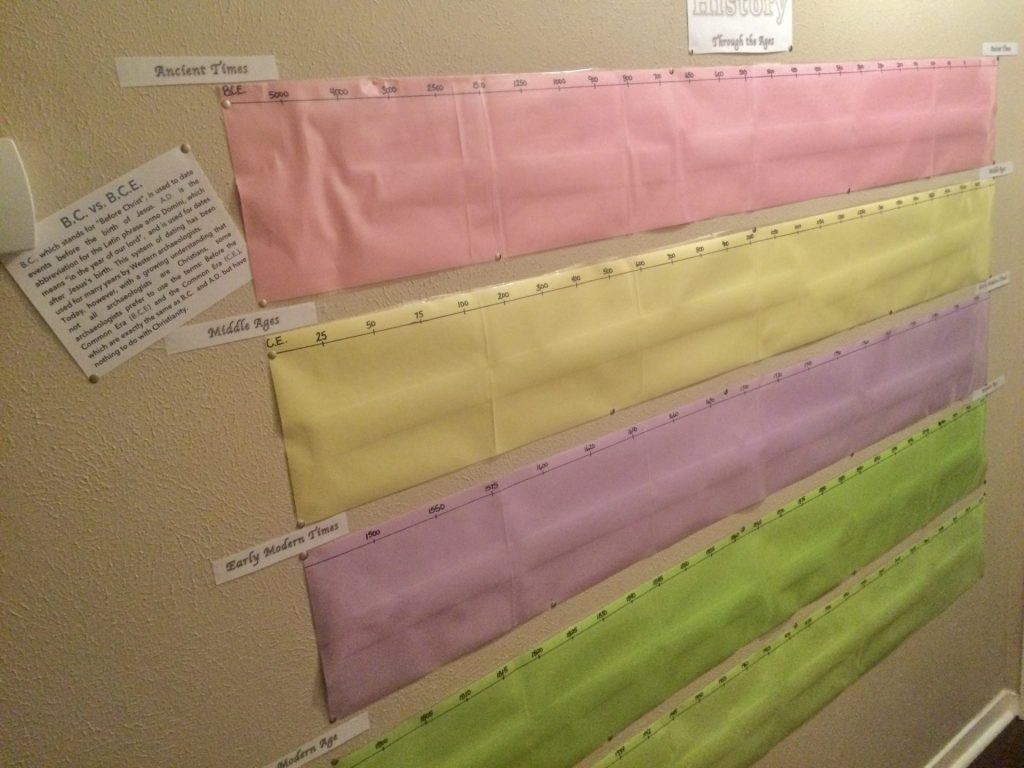
Maria’s Homemade Timeline:

Let’s also talk for a sec about physical planners. I like to spend my Sundays making my Blueprint for a beautiful week~that’s when I lay out my schoolwork, look over our activities and obligations, make my menu plan and grocery list, etc.  You can do this anyway you want. And we’ve talked about letting your older kids find the method that works best for them.  Our kids are growing up in a much more digital age than we did.  They may totally cringe at the idea of a paper system, so be flexible.

Planner

Homeschool planet

Trello

Google Keep

Cozi family calendar

Do I have to teach all subjects? (28:20)

People often ask if they need to teach every subject to their child. Again, you need go back to your state’s requirements.  Are there subjects that you are required to teach?  Do you need to keep records or work towards an end of year test or portfolio evaluation?  Most states allow you to make a lot of these decisions, but there are a few that have strict requirements. 

Some people also like to keep an eye on what public school standards are for each grade level.  We didn’t do this, but it may be something you want to do if you think your child may return to school at some point or if you just want a general idea or where you are.

Here is a very General Overview of what subjects are typically covered in school:

  • Languages –English language arts:  including reading, writing, grammar, poetry, prose, literature, creative writing, report writing as well as developing oral presentation and reporting skills.

Foreign languages: while typically introduced in high school, you can opt to begin these at any time in your homeschool.  We talk about this in our Q&A episode.

  • Mathematics – including the basics (adding, subtraction, multiplication, division, fractions, decimals), algebra, geometry, trigonometry, calculus.
  • Science – including Biology (plants, animals, human body), Physical sciences (physics, chemistry)
  • History – state history, world history and country specific history.
  • Geography – including earth sciences, astronomy, regional/cultural studies, map work and weather.
  • Technology – including product development, using/interacting with technology (PC, internet, home and kitchen appliances etc.), programming/software.
  • Economic sciences – including money management, entrepreneurship, investment, business and management skills (time management, project management).
  • Arts – including the practical application (painting, drawing, playing an instrument, theater, dance), appreciation and history of the arts and music environment.
  • Life skills – this can include everything else one needs to properly survive in the world e.g. Home maintenance, health and nutrition, first aid, safety skills, relationship skills, communication, conflict handling, study skills, etc.

Some of these subjects you are going to find repeat in some form or fashion every year.  There may be specific ones that you save for a certain age or level. 

Don’t waste a ton of time trying to teach something to a kindergartener that you can spend 5 minutes explaining to a second grader

So you do not need to teach all subjects, every year.  Pick and choose the things that you need to cover, the things you want to cover, and build your overall plan from there.

How do I organize my homeschool room? (33:33)

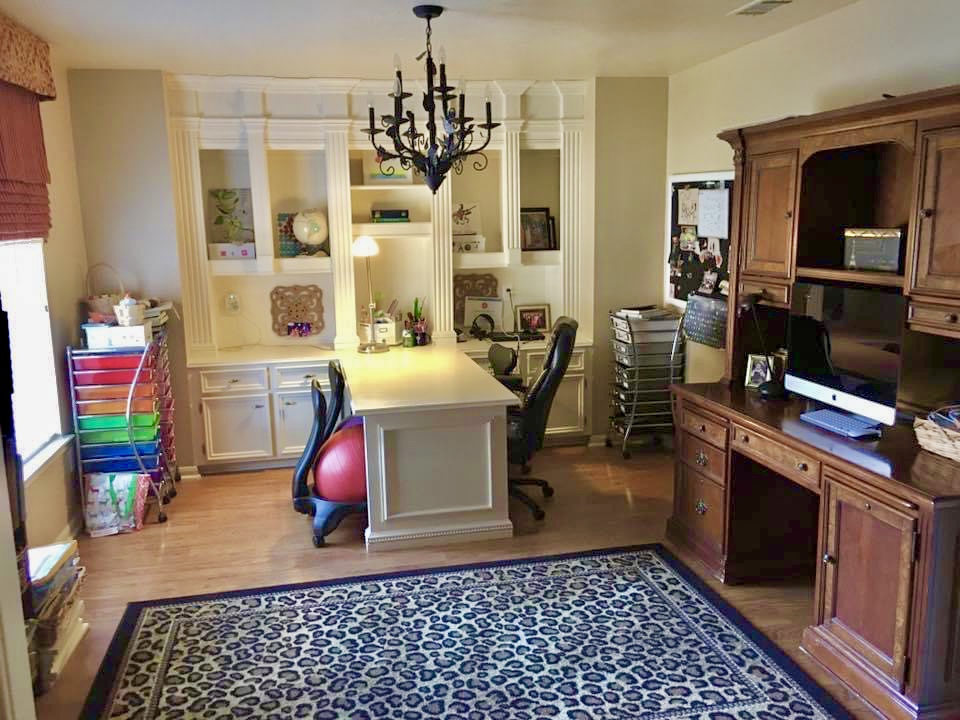
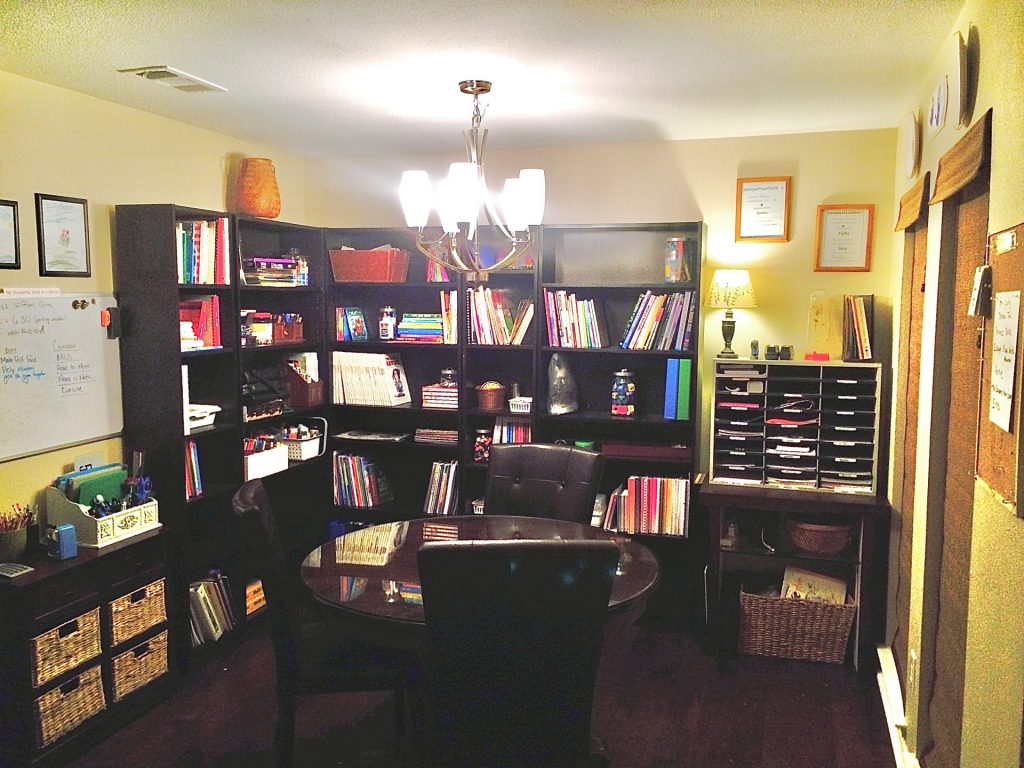
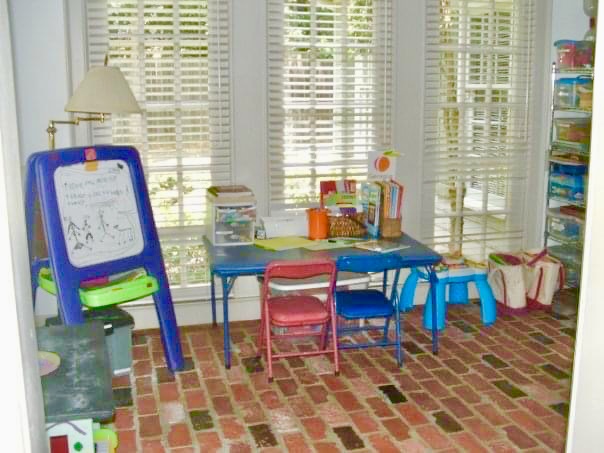
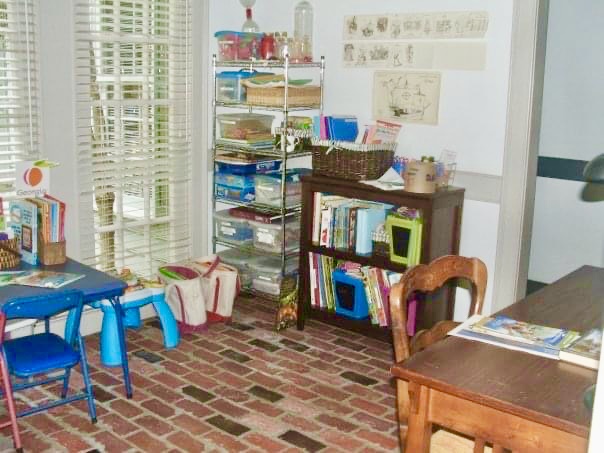
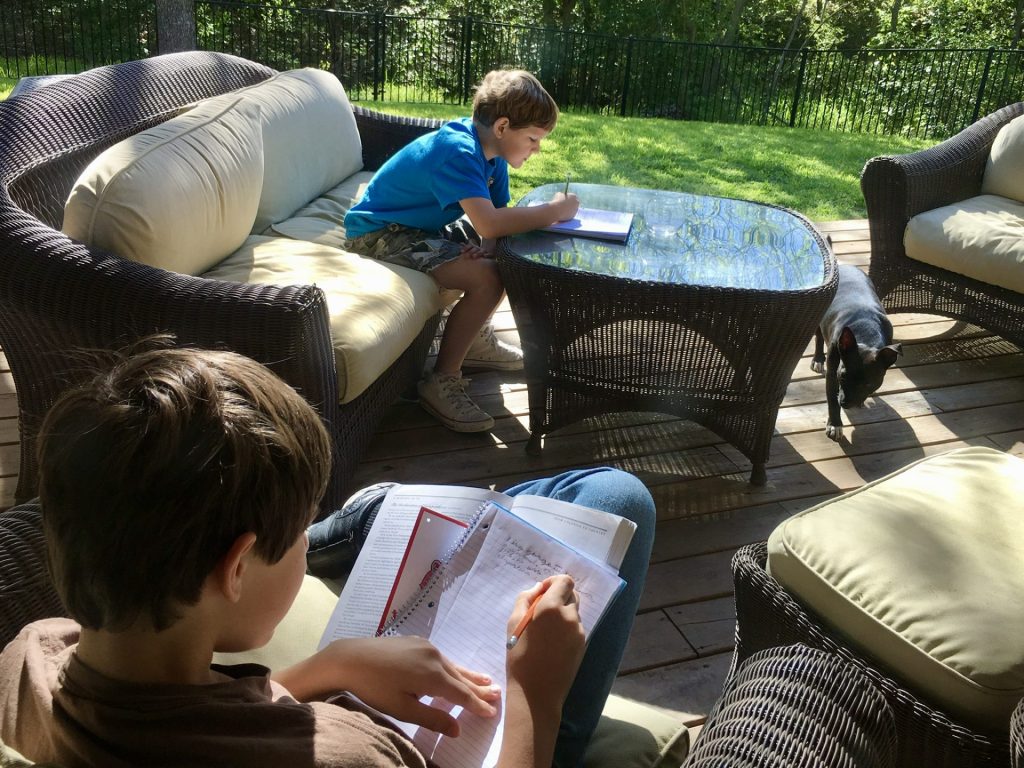
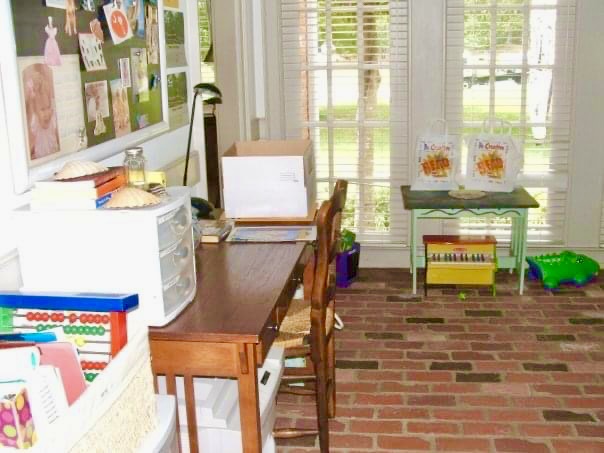
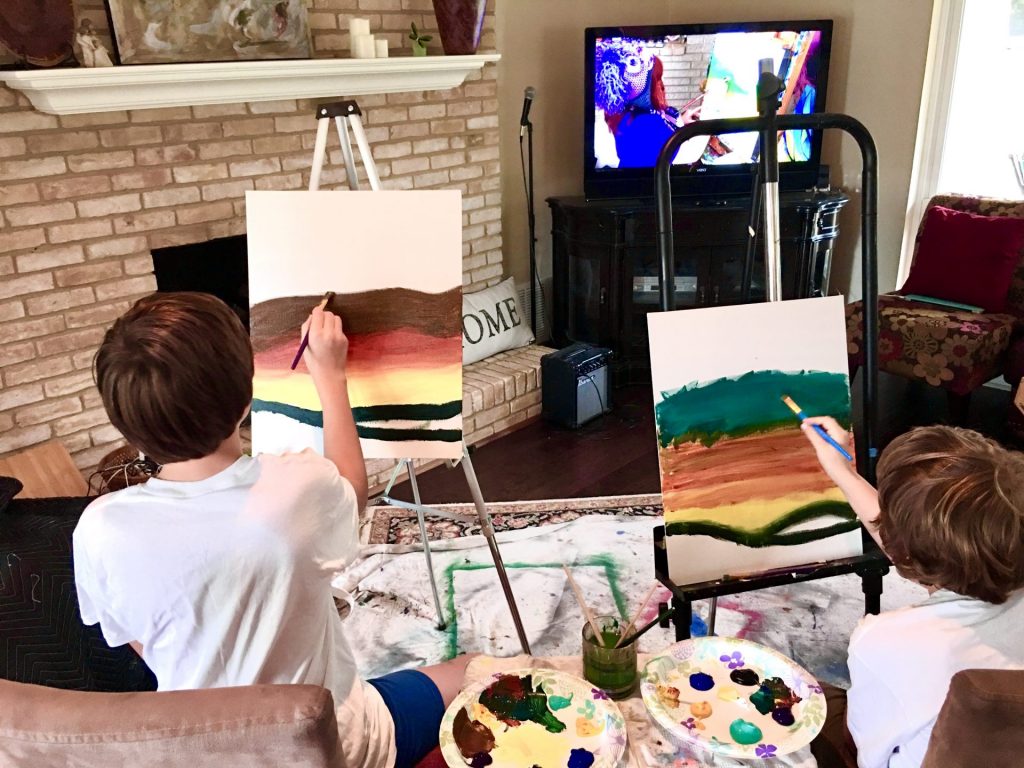
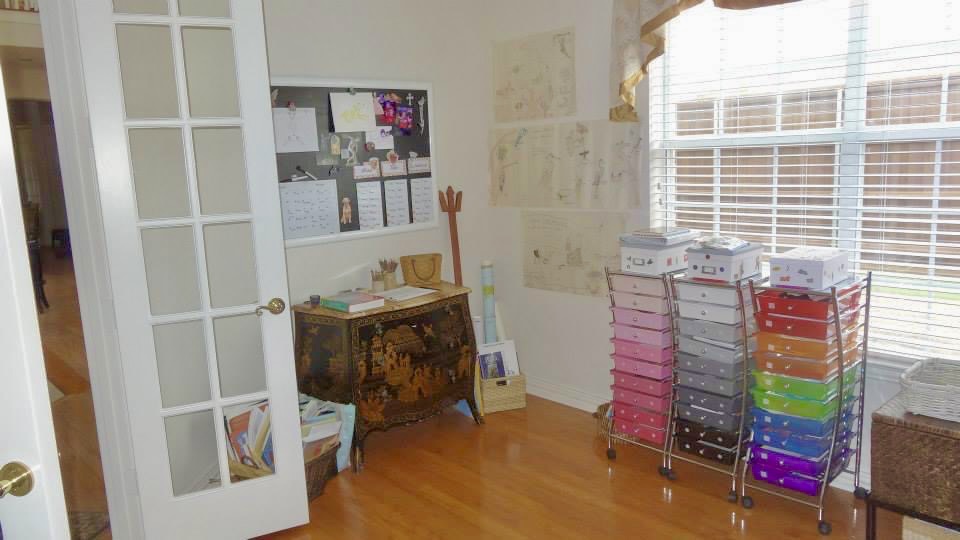
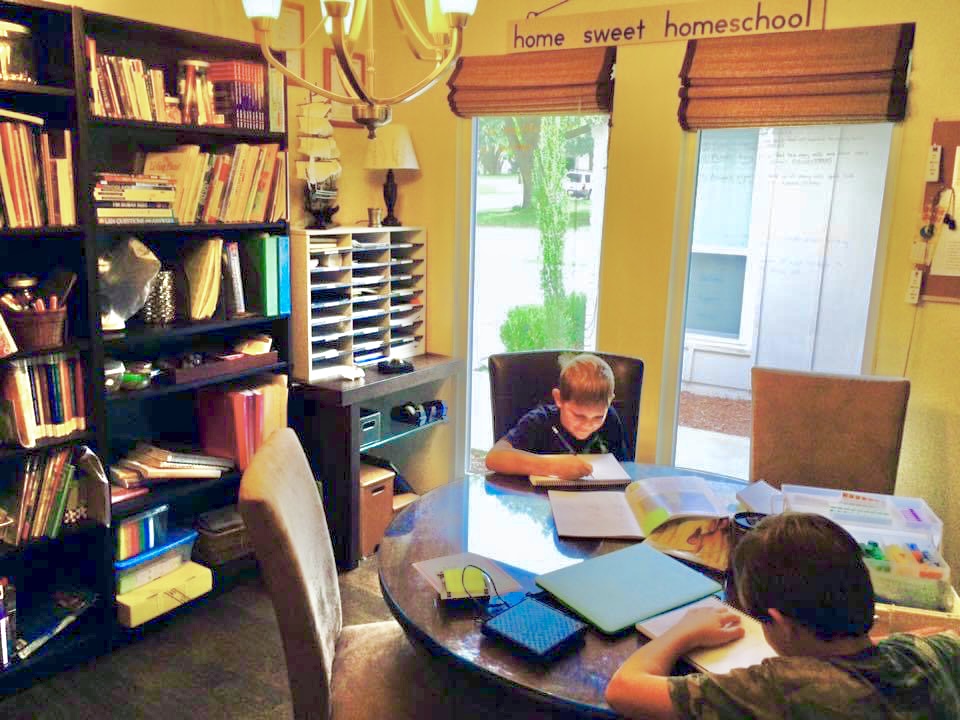
We have said many times that you really do not need a physical classroom or the perfect pinterest homeschool space to facilitate learning at home.  There are all kinds of ways that people creatively fit their homeschooling books and supplies into small spaces and learning does not at all have to happen at a desk or table. Ours often happens on the couch, or in bed. In fact, we’d caution against trying to replicate a school classroom in your home.  That can be a waste of time and money.  Instead, concentrate on things like making supplies accessible all the time for when inspiration hits. It’s just another way to keep learning fun. Remember, learning doesn’t stop when you close the curriculum, children are learning all the time.

Your learning space will depend on several factors. It will depend on the size of your homeschool space if you have it, how many children you have, and the type of homeschooling you and your family participate in. Check out our TOP 25 Homeschool Essentials:

One of the things I recommend, as well, especially if space is a concern, is having only the items out that you are using in that school year.  For a lot of us managing different aged or leveled children, this could mean you have a lot of books and resources going just for that year.  Do yourself a favor and stash stuff you are saving for later, or hand me down items for a younger sibling somewhere else and make it part of your yearly planning to rotate things in and out.

Top math Games
Games are a great way to learn math or take a break from boring worksheets. Our games are categorized to help master each math concept with fun! Check out our TOP MATH GAMES

Hopefully this episode has put you at ease and has inspired you to start planning your next homeschool year.  Homeschool planning does not need to be stressful but it can seem like an overwhelming endeavor.  We want you to feel confident as you embark on your homeschool journey.

Peek into Nicole and Maria’s homeschool rooms through the years:

This Week’s Freebie:

Top 25 Homeschool Essentials

Top 25 Homeschool Essentials

.

The new school year is right around the corner! Whether you’re a traditional homeschooling parent or diving into remote instruction for the first time this fall, creating an inviting and inspiring learning space at home is essential.

With important decisions to make about curriculum, homeschool schedules (scroll down to download our FREE printable Homeschool Planning Templates), and yearly calendars, the importance of setting up a dedicated learning environment can sometimes be overlooked.

For more tips on setting up your space and planning your homeschool year, visit our page and listen to our podcast episode, “Planning Your Homeschool Year.”

The good news is, you don’t need an entire room or even a large space to create an effective learning environment. If you have a spare room, fantastic! If not, that’s completely fine too. Consider making a room multi-purpose. A playroom can double as a homeschool space, or a rarely used formal dining area can be transformed into the perfect learning hub.

BTDT Homeschool was created with a heartfelt mission: to empower and give back to the secular homeschool community.

Through our informative podcasts, blog posts, daily inspiration, and a wide range of free printable tools, we aim to empower you on your homeschooling journey.

New to Homeschooling>>>

BTDT Homeschool Podcat
Create an Inviting Space

Feel free to transform the area where your learn-at-home adventures take place into an organized and beautiful space. While not essential, many homeschoolers find it both important and fun to create a color scheme. Take your kids to the paint store and explore color ideas together. Involve them in the process! If they’re anything like Our kids, they’ll definitely have some color preferences. Plus, the act of redoing a room can be a learning experience in itself!

Peek into Nicole and Maria’s Homeschool Spaces Over the Years:

Your homeschool room is your education hub, which means you can keep all books, supplies, arts, crafts, and other activities organized in one place. Be sure to teach your children to clean up after themselves. When they finish a project or activity, be sure it is clear to them where everything goes to make cleaning up easier for them and help you keep your sanity!

School Year Planner
Free Planning Templates

Top 25 Homeschool Essentials

With over 30 years of homeschooling experience, we’ve definitely made some bloopers when it comes to building the ideal learning environment for our families. We’ve bought things that were a waste of money (and space). There are also a lot of things we wish we incorporated early on which would have made our lives so much easier.

View Our complete wish list:

BTDT Amazon Wishlist
Complete BTDT Homeschool Supply Wish List

TOP 25 Homeschool Essentials for you to kick off your school year that you may want to incorporate or keep on hand or in your homeschool space:

1. Desk/Table

Desk/Table: Some kids very much need a workspace to function- so consider if you need a dedicated space for a desk or table that you can spread out on for bigger activities.  For many, that may also be your kitchen or dining room table.  If your table is doing double function, I recommend having a space nearby for stashing stuff so that your homeschool supplies don’t take over your space.

2. Maps & Posters

Include a world map, a variety of historical maps, specific country, state, or city map – depending on what you’re studying this year. Framing your map will make it look more attractive on your walls and we’ve also used a wet erase marker on our glass framed maps as reference points.

This is one of our favorite Maps to see all the details:
Laminated Giant Map of the World (46 x 80)

Scrunch Maps are also really popular with homeschoolers:
Waypoint Geographic World Scrunch is easy to store with storage bag (24″ H x 36″ W)

3. Globe

A globe is an indispensable homeschool essential that you will use more often than you think.  So many subjects have ties into geography and you will find yourself reaching for it several times a day. Since I’ve graduated high school, we’ve lost a planet and gained an ocean so be sure to find an up to date globe!

13″ World Globe with Stand, 720° Swivels in All Directions with Stainless Steel Stand

4. Bookshelves

Every homeschool space must have bookshelves. Whether they are used to store art supplies, books, games or other learning materials, shelves are essential to homeschooling organization.

Take a peek at our favorite low-cost Bookshelves. These are an important part of your homeschool space. Organize everything here. Everything should have a home.

5. Storage

Classroom space of any size needs plenty of storage. Rolling carts for supplies, workboxes, built-in cabinets and drawers, or cubby spaces with removable drawers. Baskets and buckets are great for being able to tote your work to other rooms.

Rolling Storage Cart and Organizer with 12 Drawers

6. Math Manipulatives

Linking cubes, counting bears, games, dice, rulers, compasses, locks, bears, anything really could work as a manipulative. I love this math set with tons of options for supporting our lessons.

Base Ten Blocks for Math – Place Value Blocks, Base 10 Math Manipulatives

Also, consider have math games on hand when you need a break from your curriculum:

Top math Games
Games are a great way to learn math or take a break from boring worksheets. Our TOP MATH GAMES are categorized to help master each math concept with fun! Plus get your FREE Multiplication Wheels

7. Magnetic White Board and Calendar

The calendar board is perfect for everyone to see what’s going on at a glance. Thie large board comes in handy when you are trying to explain a lesson, or your kid want to make silly drawings for you to find!

Dry Erase Calendar Whiteboard Set of 3 Magnetic Calendars for Fridge: Monthly, Weekly Organizer & Daily

Magnetic Dry Erase White Board, 36 x 24-Inch: The magnetic feature is a great bonus, allowing me to attach notes and memos directly to the board. However, the included marker and eraser are not up to par and we recommend purchasing higher-quality WET Erase Markers.

8. Timeline

There are so many benefits of using a timeline in your homeschool. It is a powerful tool that can make our lives a lot easier and make history more fun for our kids. If you don’t have the space for an entire timeline wall, many homeschoolers opt to use a Book of Centuries which is a portable timeline you can store on your bookshelf. It can help them visualize how history connects together. Learn more about Timelines and Book of Centuries

Maria’s Homemade Timeline:

9. School Supplies

We always like to keep these necessary supplies accessible. Pencils, tape, sharpie, highlighters, scissors, clipboard, and paper (printer/construction/cardstock/photo)

10. Library Card

Whether it’s getting new books to read, resources for a research paper, or literature for read aloud time – the library is the place to be! You can even get free books, media, and resources right to your Kindle for FREE!

Kindle Fire is a favorite and cost-effective way for downloading free books from the library.
> View our Top 50 Books for New Readers
> Favorite Middle School Books
> Top 10 Books Every Homeschooler Should Read

11. Printer

I use my printer every single day, so having a good one is a must. I even print photos, like our first day of school pictures, right after I take them!

We highly recommend this Canon Wireless All-in-One Color Inkjet Printer. It’s cost-effective and perfect for mobile and tablet printing—something we’ve used and been very happy with.

If you print a lot and are tired of high ink costs, check out the Epson EcoTank. This printer is incredibly reliable and one of the best value options on the market. Plus, printing directly from your phone is super handy!

12. Laptop / Computer / Tablet

Even if you are not doing school online, we live in a technology age and having access to it is essential. You can research a topic, put books on hold at the library, download resources, supplement your instruction with a video, teach software and computer skills, and typing. Technology is an essential part of our world.

The HP Stream 11 is a solid cost-effective laptop running Window 11

13. Laminator

Although not essential for some, we use our laminator all the time! For student and teach IDs, special documents, reusable worksheets (use with a wet erase marker!), weekly meal plan, and more! One year, my kids made an elaborate boardgame and laminated all the pieces and it has stood the test of time. The Scotch Thermal Laminator, 2 Roller System is a great cost-effective choice for everyday or occasional use.

14. Wet Erase Markers

Despite all the talk about dry erase markers, I find them incredibly difficult to wipe off laminated sheets or pockets. I prefer wet-erase markers; with a damp cloth, I can wipe them off completely clean.

There is all this talk about dry erase markers, but I find them incredibly difficult to wipe off laminated sheets or pockets. I prefer WET ERASE MARKERS that way, I can wipe them off completely clean with a damp cloth.

15. Electric Pencil Sharpener

You won’t regret getting one of these. From regular #2 pencils to colored map pencils, a Bostitch electric pencil sharpener will save hours of your life (and sanity!)

16. Art Supplies

We always like to have accessible items to inspire art projects and creativity. Art supplies like different mediums, beads, playdough, colored pens and pencils, markers, crayons, paints, collage supplies, glue, pipe cleaners, popsicle sticks, tape, or any other supplies for specific projects complement your studies.

17. Art Cart

We love our Rolling Utility Cart with Hanging Cups & Hooks! Another thing we use every single day. You can use it as a portable art creation station or fill it with your kid’s favorite art and craft supplies or use it as a morning cart with your start of the day activities read-alouds and more. I like to rotate things in and out of the cart regularly and the kids are always excited to see what’s in the cart every morning.

18. School Activity / Art Display

Both you and your child will want to see their work recognized and cherished, making the Kids Artwork Picture Frame with Hinge a must-have. We love this frame and the ease of changing out their creations. As you dive into your homeschool year, you’ll quickly find that assignments and projects can take over your house. Display the current creations and replace them when new ones are made. (Psst… keep a bin in a closet or the garage to store them after display, and go through the bin at the end of the year).

19. Science Tools / Activities

Science tools like saved nature items, resources guides, and items for experiments and STEM learning like this Microscope Kit and Binoculars made for kids. Spark your children’s curiosity and imagination by creating an environment filled with hands-on exploration. How do you ignite a love and wonder for STEM in your homeschool? What are our favorite experiments? How do you create young critical thinkers? There are a lot of ideas and supply suggestions in our Hands-On Science Ideas Page. Plus, get 3 FREE Science Freebies!

20. School Supply Organizer

As you start to gather all of your school supplies, you are going to need a functional place to store and use them. This Desktop Storage Caddy is our favorite.

21. Bluetooth Speaker

Whether it’s playing music, listening to an audio lesson, or listening to your literature book while you multi-task and tend to the baby or prep dinner, having a speaker to play from your phone is very handy. This Anker Bluetooth Speaker is a favorite that packs a lot of punch without the high price tag!

22. Headphones

Sometimes, while you’re working with one child, another might be working independently on an online math or foreign language lesson or listening to music. This can sometimes disrupt other activities in the same space. Interestingly, some children focus better with music, even when it’s loud! I’m always surprised by how my kids can listen to loud music and still concentrate better.

These Sony Headphones come highly recommended by my daughter’s music appreciation professor. They offer excellent sound quality at a fraction of the cost of similar headphones! Under $20 – on sale now!

23. Accessible Outlets and Chargers

Make sure you have plenty of places to plug things in, maybe a charging station set up so that if you are using a device, it is not dead on arrival. Nothing is worse than sitting down for an online resource and find out the battery is out. This 7-Port USB 3.0 Hub, IVETTO Data USB Hub Splitter has allowed us to charge everyone’s device at the same time at our designated “charging station”.

24. Comfy Seating

Whether or not you have room space, consider a cozy corner for reading.  Maybe some fun/comfy seating, or a large fluffy rug. Our Gaiam Classic Balance Ball Chair was a favorite with not only my kids but all their friends when they came over too! Bean Bag Chairs are always a cozy reading spot for kids.

25. Curriculum that fits your family

For most homeschool families, solid curriculum is one of most important homeschool essentials. It’s important to remember that there is no “one size fits all” for every homeschool and I would caution you if someone is promising the “perfect” curriculum. You have to consider your children – how do they learn best? What is your homeschool Philosophy? What about your own personality/teaching style? Learn more about choosing the right fit: 7 STEPS TO CHOOSING CURRICULUM:

7 Steps to Choosing Curriculum

029. Around The World In Your Homeschool

Tracing a Map

Around The World In Your Homeschool

Looking for fun ways to learn geography in your homeschool? Wondering how to teach your children about different cultures and incorporate global learning into your lessons? Join us as we share our favorite geography resources and dive into creative methods for making geography an exciting and engaging part of your homeschool curriculum. Tune in as we explore these topics and more!

Tracing a Map

Podcast Episode 029:

Scroll Down to get your FREEBIE this Week!
Geography Bundle (pdf)

Are you just starting your homeschooling journey? We’re here to help! Begin with our Get Started in Homeschooling page and Homeschooling FAQ to make the transition smoother. If you’re guiding a young child, explore our How to Homeschool Kindergarten. to make those first steps special. For middle schoolers, don’t miss our Middle School page packed with tips and advice. And if you’re heading into the high school years, our Essential Steps to Homeschool High School will guide you every step of the way!

Show Notes

Geography is not a subject to be skipped in your homeschool. It has been my favorite subject to teach and one that has brought so much fun into our home over the years. From mapping and directions, to learning about different cultures and how to be a global citizen, your family is sure to fall in love with geography too. 

Geography is a topic many families put off until later but really, it’s a subject that you can introduce pretty early on.  Kids as young as kindergarten are able to grasp concepts like directions and maps and are often eager to learn about the continents and other countries. Some people avoid the topic because they think it’s boring.  Memorizing things like states, countries, large bodies of water and spitting out facts sounds dull, so instead, reframe it as instilling a natural curiosity about the world and other cultures.

For homeschoolers who may use a history centric curriculum or a trivium approach. which describes the learning stages as children mature (Grammar, Logic, and Rhetoric), introducing geography early gives a great base at a time when children are naturally inquisitive and are willing and able to absorb tremendous amounts of information.  This makes having a general feel for where things are handy as you move into historical timelines and world events.

Our Book of Centuries and Timeline Figures are a great addition to every homeschool curriculum.

From a very young age, we always incorporated a timeline in our homeschool which really helped my kids visualize how history connects together. It also helps them identify patterns that have occurred throughout history. Let’s face it, it’s a lot easier to memorize historical events when we can see it chronologically, and it makes sense in our minds.

Geography, history, and culture really intertwine because when you learn about historical events, you naturally learn about the locations and the people that reside in those areas. 

Universal Yums has been a wonderful addition to our homeschool. My kids have learned so much about different regions and people from all over the world!

What are some fun ways to learn geography? (5:29)

Start with very general mapping skills

The book Me on a Map by Joann Sweeney is also great for this. This playful introduction to maps shows children how easy it is to find where they live and how they fit into the larger world.  It starts where they are in their bedroom, in their house, in their neighborhood and then broadens through their community, state, country. 

Which direction are we traveling? You can look at a map directory to find a store, or a trail map at your favorite park, or a highway sign that says how many miles to the next city. You can talk about map keys and symbols, physical directions like north, south, east, west.  Talk about the sun setting in the west and rising in the east and other landmarks in your area that may indicate direction.

We talk about how cities are often built on a grid and you can teach your kids what streets make up that grid in your area and what direction they travel.  Passengers have more time to notice things like this and it helps young drivers, too. We count a lot on GPS for things, but I am still a big fan of an old school street map and atlas books, for finding things.  

Take a road trip

We just did an awesome field trip episode and have a cool post with 100 field trip ideas.  Hop in the car and go on one!  One activity that my kids always loved is ‘passenger driver’. Where we spent an afternoon driving and them telling me which direction to go. At every turn, they just tell me. I would’ve never thought of this, it was my kids idea. I guess when you’re trapped in the passenger seat, you have no control, and this gave control to them because I went exactly where they told me. It was always an adventure! 

We have a friend that has always put together incredible road trips for her family- her Texas history road trip and Civil Rights road trips were my favorite, but you don’t even have to go far! For long road trips, snacks, audio books or podcasts, and road trip games can be really fun.  We loved making elaborate snack trays and a folder of car games like highway bingo, the license plate game, state fact sheets, etc.

Stuff you missed in history class is a favorite podcast for us to listen to on road trips.  We once listened to an episode about Native American Mounds and happened to be crossing into Louisiana while listening.  We made a quick stop at the welcome center, picked up a brochure, and hit it on the return.

I always loved having a road atlas to track our progress.  This one is a lot of fun for kids: Kids Rand McNally

Start or join a Geography club

Geography clubs are one of my favorite things! They are great for teaching kids research skills and how to make geography and cultural connections.  They learn physical geography, historical information, cultural facts, and artistic skills.  I ran several geography Clubs over the years.

We gathered families together and we would choose a country to study and usually meet two times a month. Each family was responsible for presenting an aspect of that country. Typically, the family hosting would prepare the food, another family would talk about geographic location and topography and typically present a map, another family would discuss the people and culture, and often dressed in traditional attire from that country, another family would prepare a game we played that originated from that country, another family did a presentation on the type of government and political system, and another prepared a craft from that country, and more! Just depended on how many families attended. It was an all-afternoon party! 

Games

You know how much we love our board games.  One of my all-time favorites is Ticket to Ride- First Journey, US Version, European Version:

Ticket to Ride First Journey Board Game | Strategy Game | Train Adventure Game | Fun Family Game for Kids and Adults | Ages 6+ | 2-4 Players | Average Playtime 15-30 Minutes

Ticket to Ride Board Game | Family Board Game | Board Game for Adults and Family | Train Game | Ages 8+ | For 2 to 5 players | Average Playtime 30-60 minutes

Ticket to Ride Europe Board Game | Family Board Game | Board Game for Adults and Family | Train Game | Ages 8+ | For 2 to 5 players | Average Playtime 30-60 minutes

When my kids were older, they loved the game RISK. What’s not fun about taking over the world in a game of strategic domination? We have a really fancy vintage game. We got it at a garage sale and my kids always thought it was hysterical because it actually had the USSR. Even though the information was not completely accurate, we had so many discussions about it they will never forget.

Risk Game | Family Board Game | Board Game for Adults and Family | Strategy Game | Ages 10+ | For 2 to 5 players

The World Game is also a lot of fun and a good way to teach geography to the entire family. I promise, with this game you are going to learn a lot too!

The World Game – Geography Card Game | Ages 7+ | For 2 to 5 players | Educational Board Game for Kids, Family & Adults

Books and other media

We read the book 360 Degrees Longitude: One Family’s Journey around the World in one of our homeschool programs.  It chronicles a family’s journey on bikes through 28 countries.  The book also uses Google Earth as a compliment to the narrative.  You can follow along virtually through maps, videos, photos, and text. 360 Degrees Longitude employs Google Earth as a compliment to the narrative. Using your computer you can spin the digital globe to join the adventure cycling through Europe, Africa, and the Andes.

For younger kids, the older show “Where on Earth is Carmen Sandiego” still has a ton of appeal and is online to stream or you can also get it from your library – or you can tune into the new version.  She’s an international thief whose capers are used to teach children geography via tracking her down as she swipes monuments and sneaks them around the world.

Penpals or Postcrossing

Get a penpal- we often see requests for these online.  I also stumbled on this kind of accidental geography project while looking for penpals years ago.  It’s a website called postcrossing.  Basically, you set up a profile and send postcards to people and others send them back to you.  Meanwhile, you can track on a map and learn about the different places your cards have come from.

Geocaching, Letterboxing, and Orienteering

Geocaching is a type of global treasure hunt.  In this real life treasure hunt, people look for hidden treasure or caches.  This is fun for all ages and there are all types of caches from micros, to large ammo boxes.  Seekers use a GPS (your cell phone) to find the treasures and then log their finds both in the cache or online.  The bigger caches may have cool items that you can take or trade.  Caches are everywhere.  We were really obsessed with this for a while and it took us to some really cool places we would not have found otherwise. I kept a gallon size baggy in my glove box with a pen and little plastic animals which I used for cache trades. 

Letterboxing is in the same vein as geocaching– except that rather than GPS, letter boxes are found through elaborate directions and landmarks.  Once you find the, they contain a book and a unique stamp, which you put in your book, and you can sign or carry your own stamp to put in theirs.  

Orienteering is a kind of sport that requires navigational skills using a map and compass to navigate from point to point. It’s typically in a diverse and often unfamiliar terrain and sometimes involves you moving at a certain speed.   You’ll have a topographical map with prepared control points. You can find orienteering groups in your city,  this is also a common scouting activity. I know friends who do races that involve orienteering as well. There’s a permanent orienteering course at the Bob Woodruff Park in Plano and you may be able to find one in your area.

GPS my City is another thing I talked about in our field trip episode and that we have a blog post coming.  It’s an app that you can use to read travel articles and then create walking tours in various cities around the globe.  I mainly use this while traveling, but you could also use it in your own town.

How do you teach about different cultures in your homeschool? (20:13)

So we talked about geography club being a great way to introduce different countries and cultures to your students. One of my favorite ways of incorporating cultural studies is through food. Yum.  Cooking is not only a great skill to know, it’s a fantastic way to teach about different cuisines. We’ve used a lot of different cookbooks over the years but a couple that I love that have kid friendly, recipes and easy to follow instructions are 

International Cooking for Kids: Multicultural Recipes to Make with your Family from Around the World (Cooking with Kids Series)

If you don’t want to do this in your own kitchen and prefer to support local (and often minority owned businesses ), I really recommend trying out visiting different restaurants and cuisines in your area.  Often it’s a great way to expand your food palate, try some dishes that may be totally new to you, and learn something about the culture straight from the source.  We used to have a Culture Club restaurant group where we met for lunch once every two weeks and tried different foods.  We would read up about the country or region beforehand and discuss over lunch.  If you have a friend who can guide you in the food of their culture, that’s even better.  We have a friend who has graciously done an Asian grocery market tour of her favorite items and always offers to give friends a crash course in Korean BBQ.

Universal Yums

Universal Yums is something we did for over 10 years in our homeschool. If you’ve not heard of it, you’ve got to check it out. Universal Yums is a subscription service that sends you a box of snacks and candies from a different country every month. It was only about $12 a month and they sent us so many snacks that were delicious and unique and often extremely difficult to find in the US. 

We’ve learned so much from other countries with Universal Yums!

Each Universal Yums box also came with an interactive guidebook for that country. It described in detail each item and where the food originated. We would read these right before we tried each snack. It was a big event in my house. The booklet also has trivia, games, recipes, culture and more from that country. We would often head to the library and gather books and continue reading. It really was like getting a present every month in the mail.

Model United Nations is an educational simulation in which students learn about diplomacy, international relations, and the UN at a conference the students will work as a representative of a country and they must solve problems with other delegates from around the world. They learn all kinds of skills like research, public speaking, debate, writing, in addition to critical thinking, teamwork and leadership. While it’s typically an extracurricular activity, some schools also offered us a class. My kids have been actively involved in model United Nations groups since they were little.  The program that they do is a middle school program but it involves kids as young as 8 to 10 as pages in the program and then high school kids run the program as the secretariat. 

There are all kinds of model United Nations programs out there. The YMCA runs a large one and there are high school groups that participate, even college groups participate in model United Nations.  It’s really an awesome activity that engages students and allows them to develop a deeper understanding of current world issues, world politics and just the things that can affect different cultures and countries.

Cultural events and Celebrations—  We touched on this in our field trip episode, too, but visiting cultural events and celebrations in your area is a great way to learn about others.  We love attending events like the Greek Festival, Chinese New Year, and other country specific or cultural celebrations. 

And of course, reading!  We specifically search for books that contain characters of color as well as main characters that may represent a minority point of view.  We look for books that are written by an author of diversity or color from their perspective.   Books that feature myths or folktales from other countries are often favorites and can show kids the parallels between these stories and the stories they may have grown up with.  You do want to make sure you are choosing quality books and not ones that reinforce negative stereotypes.  We want to encourage our kids to be global citizens and celebrate diversity and inclusion. 

Heritage Mom

We are including a couple links to websites with wonderful book lists.  Amber O’Neal Johnston’s Heritage Mom site has a fantastic page of recommendations, mostly including African and African American, but also, books about refugees and migrants, etc.

Pragmatic Mom

Another list is from Mia WenJen’s site.  She is the co-creator of Multicultural Children’s Book Day (January 25th). Her Pragmatic Mom site is amazing.

Kelly Tudor is Lipan Apache and a citizen of the Lipan Apache Tribe of Texas.  She is culturally intact, speaks her language, and is active in the local Native community.  She has a blog that reviews curriculum and books from an Indigenous perspective and she’s also a very popular Indigenous instructor on Outschool.  We will link to both her classes and her blog.

What are our favorite geography homeschool resources in addition to all the ones we’ve listed so far? (27:08)

Mapping the World with Art by Eileen Henry is almost 3 books in one- the first section is a history text that tells the story of cartography from ancient Mesopotamia up to the discovery of Antarctica, the second section provides step-by-step drawing lessons for each of those history lessons, and in the last section provides extra activities that you can use with your students like worksheets, group games, historical crafts, art projects etc. 

Build Your Library is a secular, Charlotte Mason inspired, literature-based curriculum that both of us have used for many years.

BYL is a secular, Charlotte Mason inspired, literature-based curriculum that both of us have used for many years. Level 0 is a gentle tour around the world and introduces kids to seven continents and explores amazing places, people and the animals of these regions.  It is appropriate for about 5- to 7-year-olds. Level 7 explores various landscapes, continents, culture, and people with another diverse and exciting book list.  The literature in this level takes you to many destinations across all seven continents. This level also teaches about the religions of the world. This suits a middle school age range and is a great program for multi age families.  The levels do not include math, so it is flexible and easy to combine different age kids.

Holling Clancy Holling was an author and artist who worked in a taxidermy department of the Field Museum of Natural History in Chicago and spent time working in anthropology. For many years, Holling C. Holling dedicated much of his time and interest to making books for children. Much of the material he used was known to him firsthand, and his wife, Lucille, worked with him on many of the illustrations.  He has 4 books that we have used. Disclaimer: they are very old books.

Tree in the Trail

Paddle to the Sea

Minn of the Mississippi

Seabird

There’s an awesome set of maps from the Beautiful Feet company (not a secular resource, but they are just blank maps) that we bought to go with these.  They are on parchment style paper and just gorgeous- we colored them in and hung them in our classroom- they make excellently keepsakes.

From mapping and directions, to learning about different cultures and how to be a global citizen, geography is not a subject to be skipped!

This Week’s Freebie:

Download your FREE Geography Basics Bundle! It introduces a compass rose, cardinal directions, using maps, and identifying your place in the world. It also has grids that encourage your child to map their bedroom and neighborhood.

025. How Do You Successfully Teach Math?

Math Anxiety

025.

How Do You Successfully Teach Math?

How do you deal with math mistakes?
What if my child is anxious when teaching math?
Do homeschoolers need to give math tests?

Tune in this week while we discuss these topics and more!

Math Anxiety

Episode 025:

Scroll down for your FREEBIE

Are you just starting your homeschooling journey? We’re here to help! Begin with our Get Started in Homeschooling page and Homeschooling FAQ to make the transition smoother. If you’re guiding a young child, explore our How to Homeschool Kindergarten. to make those first steps special. For middle schoolers, don’t miss our Middle School page packed with tips and advice. And if you’re heading into the high school years, our Essential Steps to Homeschool High School will guide you every step of the way!

Show Notes

We talked in a previous episode that teaching your child to read would be the hardest part of homeschooling, but math can sometimes also be a challenge. For many parents, this was a challenging subject for them and it’s easy to be a bit nervous about teaching it, especially upper levels.

math anxiety

The good news is, that like with many homeschooling subjects there are tons of options from video format to scripted programs out there and you do not need to be an expert to teach math to your children. If you find it hard and frustrating to teach math, you’re not alone. Many parents find the very thought of teaching math daunting because nothing ruins your homeschooling day more than fighting about math. The whole day will be miserable if every time you pull out math there is arguing, whining, and crying. 

Why does my child have math tears? (4:27)

There are some kids that hate math. So no matter what we share with you here today and all the tips and tricks to help make teaching math easier, some kids are still going to hate math. But hopefully we can help guide you and give you some tips so there are less math tears in your home. 

There are different reasons why kids are discouraged by math. Some find it too hard; others find it overwhelming, and still others are so bored by it that they can hardly bring themselves to complete their assignments. I’d also caution you to make sure you aren’t projecting your own feelings about math onto your children.

Base 10 Blocks, Place Value Blocks, and Activities Set. Fun way to learn and understand place value with manipulatives. 5+

It’s also important to rule out an actual, real obstacle to math, like a learning disability.  We talked about dyscalculia in our learning disabilities episode if you haven’t listened to that we will link it in the show notes.  For the most part though, math obstacles are often caused by other issues.

In the middle of a lesson, your child may struggle to make connections between math concepts, or they may forget the procedures needed for a simple calculation. And this leads to a lot of tears for them and in turn, sometimes for you too. No, it’s not just the kids that are crying here! The more frustrating math time is, the less you want to teach it…which causes even more forgetting and tears. It can become a vicious cycle.

I’

And as hard as it may be for you to teach it, it’s probably even harder for your child trying to get the concepts. When your student is making a recurring mistake, it is an opportunity to pause, and then ask together, “Okay, what parts of this are we not understanding? Is there a way we might approach this differently?” Remember that when things sometimes get too hard, it is ok to walk away and come back to it later.  Sometimes that magically leads to understanding. But eventually, we are going to have to get back to the topic at hand.

Mathemagical World – Addition & Subtraction Math Board Game. Includes Two (2) Levels of Difficulty and Speed Ages 5+

Eight (8) Unique Magic Worlds: Desert Island, Dinosaur Island, Pirate Island, Zombie Island, Unicorn Island, Ice Island, Dragon Island, and Ninja Island!

Instead of beating themselves up every time they get something wrong or make a mistake, you want to teach them to see math mistakes as opportunities to evaluate, improve, and learn. This will equip them with a skill that is useful for all of life. Recognizing mistakes is something that is extremely important in math because this is one place where you can’t have a partially incorrect answer.  It’s either going to be right or wrong.  Sometimes you really need to slow down and look at where mistakes are happening and why.

It’s also important to model working through mistakes. When you do this, you are empowering students to become an advocate for themselves, and this is especially the case as they progress into the upper levels of math where the level can be especially challenging. And honestly, some children really breeze through some of the early math, but they may not really completely understand the concept so then when they get to things like algebra, you really need to have a complete understanding of the concepts because you aren’t going to be able to fake your way through.  This is sometimes where real math anxiety hits because it’s finally gotten challenging. It’s so important when teaching the skills that you’re not just teaching memorization, and your child is really understanding the math concept. 

Finding ways to model this process of turning math mistakes into opportunities for your child is so important. You spend a lot of time with your child, and they see you day in and day out, and we all make mistakes, and they see that.   Use those opportunities to model that what would be otherwise considered a mistake is an important part of the learning process. Children need to know that they are in a safe place to make mistakes. Mistakes are part of the process—a place that actually celebrates those mistakes. Really, they are learning opportunities and with this mindset, your children will see they are learning opportunities. 

Fraction War Math Game – Fun way to Learn, Compare and Simplify Fractions. Fast-paced card game that helps players get comfortable with fractions, comparing fractions and converting fractions. Ages 7+

When doing math, you can say things like, “something doesn’t seem right here,” and “oh, I see, I see where we are having trouble.” If your child does not understand something or is having trouble with a new concept, you can help them to see that it’s not a reflection of their intelligence, potential, or skill. Learning to see mistakes as opportunities is a good skill for everyone to have. You can help them understand that the struggle to acquire knowledge is an intrinsic part of the learning process.

Finding the right level of challenge is key to helping kids enjoy math, too. There’s no satisfaction in whizzing through easy busywork problems, but it’s very frustrating to plug away at problems that are too hard.  We don’t always stick to the curriculum as scripted.  While there is certainly a place for rote fact memorization, it’s also fine to move on from concepts your student has mastered.  

Another thing you need to think about is if you are using a program that works for both you and your child? You may want to think about evaluating what you’re using and if it’s a good fit for them. And there are a lot of programs out there. And what works for you might not be working for your child’s learning style. 

How do I deal with math anxiety? (12:57)

Math anxiety can be a very normal part of the process.  Again, when we talk about modeling behavior for our kids, we do want to make sure we are careful that we are not projecting our math anxieties on them.  Watch the things that you may say, I hate math, I’m not good at algebra, I’ve never liked geometry.  These statements can have an impact on our kids even though we don’t mean them to.

Some children who have had bad experiences with math can experience math anxiety and even panic when faced with the prospect of making mistakes or revealing they do not yet understand something. It is not uncommon for some kids to have immediate panic when they see drill sheets or workbooks filled with word problems, lengthy tests, etc.

Pizza Fraction Fun Game, 13 Fraction Pizzas, 67 Piece Game 6+

If your child experiences math anxiety, I would encourage parents to consider these possible solutions:

  • Take extra time to master more difficult concepts and if your kid melts down at the site of a drill sheet, begin with a few problems and work up to more. Also, I would avoid timing drills altogether especially if math is already an issue in your home. 
  • Limit the time you spend on a concept that your student has not yet mastered. For example, the attention span for an 8-year-old when trying to understand something is typically around 10 minutes. A good rule of thumb is to use their age number +2 as a guide to determine what is average for your student’s age. If you want the math session to be longer, you can either switch out to reviewing math the student has already mastered or work with games or activities using known skills. This really helps build confidence. And not just in math – you can use the technique and other subjects. Ask them questions that you know that they already know. Kids love to be a ‘know it all’, so give them a shining moment! Another option might be two short sessions with a two-hour break in between.
  • When introducing a new concept, coach your student toward a more positive mindset by saying something like, “Okay, this is our first day on this, let’s see if we can catch a piece of it today.” Again, limit time spent per session on the new concept to their age +2.
  • Collaborate with your child to set the pace for each day. If your math plan for the day involves a worksheet, ask, “How many problems do you think you would be comfortable solving today?” or “Let’s start out with finishing the odd-numbered problems first.” This way, you can evaluate any areas which might need additional assistance. Bring them into this process and help them regain a sense of their own learning.
  • I would encourage you to give your child permission to skip the questions that they don’t know how to solve. You can then say something like, “Oh good, you skipped that one. We know we don’t know that one.” This gives you an indication of what concepts to spend more time on with them while sparing them the anxiety of being penalized for knowledge that they have not mastered yet.
  • Looking over the work together helps your child feel ownership of his learning and a greater sense of responsibility. Plus, you show your child that learning from mistakes is part of the learning process.
  • Consider if the reason you are struggling is because of a missed concept along the way.  It’s ok to work backwards to find that.  Sometimes the success of later math is completely hinged on something that you learned earlier and that things built on.
  • Another thing you can do to help reduce stress is to build routine into your day. We talk about this in our schedules, routines, and rhythms episode. This applies to teaching and learning as well as the rest of your daily activities. When children can depend on a schedule and consistent people involved in that schedule, they are more able to settle their minds and take risks in other areas of their lives. Create a routine, inform them about that routine, then review it with some regularity.
  • It’s extremely important to model a positive attitude towards math. If you don’t like math yourself, I know it can be hard to fake a positive attitude. But we moms set the tone for our homes. When we’re dragging, everyone’s dragging. When we’re energized and positive, the kids are much more likely to be, too. A little bit of positivity. When you pull out, the math books can go a long way.
  • Also, something that causes a ton of math anxiety in my house can be remedied with just slowing down.  I can’t tell you how many times we’ve gotten hung up on a math problem, turned to anger, and then done something really dumb like angrily write a number from the first part of a multi part problem incorrectly, just because we are in a hurry to get it over with.  Don’t do that.  Slow down.
  • Bust out the teacher’s guide gathering dust on the shelf. They are a wealth of useful information! Most will help you understand the main objective of the lesson and show you some ways to demonstrate the concept. Some will even provide games and activities to reinforce what your child is learning and add some fun to your math time. Learning concepts with games and making it a fun time rather than drill and kill can completely turn your home around.

We’ve always been big gamers, and have used games in our homeschool from the very beginning. A lot of homeschoolers use the term “gameschooling” when incorporating games into their homeschool. Games are a fantastic way to solidify a concept – especially in math! So we’ve taken all of our favorite games and organized them per concept for you.

Enjoy one of our TOP MATH GAMES when you need to take a break from the worksheets and solidify concepts:

Top math Games
Check out the Complete List >>
We’ve categorized our TOP MATH GAMES list per concept
  • Shape, Color, Pattern
  • Counting
  • Place Value
  • Telling Time
  • Money Management and Investing
  • Addition and Subtraction
  • Multiplication and Division
  • Equations
  • Fractions
  • Mental Math
  • Logic and Strategy

Games are a great option for teaching math, reinforcing math concepts, or just taking a break from boring worksheets!

We also really like this set of books:

The goal is to lessen stress, embrace mistakes, and provide your anxious student with many small victories. Through these kinds of processes, you and your student will begin to realize how to find learning success with limited anxiety. Not everything about learning will be fun, some things you do have to power through, but knowing how to advocate for their own learning process is a skill that will assist them in becoming lifelong learners and enable them to reach their full individual potential.

Should I give my child a math test? (26:18)

This is going to depend on a lot of things. And opinions are going to vary on this topic.  Where are you on your homeschool journey?  If you are brand new to homeschooling out of a school environment, you may want to consider testing just to get an idea of where your student is and if perhaps there are some learning gaps that you need to work on before advancing.  Many homeschool curriculums do have their own placement tests that you can use for this.

Testing in general can be a tricky concept because often, if you aren’t actually teaching to a test, testing isn’t always going to be an accurate representation of what your student actually knows. I, personally, do not recommend taking a test until your child has demonstrated mastery. If they need extra time to achieve mastery, then give them extra time. Another great benefit of homeschooling. You can move at your child’s pace.

Prime Climb Easy to learn, and endlessly replayable, thanks to dynamic mix of strategy and luck. Learn and master multiplication, division, factorization and prime number concepts. This is a fun and favorite game in our house! 10+

We love a mastery approach.  The “wait for mastery” approach to testing teaches them to develop an understanding of what they need to be prepared for on an exam. This sets your child up for success in testing so when they see the word “test” at the top of the page, they feel confident in their ability to tackle it.

When there are errors on the test, try to keep them in the same perspective you would with daily work. When working through mistakes you can ask: Were multiple problems missed that use the same concept? If so, this might be an indication that they need to revisit a concept for some additional practice. Did they rush through it? Were there distractions? It might indicate that they were tired or not feeling well that day, which might have made it hard to focus. By asking these questions and having a conversation about the errors, you can again reinforce that mistakes are an opportunity for growth. Together you’ll learn and make decisions regarding next steps for continued success in both daily work and test prep.

Adsumudi Math Game – The Monstrously Fun, Smart Game for Kids to Practice Multiplication, Division, Addition and Subtraction – Great for Kids Ages 8-12

Celebrate Accomplishments

When your child accomplishes something especially hard, like mastering a new concept, do something fun to celebrate! The more that you and your child embrace the perspective that mistakes are opportunities to grow, the more positive the learning process will become for both of you. I’m confident that your student will grow to feel like math is something they can do, and possibly even enjoy!

2 Freebies This Week:

021. How Do You Homeschool a Child with a Learning Difference?

learning disability

How Do You Homeschool a Child with a Learning Difference?

learning disability

Scroll Down for your FREEBIES this week

Show Notes

Learning challenges can make it difficult for children to keep up with peers academically and may lead to frustration and behavioral issues. Children with learning differences often struggle with social interactions and have low self-esteem. It is important for children with learning disabilities to receive appropriate support and in order to succeed academically and emotionally.

Sometimes people may have the idea that kids with learning disabilities are not motivated or intelligent, or it’s the parents’ fault. That is absolutely false.  We really need to widen the lens of how we look at these kids. Also, keep in mind that all students are unique and special and every single one has areas of strengths and areas of weaknesses. It’s important to remember that there are functioning, responsible adults everywhere that grew up navigating the system with a learning disability. 

What is a learning disability? (5:18)

Learning *disorder* is a diagnostic term. A licensed professional — usually, a psychologist — diagnoses a person with a learning disorder based on a list of symptoms. Learning *disability* is a legal term. A public school identifies a student with a learning disability. People will often use these terms interchangeably, but those are their definitions.

Sometimes we use terms like developmental delay or gaps in knowledge to describe learning disabilities. Learning disabilities are actually a neurological disorder. The most common of course being reading disabilities with dyslexia as the most common. The reality is that 5–10% of students in the US have some sort of learning disability. 

There are many ways that professionals will go about diagnosing a learning disability including tests that psychologists do. That may include an aptitude test and an achievement test and often they compare those two. They may run more tests and once they have those results it helps them determine if there is a neurological disorder, a gap in knowledge, or they just need more exposure and more time to catch up. Typically, these sorts of assessments are done around 6 or 7yrs old. 

Sometimes there are even children with really high IQs that may be labeled GT, gifted and talented in a school system that may actually have a processing disorder. Knowing that and getting appropriate diagnosis is going to really help make your approach to how you teach them in your homeschool. 

Unfortunately, some kids may feel shame because it may take them so much longer than their friends to do something. It makes them feel that there is something wrong with them. It’s important that these children see themselves and also that we see them not from a deficit viewpoint but from an asset viewpoint. So often we label and put people in boxes because it’s easy to identify them like that, but we know that people are multidimensional— every single human being — not just academically, but emotionally but also in their talents. 

When you are able to personalize your child’s education in your homeschool, you will be able to break that cycle of failure they may feel. When they can feel small measures of success, you can help them to change their internal dialogue and their mindset about themselves. It will help build their confidence and will help with every aspect of their life. These are often the kids that grow up with the most resilience, persistence, and grit. It’s not just about academic success!

It’s critical that you and your child learn about their diagnosis together. You need to become their advocate, but ultimately, you want them to be their own advocate in life -in the classroom and beyond- so they need to understand how they best learn and process information too. 

There is no better ratio for educational success than 1:1. Being able to customize an education to your child’s specific needs is what homeschooling is all about. Positive outcomes begin with having the right blend of teaching style, curriculum, and a keen understanding of how your child/teen learns best. 

How do I know if my child has a learning disability? (12:10)

Learning disabilities usually fall within four broad categories:

  1. Spoken language-listening and speaking.
  2. Written language-reading, writing, and spelling.
  3. Arithmetic-calculation and concepts.
  4. Reasoning-organization and integration of ideas and thoughts.

Today we’re going to address 6 common learning disabilities and how you can tailor your homeschool to accommodate your children and their individual needs.  Each of these conditions can present with a range of symptoms and can be diagnosed through a combination of medical and educational assessments. 

Dyslexia

Dyslexia is the number one learning disability that affects people of all ages. It affects a person’s reading and language processing skills.  If you are the parent of a child with dyslexia, you have probably searched long and hard for ways to help your child learn. Because children with dyslexia are often highly intelligent, creative, gifted, and productive, you can often capitalize on your student’s strengths to make the most of homeschooling. You have complete control over the materials you teach with and can even choose a targeted homeschool curriculum for dyslexia.

Dysgraphia 

Dysgraphia is a learning disability that affects a person’s ability to write. It can manifest as difficulty with spelling, poor handwriting, or trouble putting thoughts on paper.

ADHD 

Although ADHD is technically not considered a learning disability, research indicates that 30-50 percent of children with ADHD also have a specific learning disability, and that the two conditions can interact to make learning extremely challenging. ADHD, if not treated, can interfere with a person’s ability to succeed academically and socially, and may lead to challenges in relationships and employment later on. 

ADHD, or attention deficit hyperactivity disorder, is a neurodevelopmental disorder that affects a person’s ability to pay attention, control impulsivity, and regulate their level of hyperactivity. It’s the second most common learning disability and can affect people of all ages. I know many people that have struggled all their life and then to be diagnosed as adults. 

ADHD makes it difficult to concentrate, which can lead to one child distracting others around them in a classroom setting. Many children with ADHD are disciplined for misbehaving, but they can’t control their actions.

Dyscalculia

Dyscalculia is a learning disability that affects math skills. It can make it difficult for a person to understand math concepts, perform arithmetic calculations, and solve math problems.

Lots of people dislike math, but they’re eventually able to understand it with enough practice. Dyscalculia is more severe because it’s diagnosing a learning disability that makes it challenging to understand even the most basic math concepts. Since math builds upon itself, children with dyscalculia can fall behind and struggle to catch up for years.

Dyspraxia

Dyspraxia is a neurological disorder that affects a person’s ability to plan and coordinate movement. It can affect fine motor skills, such as writing or tying shoelaces, as well as gross motor skills, such as balance and coordination. Dyspraxia can also affect a person’s ability to process information and perform tasks in the correct order. It is often referred to as developmental coordination disorder (DCD) and is thought to be caused by problems with the brain’s ability to process information about movement and coordination.

Although dyspraxia is a condition that affects someone’s motor skills, it still has the potential to hinder specific learning.It mostly interferes with hand-eye coordination skills. Dyspraxia presents itself differently in each affected person, but some symptoms include poor balance and struggling with fine-motor skills.

Auditory and visual processing disorders

Visual Tracking Disorder 

There are some families where parents feel it’s necessary to read and write everything because their child has behavioral issues when they try to make them do their own writing for math or reading. Sometimes there is something else going on and can translate as a visual tracking problem that makes reading very difficult for them. At this point, it would be advisable to look into professional help.

Auditory

Although CAPD is not considered a learning disability itself, it can make some aspects of education particularly challenging. Central auditory processing disorder (CAPD) is a condition in which the ears and the brain do not work well together. A child that struggles with central auditory processing disorder is unable to properly process information. Their ears can hear, but the brain does not organize and store the information in a way that lets the child remember it easily.

How do I homeschool a child with a learning disability? (18:37)

We likely see a disproportionate number of students with learning disabilities in homeschooling circles.  This is typically because either the school has failed to meet their needs and the parents feel they do better with one-on-one instruction. Or, the diagnosis comes earlier as the parents have noticed something in their day-to-day interactions that may have slipped by in a busy classroom.  For whatever the reason, in order to homeschool a child with a learning disability there are some steps you want to take.

Diagnosis of disabilities

If you or someone who knows your child suspects a learning disability, you may want to have a complete evaluation done by a psychologist or specialist to get a clear picture of their strengths and weaknesses. You may also seek testing through an educational diagnostician. These are available through school districts, or an independent evaluator or private provider, or medical institutions like pediatric psychology groups. Check with your state homeschool laws or school district to find out about evaluation services that may be available to you. Sometimes these resources even provide support.

Learn about your child’s diagnosis

You know your child best and no one loves them more or is a bigger cheerleader for them than you can be. You know that they are more than a label and you are the one who can help them reach their full potential.  You want to do all you can to learn as much as possible about their diagnosis so that you are able to understand how to support them. You are going to need all the understanding and tricks in your toolbox to aid them and to recognize their different abilities.

Educate yourself on treatment options

Learn about what your options are for treatments.  There may be medications, or therapies or other interventions available to aid you in your new journey.  Seek advice and information from your student’s diagnosing professional and their pediatrician.  Other treatments may be available by working with an integrative physician. There are more and more types of therapies available for various disabilities and special needs: art and music therapy, pet therapy, behavioral and cognitive therapy.

Traditional or standard speech/language, vision, physical, and occupational therapies are common treatments. Unfortunately, nearly all health insurance plans exclude coverage for Educational Evaluations.insurance companies do not cover for testing that is educational in nature.  Sometimes it is FSA eligible. So, in some cases testing and therapies may be financially out of reach if you are seeking private care but are free through the public school system. Again, research the resources available to you (some states give homeschoolers with learning disabilities access to special services).

Seek Support

Seek support of all kinds from professional to other families. Finding supportive people or groups is a great way to get personalized answers and practical resources. Many of our friends that have been through this struggle say, over and over again, that other homeschool moms who have been through it were invaluable to them.

For parent support you may want to try groups such as International Dyslexia Association, and Decoding Dyslexia.   National charitable organizations such as Scottish Rite, Easter Seals, and The Arc offer resources, support, directories, grants, scholarships, and other helpful tools. 

SPED Homeschool is another national nonprofit organization that offers encouragement and an online community to support families impacted by special needs. They have all kinds of resources from teaching tools, planning guides, and empowering media.

International Dyslexia Association
Scotish Rite
The Arc
Easter Seals
SPED Homeschool

Get real with your child

We mentioned this earlier, but it’s critical that you and your child learn about their diagnosis together. Ultimately, you want them to be their own advocate in life -in the classroom and beyond- so they need to understand how they best learn and process information. 

You really want them to understand that they are not defined by a diagnosis. One in five people have a learning disability and there are so many bright and successful people out there who also share the same learning disabilities.  Understanding their difficulties and how their disability affects them while also realizing what their strengths are and ultimately learning how to work around or with all of this will help.

The book 8 Great Smarts by Dr. Kathy Koch is a great resource

There is also a homeschool specific 8 Great Smarts for Homeschoolers by Tina Hollenbeck and Dr. Koch

There probably is not a greater life skill than self-advocacy.  Some other resources like the Yale Center for Dyslexia and Creativity and Understood.org can help you find resources to educate your child and teach them how to advocate for themselves.

The Yale Center for Dyslexia & Creativity

 Another popular highly rated book is The Dyslexia Empowerment Plan by Ben Foss

Allow for accommodations

 Accommodations help students take in information or demonstrate what they know but at their level and at their abilities. Decide what kind of accommodations your child may need and make sure to discuss these with other people who may be in supervisory roles in your child’s life, like outside teachers/tutors or coaches and other instructors.  Some common accommodations that may be of use are audiobooks, dictation or oral work in lieu of writing. Other accommodations may be frequent breaks or extra time to do a task. This is something you may want to document in your homeschool records.

Elizabeth Hamblet’ website offers advice and makes presentations based on her professional experiences drawn from her 20+ years as a college -level learning disabilities specialist. Explore her site to learn all about the college disability accommodations system, and how disabilities are handled in the admissions process.

Have confidence and faith in yourself

You are your child’s best teacher, and you are totally able to give them a completely personalized education plan. One of our friends did emphasize that you need to be willing to constantly adapt and change what you are doing.  

Some of our friends have been able to teach their dyslexic children to read.  Others had to seek outside assistance. One used Scottish Rite and said her student responded very well to the structure of the program. Another friend was able to teach one of her kids with dyslexia to read but not the second. The second child received intensive remediation through a reading specialist, who was trained in research-validated multisensory programs that work when other approaches fail.  These programs address underlying weaknesses that make reading, spelling, writing and comprehension difficult.  

Read Texas

Instructors are trained in the following programs and instructional approaches:

  • Seeing Stars® Symbol Imagery for Phonemic Awareness, Sight Words, and Spelling. 
  • Visualizing and Verbalizing for Language Comprehension and Thinking®
  • Talkies®: Visualizing and Verbalizing for Oral Language Comprehension and Expression
  • Lindamood Phoneme Sequencing® Program for Reading, Spelling, and Speech
  • On Cloud Nine® Math Program
  • Orton Gillingham approaches including Take Flight: A Comprehensive Intervention for Students with Dyslexia

You’re going to find that there is no single best curriculum for your child. I would encourage you to really tune in to their specific strengths and weaknesses, and personal preferences, and customize the best homeschool curriculum options for them.  That might mean choosing a blend of homeschool curricula.

Parents should read to their kids, help them sound out words, and guide their reading activity, but they can’t learn for their child. That’s where using a reading program that accommodates their disability can aid independent mastery. Online courses, read-alouds, interactive videos, field trips, box curriculum, physical movement, and manipulatives, group/co-op learning can all provide exciting and engaging ways in which your child will succeed in homeschooling. 

Ideally, you will want to choose learning tools that:
  • Utilizes techniques that best fit their learning style
  • Self-paced so they can move ahead when they have mastered a concept
  • Be multisensory and include plenty of visual or audio instruction and support (depending on their needs)
  • Include instruction in all the rules of reading and strategies both for decoding and spelling new words (especially for dyslexia)
  • Builds on existing reading, writing and math skills
  • Encourages kids to become active learners through exploration and discovery
  • Introduces new learning opportunities in a safe, supportive environment
  • Balances learning with fun!

A couple recommendations we heard from friends were the program All About Reading.  Another one recommended Reading Eggs and  Hooked on phonics.  While these programs aren’t specifically designed for learning disabilities like dyslexia, they can help.

All About Reading uses the Orton-Gillingham approach. Children with learning differences find it’s a lot easier wy to decipher the code.
Learn More>>

Sounds Abound: Listening, Rhyming, and Reading by Hugh Catts Tina Williamson is recommended.  This program builds skills students need to become proficient readers with an evidence-based, systematic progression of lessons. The 125 one- and two-page lessons help students connect letters with sounds and improve early reading achievement. The lessons are organized into five skill areas in order of development. Each skill area begins with picture-supported lessons and progresses to listening tasks without pictures. Determine student progress with a pre- and posttest for every unit.

Sound Foundation’s Dancing Bears were easy-to-use books developed to teach reading and spelling to young children and students struggling with literacy. First published in 2001, ‘Dancing Bears’ pioneered synthetic phonics. All the exercises were chosen for their proven success in teaching dyslexic children to read and spell. Our books are designed to empower amateur teachers (AKA parents)

Sound Foundations Dancing Bears

Replacing writing with typing can be a helpful tool. Dyslexie font is a typeface – specially designed for people with dyslexia – which enhances the ease of reading and comprehension. To design the dyslexia-friendly typeface, all typography rules and standards were ignored. Instead, all the challenges of dyslexia are taken as a starting point. There’s an array of products you can add this to- like Microsoft Word, Google Chrome, etc.

Dyslexie Font

Another introduced us to Grammarly, which is a writing support program that 

supports streamlined and effective writing. Their suggestions help identify and replace complicated sentences with more efficient ones, refresh repetitive language, and uphold accurate spelling, punctuation, and grammar. Catch typos, missing punctuation, or commonly confused words before they become distracting to your reader.

GRAMMARLY: The World’s Best Automated Proofreader
Grammarly to help with writing.

A couple of our friends also chose to become trained in The Orton-Gillingham Approach to better help their students, which is a direct, explicit, multisensory, structured, sequential, diagnostic, and prescriptive way to teach literacy when reading, writing, and spelling does not come easily to individuals, like those with dyslexia.  It is most properly understood and practiced as an approach, not a method, program, or system. In the hands of a well-trained and experienced instructor, it is a powerful tool of exceptional breadth, depth, and flexibility.

Will having a learning disability hold my child back? (32:50)

It doesn’t have to. And remember that as homeschoolers, there is no behind.  The biggest benefit of homeschooling is flexibility.  Some other advantages of homeschooling your child with a learning disability are: 

  • A quieter learning environment in a familiar setting.  This can reduce anxiety and pressure.
  • Daily Progress  In a school environment you may get feedback from teachers at the end of the day or weekly.  But as a homeschooler you can track progress daily and see them blossom.  And you are also there if the day goes bust.
  • Set the pace. Spend as much time as you need on concepts or skills that are hard for your child. Move on when you have mastered something.
  • Choice of curriculum and resources  Children have different learning styles and sometimes music or movement are better than sitting still and listening. There are So many different approaches you can use as we discussed in the last section.
  • Quality social opportunities. You can join local groups that encourage kids to relate to one another on their own terms. You can pick your activities and extra curriculars.

You may have concerns about things like not having as much structure as a school environment.

You may worry about having fewer resources than a school may.  You may be worried about having less social interaction and getting burned out. Focus on things you can fix. There are things that you have much more control over, but you still can’t control everything that might go wrong in a homeschool environment. Instead of thinking about the resources that aren’t available to your homeschooled child, think about how you can fill in the gaps and gain valuable skills. 

Each public school child eligible for special education has an Individualized Education Plan (IEP). As a homeschooling parent, you may not have to have one at home, but it’s a good idea to set goals at the beginning of the year and monitor progress over time. An IEP can also help you communicate with specialists. There are free sources online that can help you generate your own.

A common fear for parents as their child with disabilities grows up is that they will sit at home all day after graduation and do nothing. This is a normal fear but doesn’t have to be reality.

One of our friends is using a vocational rehabilitation service for youth.  They updated testing for her adult child and helped prepare for post-secondary education and employment opportunities.  Services are eligibility and need based. Some even pay tuition and books at the community college.

Ultimately you know yourself and your child. Your child with disabilities could thrive under your tutelage if you have the patience and courage to lead the way. You know your child best.  

This Week’s Freebies:

Orton-Gillingham Approach
Get your FREE Power of the Orton-Gillingham Approach e-book!
Free Poster (pdf):
Dyslexia Checklist
Get your FREE free Symptoms of Dyslexia checklist. It is designed to help you determine if your child has the signs of dyslexia
error

Listen to our latest episode & follow us :)

Scroll to Top