Blog ONLY

Outschool: What is it and should I use it in my homeschool?

What is Outschool?

Outschool is an education platform that connects teachers of any subject with students around the world for a variety of engaging small-group classes online.  It gives kids the opportunity to explore their interests via interactive, live video by experienced, independent educators.

How Many Courses Does Outschool Offers?

Outschool offers variety of classes and over 100,000 Interactive Online Classes for every age group from 3 to 18 years. You can use it as full academic classes or supplements. You can also have your kids choose their favorites and dive into their interests. Below is the vast list of subjects your kids might be show interest in. The content appeals to all different types of learners and there are countless subjects.  To name a few: life skills (like Future Chef’s Baking Club), social studies (like indigenous studies taught by members of First Nations), organization (like Conquering the Clutter), the arts (like Dance with Me and crochet), Study Skills to get ready for high school and college, and a First Grade Sight Word Bootcamp taught with fun and games.

What Type of Courses Does Outschool Offers?

  • Arts – Drawing, photography, dance, Theatre, Film, Sewing
  • Coding & Tech – Coding, Video Game Design, Robotics, Engineering, Internet Safety, Animation
  • English – Creative Writing, Grammar, Spelling, Book Club, Essay Writing, Poetry, Literature
  • Health & Wellness – Hygiene, Emotions, Exercise, Mindfulness, Nutrition
  • Life Skills – Cooking, Financial Skills, Study Skills, Social Skills, Critical Thinking
  • Math – Elementary math, Algebra, Numbers, Geometry, Fractions, Calculus, Statistics, Probability
  • Music – Guitar, Piano, Singing, Composers, Music Theory, Composing, Recording
  • Science & Nature – Chemistry, Biology, Zoology, Physics, Astronomy, Anatomy, Marine Biology, Psychology
  • Social Studies – Geography, World History, American History, Anthropology, Economics, Politics
  • World Languages – Spanish, American Sign Language, French, Japanese, Latin, German, Chinese, Greek, Italian, Mandarin
  • Leaner Favorites – Dungeons And Dragons, Fortnite, Lego, Pokemon, Minecraft, Cats, Dogs, Unicorn, Adventure

How Are Teachers at Outschool?

I personally know several friends that teach classes on Outschool. Many are homeschoolers, and many are classes that my own children have taken and loved. In general, you can find varied teachers with different personalities and backgrounds. You can choose a teacher that fits best with your teaching preference and style. Some of the teachers are retired teachers and others are passionate parents who are passionate about a subject and are really good at teaching. 

I’ve been really happy with every teacher we have used. They have kept my kids engaged and wanting to learn more about what is being taught. Most teachers offer a demo class for $20 or even less ranging between $10-15. You can use multiple trial and error demo classes to choose the best teacher that suits your requirements. When looking for a class, I would really recommend reading all the reviews about the teacher. Parents are pretty honest, and kids are pretty vocal when they’re not happy with a class. 

Most of the teachers love teaching and are exceptionally good with kids. 

Outschool offers small size classes and recommended class size to teachers as below:

  • For kids ages 6 and below – class size should be up to six learners in one class.
  • And for kids ages between 6-12 – maximum of 9 kids at a time is a pretty good class size.
  • Finally, Kids ages 12 and above – up to 12 learners are recommended.
  • The flexible schedule classes are capable of teaching 18 students at a time.

How Much is Outschool Classes?

Students can sign up for classes at a variety of costs.  Most one-time courses go for around $10.00 to $15.00 per student, depending on the length and content. Students can also sign up for ongoing and semester courses, which are priced comparably to one-time courses.  One-on-one classes and tutoring go for between $15.00 and $130.00 per session. Teachers’ charges vary as per subject, age range, content, and time.

What are the potential drawbacks of Outschool?

Here are some reasons that Outschool might not be a good fit for your family:

  1. Teachers: Some of the teachers are individual contractors which can make the classes hit or miss. There’s no guarantee that the teacher is going to be a good fit for your child.
  2. Special Needs: If your child has special needs, it is up to the teacher to decide if they will accommodate your child in their class. This is very inconvenient since some kids have different learning abilities at different levels. However, you can always reach out to the teacher before registering to address this issue to see if it’s a good fit.
  3. Payment: Payment is required upfront. If you encounter a problem and want a refund, you need to make a strong case to get one approved.
  4. Technical Problems: Technology isn’t perfect and if you I have tech issues, you may miss a live class. Fortunately, many live classes are available after, so your child can catch up if they miss. The best way to avoid this is to test out your equipment before class begins to make sure everything is working properly. They’ve made this system pretty streamlined. 

Is Outschool Right For You?

Outschool is a good resource and opportunity for learning something you may not want to teach and outsource or learn more about a special interest topic. It’s also a great way to learn something new from somebody other than mom. 

Personally, we have had a great experience and loved all the classes at Outschool. My kids have enjoyed both the group classes as well as one-on-one classes. They both prefer live classes but have also enjoyed pre-recorded classes because they can do them at their own pace. 

Outschool has been a great time-saver tool and has allowed me time to work one on one with my children while my other child is in a class. There are also several classes my kids have done together. 

I recommend that you try a class before you choose an 8-week program. Read all the reviews and sign up for a one-time class and see if the teacher seems engaging and is a fit for your family.

Making a Jell-O Cell

jello ce;;

Making a Jello Cell

Scroll down for your FREE Science Bundle to learn all about Cells

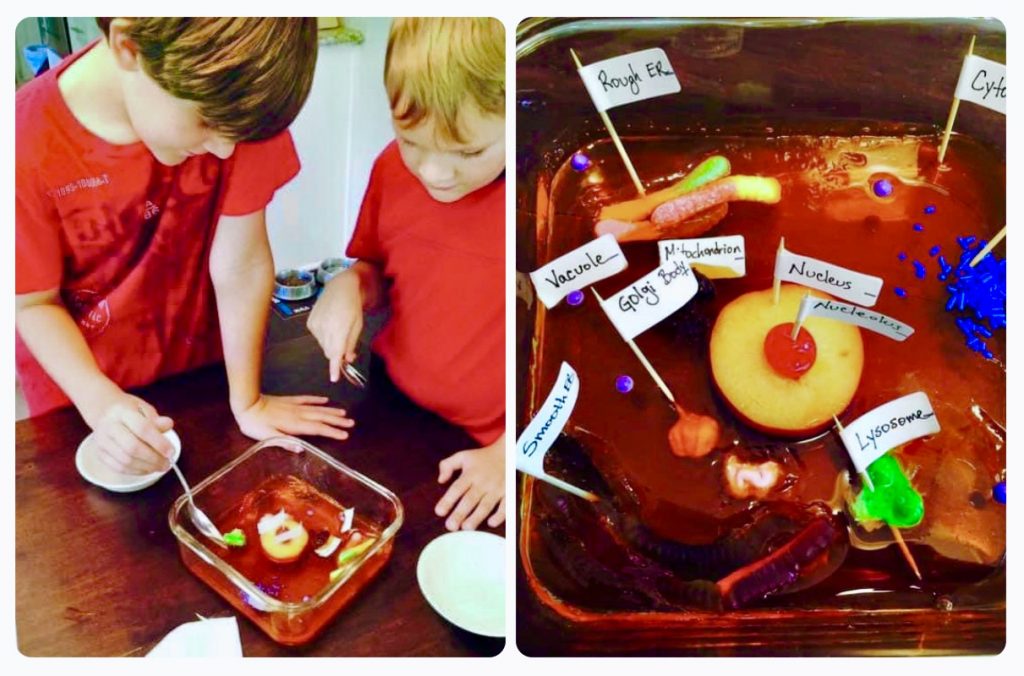
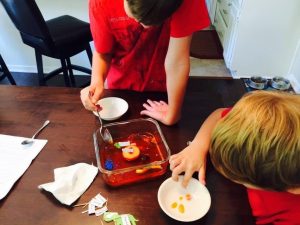
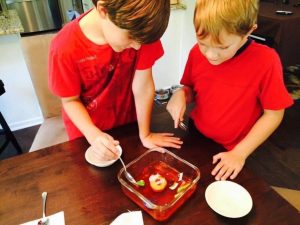
Years ago, kicked off our “Not Back to School” week with a fun and memorable project: the Jello Cell Activity! My kids are teenagers now, but they still remember how much they enjoyed it.

Cells are the building blocks of life. Every living organism, from plants to animals, is made up of trillions of cells, each containing organelles that perform essential functions, enabling the organism to thrive. With this activity, you and your children can create an edible cell model to explore the structure of cells in a fun, hands-on way! For more creative ideas and to download free first day questionnaires and photo signs, be sure to visit our First Day of School page!

For a wealth of tips, creative activities, and hands-on experiments that bring science to life, explore our Hands-onScience Page. Discover how to make learning science an engaging and enjoyable experience for your children!

Materials Needed*

  • Small strips of paper
  • Tape
  • Toothpicks
  • Jell-O mix
  • Water
  • Glass square container
  • Pineapple Ring
  • Maraschino Cherry
  • Fruit roll-ups
  • Sugar-coated gummy worms
  • Smooth gummy worms
  • Gumdrops
  • Sixlets
  • Raisins
  • Gobstoppers
  • Sprinkles

*Use any variation of candy to represent if you can’t locate an ingredient. Get creative!

BTDT Homeschool was created with a heartfelt mission: to empower and give back to the secular homeschool community.

Are you just starting your homeschooling journey?
We’re here to help! Through our informative podcasts, blog posts, daily inspiration, and a wide range of free printable tools, we aim to empower you. Begin with our 10 Steps to Getting Started in Homeschooling page and Homeschooling FAQ to make the transition smoother. If you’re guiding a young child, explore our How to Homeschool Kindergarten page to make those first steps special. For middle schoolers, don’t miss our Middle School page packed with tips and advice. And if you’re heading into the high school years, our Essential Steps to Homeschoo High School will guide you every step of the way!

Instructions:

Enjoy your delicious and educational Jell-O cell model!

  1. Labeling the Organelles
    • Write the name of each organelle on a small strip of paper.
    • Tape each strip to a toothpick.
    • Insert the toothpick into the gelatin next to the corresponding organelle to label the components of your cell model.
  2. Preparing the Jell-O
    • Make the Jell-O according to package instructions, but use about ¾ of the recommended water.
    • This ensures your “cytoplasm” will be sturdy enough to hold all of the “organelles” without shifting or sinking to the bottom of the cell.
  3. Creating the Cell Model
    • Pour the Jell-O into a container (a glass square container works well).
    • The container will act as the cell wall or membrane.
    • For a plant cell, you may want to use lime Jell-O.
  4. Setting the Jell-O
    • Place the Jell-O in the refrigerator for about 45 minutes, until it is almost set but not quite.
    • While waiting, prepare the other supplies.
    • Cut the nectarine in half, ensuring the pit stays in one half.
    • Cut the fruit roll-ups into ¼ inch strips.
  5. Adding the Organelles
    • Nucleus: Slip the pineapple ring with cherry into the center of the Jell-O representing the nucleus
    • Rough and Smooth ER (endoplasmic reticulum): Place some sugar-coated and smooth gummy worms around one side of the nucleus to represent rough and smooth ER.
    • Centrosomes: Push a few gumdrops around the nucleus
    • Lysosomes: Scatter sixlets through the Jell-O for lysosomes.
    • Mitochondria: Use raisins to represent the mitochondria.
    • Vacuoles: Use Gobstoppers to symbolize vacuoles.
    • Ribosomes: Sprinkle the Jell-O with sprinkles to represent ribosomes.
    • Golgi bodies: Fold your fruit roll-ups into accordions and insert them as Golgi bodies.
  6. Finalizing the Cell Model
    • Allow the Jell-O to set for about 20 more minutes, or until fully set.

This hands-on project will not only provide a fun and engaging activity in your homeschool, but it also teaches your children to visualize and understand the structure of cells in a creative way.

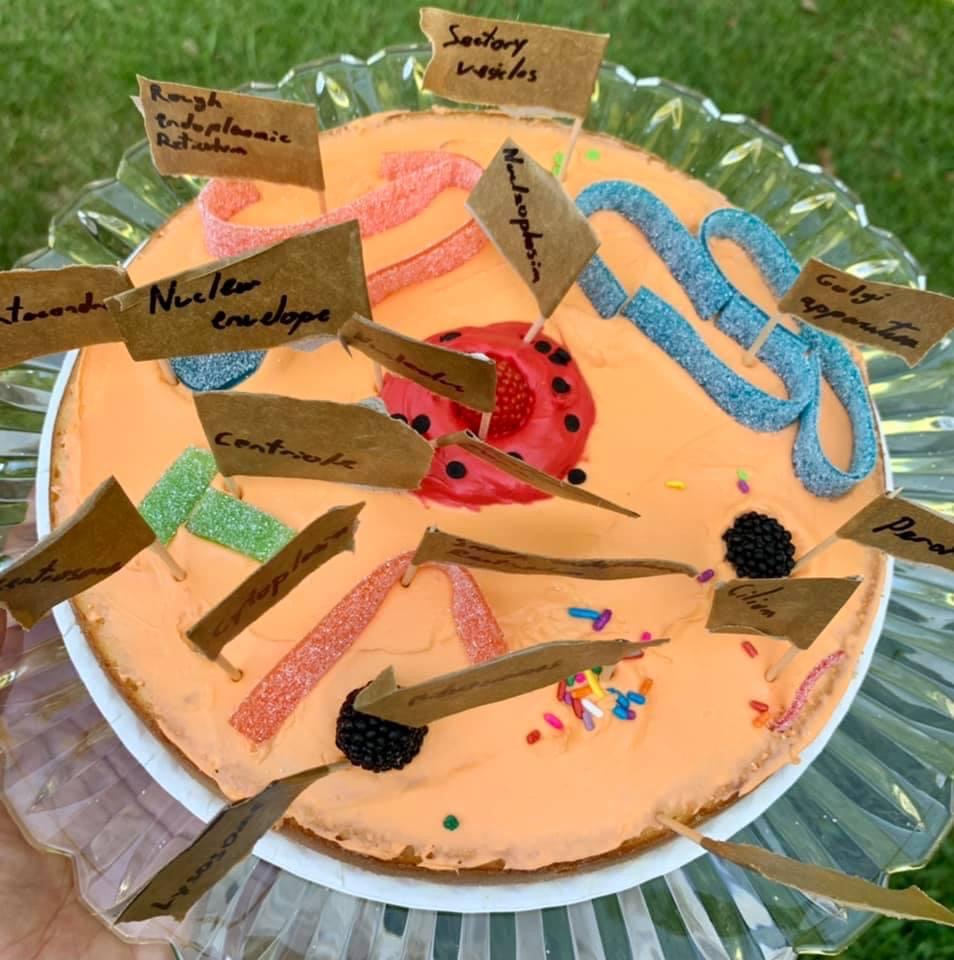
Years later, when my son was in Homeschool High School Biology, he created a “Cell Cake” without my help. He had a lot of fun with this one too!

Years later, when my son did Homeschool High School Biology, he created a “Cell Cake” without my help. He had a lot of fun with this one too!
Learn more about cells >>

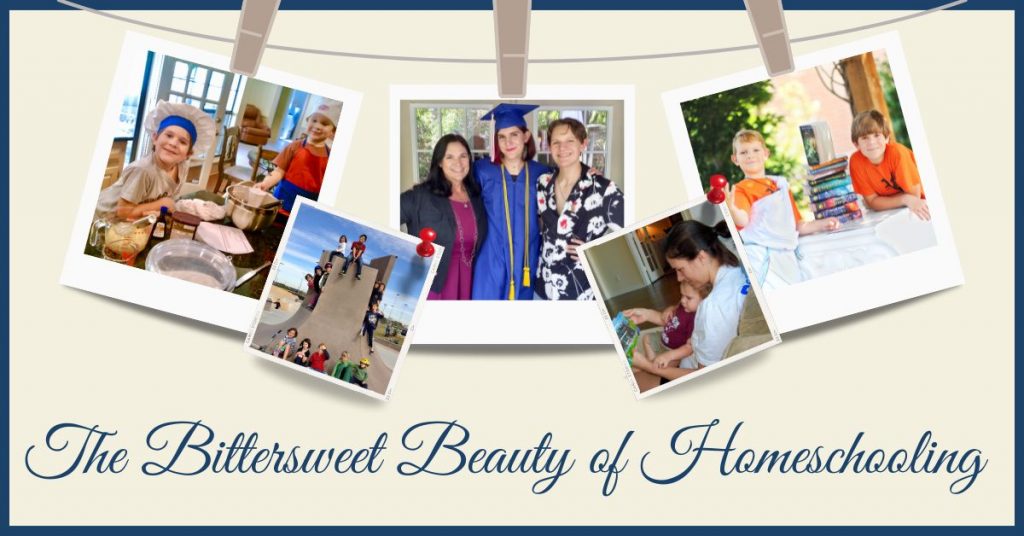
The Bittersweet Beauty of Homeschooling: From Little Feet to Flying Wings

The Bittersweet Beauty of Homeschooling

As I reflect on our homeschooling journey, I realize how profoundly it has shaped our lives and the special connection we share. 

I have always chosen to homeschool my two children, and even after going through a divorce, I remained committed to homeschooling them. This allowed me the privilege to witness their growth and development up close, fostering a closeness that would not have been possible had they been in school every day.

Although the dynamics of my relationship with my older teenager and young adult are different, it remains a close and cherished connection. 

I often find myself longing for the days when their little feet would patter down the hallway and they would jump into my bed for morning snuggles.

When you become a parent, there are challenges and genuine concerns that weigh heavily on a parent’s mind. 

One of the most profound worries that grips the hearts of parents is the constant concern for the well-being of their child. Every fever, cough, or bump brings a wave of anxiety, and the responsibility to ensure your little one’s health can be overwhelming. The struggles of sleepless nights with a baby, the uncertainties of weaning and potty training, and the never-ending energy of a toddler can be exhausting.

We strive to create a nurturing environment, filled with warmth and support, to help our children thrive and embrace the world with confidence.

As they grow, we become increasingly concerned about their emotional and social development. Choosing to homeschool can come with countless additional concerns and anxieties. Making financial sacrifices, selecting curricula, managing an ongoing flow of projects, fostering emotional intelligence, and facing the relentless mountain of laundry. We worry about teaching them to read, mastering multiplication tables, and writing essays. The days can be mentally and physically exhausting.

Yet, within the chaos, there are moments of pure magic that make your heart swell, like when they wake up on their birthday and you announce that school is canceled just for them. You try to savor the magic of such occasions, but time slips away so quickly.

BTDT Homeschool was created with a heartfelt mission: to empower and give back to the secular homeschool community.

Through our informative podcasts, blog posts, daily inspiration, and a wide range of free printable tools, we aim to empower you on your homeschooling journey.

New to Homeschooling>>>

You embrace their passions wholeheartedly – music lessons, dance classes, sports, science projects, and exciting field trips. You stretch your monthly budget to accommodate these experiences because they are the very reason you have chosen this life. 

Yet, amidst the whirlwind, it becomes difficult to see just how swiftly everything is moving when you are right in the middle of it all.

Suddenly, those late-night nursing sessions, morning cuddles, daily read-alouds, handwriting lessons, math problems, museum workshops, and park days transform into months and years.

That little person who once cuddled up with their favorite book is now a young adult with a life of their own.

The chaos and laughter that once reverberated throughout your home now give way to silence and solitude.

You are no longer the parent of a young child who relies on you for everything, and the prospect of letting go feels like a knife.

You find yourself wondering how time has slipped away so quickly. It never seems like there was enough of it.

Did you teach them the right lessons? Did you read enough books to them? Did you spend enough time playing together? Do they truly understand just how much you love them? What could you have done better as a parent?

It wasn’t a perfect journey. 

Parenting never is.

But you were there.

That is why you chose homeschooling—to be present and witness it all. It may not make the process any easier, but you were there, and both you and your children are better for it.

Parenting is the most remarkable experience of my life. It’s filled with wonder and heartache.

But it never feels like enough time.

To all the exhausted parents with young children struggling to navigate the chaos, I urge you to cherish every moment and every stage.

Because one day, all those wild days filled with read alouds, messy projects, field trips, co-ops, phonics lessons, math tears, enchanting birthday mornings, snuggles, and weekday sleepovers will come to an end.

And then, you’ll be left hoping that you did enough things right, so that when your children spread their wings and take flight, they soar with resilience, confidence, and love.

Free Audiobooks for Kids

Audiobooks
Audiobooks

Audiobooks are a fantastic way to entertain your kids with classic and modern stories, introduce them to historical periods and situations that are different from their own, and help them practice listening comprehension. If you’re trying to prep dinner or working one on one with another child, setting your child up with a good audiobook can give you the space to get things done. 

We’ve listed some websites below where you can find FREE audiobooks for your children (including plenty of children’s classics) and a few recommendations to get you started.

PBS Kids

If your little one loves picture books, they’ll be delighted by Read-Along with PBS Kids! This playlist features children’s books read by the author or a notable person, including former first lady Michelle Obama and US poet laureate Joy Harjo.

Spotify

Through Spotify, you can access tons of free audiobooks in the public domain, such as:

Beyond these beloved classics, Spotify also has a whole Spoken Word section dedicated to audiobooks, poems, and other non-musical resources. You will need to create a free Spotify account to access any of these items.

BTDT Homeschool was created with a heartfelt mission: to empower and give back to the secular homeschool community.

Through our informative podcasts, blog posts, daily inspiration, and a wide range of free printable tools, we aim to empower and assist you on your homeschooling journey. We believe in equipping you with valuable resources to make your homeschooling experience successful and enjoyable.

Storynory

The Storynory podcast offers short weekly audiobooks based on folklore and fairy tales from around the world. Popular retold tales include stories by The Brothers Grimm, Hans Christian Andersen, and Aesop.

Use these links to listen to the podcast on one of these popular listening platforms:

Lit2Go 

Another robust collection of public domain literature, Lit2Go leans into education by rating all of its titles on the Flesch-Kincaid grade level scoring system. This makes it easy to filter and browse audiobooks by grade level, from kindergarten through 12th grade. You can play books by chapter with the on-page audio player and read along with the text, or download the audiobook, often through a link to iTunes U. 

Harper Kids

The Harper Kids YouTube channel features author read-alongs of popular picture books in their Storytime Read Aloud playlist. Older children who are ready for chapter books may enjoy The Graveyard Book, read by the author Neil Gaiman.

Free Audibooks on LibriVox

LibriVox has created thousands of free classic audiobooks read by volunteers. Like Spotify, all books available on LibriVox are open to the public domain, so you won’t find some of the more modern stories that are still under copyright.

While not all of these audiobooks are suitable for a younger child’s listening comprehension level, LibriVox has many books by authors who are taught in elementary and middle school, including:

OverDrive/Libby

Through OverDrive’s app Libby, you can access audiobooks available from your local library and listen to them online. Because every library purchases a different selection of books, the children’s books you can find will vary depending on where you live. Also, you’ll need to have a library card to access OverDrive and Libby.

Try this Library Finder to find the library nearest to you that uses OverDrive. If your local library does not use Overdrive, ask them if they offer a similar audiobook platform. Most libraries do, and they will be happy to get you set up!

Top 50 Books for New Readers
Finding the right book is essential in helping to ignite your young readers and set them up for a life-long love of literature. On this booklist, we have picked a selection of short, illustrated books that were our family favorites and are perfect for children launching into independent reading.

Story Seeds

This podcast features short stories written by kids ages 6 to 12 in collaboration with bestselling children’s authors. A few fun episodes to start with include:

Plus, if your child has a story idea of their own, they can submit it to the Story Seeds podcast here!

Middle School Books
Favorite Books for Middle Schoolers
As parents and homeschoolers, we understand the importance of nurturing a lifelong passion for literature and finding the right books can make all the difference. This is especially important during those middle school years as your kids begin to read more hearty chapter books on their own. We’re giving you strategies to ignite a love for reading during this age and share an exciting list of books that helped our kids fall in love with literature.

Homeschooling FAQ Guide

Homeschool FAQ
apples, books, school-2276269.jpg

FAQ Guide

Frequently Asked Questions
about
Homeschooling

Are you considering or ready to homeschool your child but feeling a bit uncertain? Don’t worry, you’re not alone! As seasoned homeschool moms, we understand the doubts and concerns that can arise when embarking on this educational journey. But fear not, we are here to help you navigate through your questions and provide encouragement every step of the way! Meet Maria & Nicole.

Through our informative podcasts, blog posts, daily inspiration, and a wide range of free printable tools, we aim to empower and assist you on your homeschooling journey. We believe in equipping you with valuable resources to make your homeschooling experience successful and enjoyable.

Follow us on Facebook and Instagram for daily tips and inspiration

What is homeschooling?

Homeschooling is a legal method of providing personalized instruction and support for your child’s learning needs, outside the confines of a traditional brick-and-mortar classroom. Typically facilitated by a parent, this approach to education allows you to tailor the learning experience to suit your child’s individual requirements. Many people choosing to homeschool need to take time to shift their views on and the ideas they have been taught about education. We find this especially difficult for our ex-public school teacher friends that have chosen to homeschool. To help you rediscover what education can mean to you and your family, visit What is a Homeschool Lifestyle?

Do I need to be a certified teacher to homeschool my child?

While it’s important to check the laws in your state, let me reassure you that, at present, teacher certification is not a mandatory requirement for homeschooling in the United States. However, some states do require some level of accountability or supervision. Make sure to familiarize yourself with the specific regulations in your area to ensure compliance. Check your State Homeschool Laws

Getting Started Page>>
BTDT HOMESCHOOL PODCAST

New episode every Thursday to guide you on your homeschool journey:

Do I really have what it takes to homeschool my children?

Whether you’re a new homeschooler or have been homeschooling for years, every one of us has encountered fear and worry at some point. Learn how to Gain Confidence as a Homeschooler and building the confidence in yourself as we give you the tools you’ll need when you’re struggling and needing assurance.

Do I need a dedicated classroom space?

Creating a designated classroom space is not a prerequisite for homeschooling success. Although many homeschooling families do have a dedicated area for teaching, it’s entirely possible to provide an enriching educational experience without one. What truly matters is fostering an atmosphere for learning and finding a peaceful corner where your child can study without distractions. Remember, the world itself can be your classroom, offering limitless opportunities for exploration and discovery! See picture of our homeschool room through the years

How do I know what to teach my child?

While it’s crucial to follow your state’s educational requirements, remember to consider your child’s individual skill levels as well. If your child has been struggling in their current grade level or a particular concept, it’s perfectly acceptable to take a step back and revisit subjects they find challenging. If you’ve recently unenrolled your child from a traditional school environment, be sure to take time to Deschool. Don’t skip this crucial step!

Deschooling

Homeschooling allows you the flexibility to tailor their education to suit their specific strengths and weaknesses. On the other hand, if your child excels academically, homeschooling provides ample opportunities to challenge and engage them at a higher level or incorporate hands-on projects. Embrace the beauty of customization in homeschooling! Download your FREE PreK – 12th skills Checklist

How do I socialize my child?

Socialization is one of the biggest myths of homeschooling.  If anything, because we had a shorter school day and this more time for events/activities, I actually found we were too social and sometimes struggled to find time to get chores done at home! Learn more about Socialization and get your FREE Socialization Guide.

What if I need to teach a subject I struggle with or never learned?

Many homeschoolers encounter this situation at some point during their teaching journey. Don’t worry! There are many ways to overcome this challenge. Most curriculum come with scripted teacher guides so don’t let them accumulate dust on the bookshelf! You can also utilize online instruction or textbooks to fill in the gaps in your own knowledge. Additionally, you may find local brick and mortar a-la-cart classes or tutors. You can also enlist the help of other family members who have expertise in those subjects or join a homeschool co-op. Another wonderful approach is to learn alongside your child—a win-win situation that fosters a love of learning and strengthens your bond.

Learn the Top 10 Things we’ve learned over the years

Will my house be overrun with science experiments?

Balancing homelife and homeschooling your kids can be challenging. Before many of us even started homeschooling, we may have already struggled to manage motherhood, your marriage or partner, housework, meals, work, adult friendships, and other commitments. Adding in homeschooling is just another level to an already high demand on your time. It might mean that something has to give. Learn 12 Ways to Balance Your Home and Homeschool.

Where can I find homeschooling resources and curriculum?

A simple Google search will reveal a plethora of suppliers catering to every subject under the sun. However, let us save you some time and effort. This page and podcast episode, 7 Steps to Choosing Homeschool Curriculum is an excellent starting point to help you begin to narrow down your search!

The internet is a wealth of information when it comes to educational materials. This resource will spare you the daunting task of sifting through countless products that don’t work for you or your children saving you time and money. We’ve created a Curriculum Guide to help narrow down the search. Keep in mind that what worked for a friend’s child may not be a good fit for you or possibly what worked for your older child may not be a fit for your younger child. We will help you to find the perfect curriculum for your entire family. We will be doing some curriculum unboxing so stay tuned as we show you pages of curriculum up close!

Curriculum Guide >>

I have my curriculum and resources—what now?

Take a deep breath and trust your instincts. Remember, you have been teaching your child since the day they entered your family, and no one knows them better than you. Homeschooling is simply the next step in this journey. Don’t worry about making mistakes or feeling ill-equipped—we’ve all been there! Take time to review your materials thoroughly, read the provided instructions, and dive in. If you encounter challenges along the way (and trust me, we all do!), reach out to other homeschooling parents for support and assistance. Facebook groups and local homeschool groups are fantastic sources of information and encouragement.

Facebook Resource Group
Homeschool Freebies & Support  for PreK-12
Free Instant download resources from all over the world in this Facebook Group:
Homeschool Freebies PreK-12th

What if my child is special needs?

You may be a parent that has considered or chosen to homeschool because your child has a learning disability or needs an accommodation to help them learn. You may have battled your school system for a curriculum suitable to accommodate them. You may have asked yourself, “Can I homeschool my child?” The answer is a resounding, “Yes!” Learn more about homeschooling a child with a learning difference

But what about high school and college?

Making a unique and personalized high school experience for each of them has been one of the coolest things – and you too can do that for your teenager! Doing so will offer an opportunity to not only equip them with everything they need for college or the workforce but also tailor their education to match their individual interests and passions. With our High School Series you can provide your children with a solid foundation and the necessary skills to thrive in life: at their 4-year universities, the workplace, and personally.

12-Part High School Series
Making a 4-year plan to graduation and beyond

In conclusion

Pay attention to your child’s learning habits and style and adapt your teaching methods to suit their needs. Remember, homeschooling involves a lot of trial and error, and there’s no one-size-fits-all formula. Be patient with both your student and yourself as you explore the right path for your family. If something doesn’t work, keep an open mind and change it up! Homeschooling allows you the flexibility to do this so use this to your advantage. Rest assured that by working towards providing the best education for your child, you are destined success!

Embrace this wonderful journey. While uncertainties may linger, know that you have the love, dedication, and support needed to create an incredible educational experience for your child. You’re not alone—we’re all here cheering you on, ready to share our experiences and wisdom. You’ve got this!

Navigating College Acceptance Letters

a book, read, college student-4126481.jpg

Navigating College Acceptance Letters

It’s that exciting time of year when college acceptance letters are starting to arrive! These letters hold the power to bring immense joy or disappointment to your homeschooler’s life. Remember, no matter what the outcome may be, your unwavering support is what truly matters.

To help you navigate the emotional roller coaster that comes with this process, we have some tips to make this journey more manageable for both you and your child.

Embrace Your Emotions, Stay Positive

As a parent, it’s natural to want the best for your child. Receiving a rejection letter can be tough on both you and your homeschooler. But remember, this is not a reflection of the job you did or their worth. Focus on your child’s needs and emotions, providing them with the support they need, regardless of the college acceptance letter’s contents.

Allow Your Child to Express Their Feelings

This is a significant moment in your child’s life, and they will experience a range of emotions, whether the news is positive or negative. Encourage them to express their feelings openly and honestly. By being there for them, you provide a safe space for them to work through their emotions and grow stronger.

Even exceptional students with impressive achievements may face rejection from highly selective schools. If your child is accustomed to academic success, a rejection might come as a surprise. Help them see beyond this setback, reminding them that there are other great options awaiting their response.

Similarly, if your child receives an acceptance letter from their dream university, they might feel both elated and apprehensive. Support them in embracing their happiness while addressing any anxiety or doubt that arises. Transitioning to college is a big step for anyone, and it’s natural to feel some nervousness and jitters.

Sensitive handling of the news is crucial, regardless of the outcome. Many students share their college application plans with friends, driven by the initial excitement. However, once the results arrive, it’s important to handle the information delicately.

If your child doesn’t get accepted into their dream school, remember that facing the rejection publicly can be challenging for them. Offer your support, as they might find it difficult to confront the reality that their envisioned future didn’t align with the current situation. This support extends to family members and friends.

If your child is admitted to their first-choice college, encourage them to handle the news with grace. While celebrating their achievement is wonderful, it’s important to avoid excessive flaunting on social media or insensitive conversations. Other students who haven’t received their desired acceptance may feel resentment, and it’s essential to be mindful of their emotions. Remind your child about the importance of tactful communication and discourage them from bragging openly. Remember, there are still many high school students waiting for their own college news, and this can increase their anxiety or frustration.

Create a Plan Together

Both acceptance and rejection call for a plan of action. If your child receives rejections from certain schools but is still awaiting responses from others, review the timelines associated with those institutions. This will help you determine whether it’s time to explore alternative options or wait for further news.

If there are no pending applications, it’s time to explore alternative colleges or universities that offer programs your child is interested in. Even though it may be challenging for them, encourage them to stay positive and keep moving forward.

Getting Started Page
BTDT HOMESCHOOL PODCAST

New episode every Thursday to guide you on your homeschool journey:

BTDT Homeschool Podcat

BTDT Homeschool was created with a heartfelt mission: to empower and give back to the secular homeschool community.

Through our informative podcasts, blog posts, daily inspiration, and a wide range of free printable tools, we aim to empower you on your homeschooling journey.

New to Homeschooling>>>

APPLESPOTIFYAMAZONYOUTUBE

For cases where your child is accepted by a school but has yet to hear from their top choice, carefully review the acceptance packet for important deadlines and required documentation. Make note of these dates and be prepared to complete the necessary paperwork promptly if the other school does not accept them.

If your child is admitted to their dream college, it’s time to get that paperwork started! Dive into the acceptance packet together and begin completing all the required forms and tasks. Some aspects, like dorm preferences, may be on a first-come, first-served basis, so prompt action is important. By getting this work done efficiently, you can free up time for other exciting preparations.

Prepare Financially

Now that you know where your child will be attending college, it’s time to start thinking about tuition. While the financial aid package might not be finalized yet, there are steps you can take to supplement their college funds. Explore various scholarships and grants that are still accepting applications. 

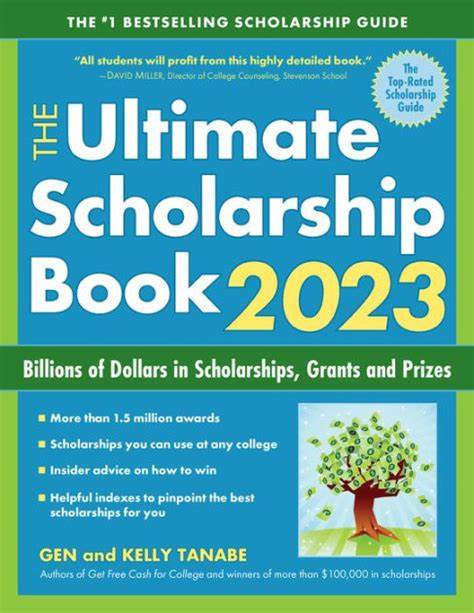
The Ultimate Scholarship Book.is updated twice per year. It has several thousand scholarship listings, and the opening chapters are gold for the advice they give. There are 13 indexes in the back so you can search by race, major and disability status separately. Get all the CASH to pay for College! $$

This is a perfect opportunity to support your child in pursuing additional financial assistance.

Remember, you are not alone in this journey. Reach out to fellow homeschooling parents and join online communities. Together, you can create a supportive network that encourages and uplifts each other during this momentous time.

Celebrate the Achievements

Throughout this process, take moments to celebrate your child’s accomplishments. Whether they receive acceptances or face rejections, remind them of their unique strengths, talents, and potential. College admissions can be unpredictable, but what truly matters is the person your child has become through their homeschooling journey.

graduate, girl, happy-6671173.jpg

Encourage them to embrace every opportunity, to continue pursuing their passions, and to remain resilient in the face of challenges. Their path to success is not defined by a single college acceptance letter, but by the knowledge, skills, and character they have developed over the years.

You have played an integral role in their education, and your dedication and support have prepared them well for the next chapter of their lives. Embrace this moment with encouragement, knowing that their future is bright and full of endless possibilities.

Congratulations to you and your homeschooler on this incredible milestone!

The Ultimate North Texas Homeschool Resource List

BTDT Homeschool North Texas Resources

BTDT Homeschool North Texas Resources

Maria and Nicole at BTDT Homeschool are thrilled that our podcast, website, books and free downloads, and blog posts have been an inspiration and resource for thousands of homeschoolers. As an effort to continue to pay it forward to our own community in North Texas, we decided to create this resource list dedicated to helping our local families find secular resources that align with their family values. This evolving list is a work in progress, and we encourage you help us to continue to update it with accurate information.

Check back frequently as this list will be updated frequently. We will do our best to ensure accuracy. If you know a secular or neutral resource in North Texas that is not included or a correction, please send us an email with that information to: info@btdthomeschool.com

Keep in mind that many businesses offer resources afterschool and during the weekends. This list is dedicated to homeschool resources during the school year and during normal public-school hours or a specific resource beloved and catering to homeschoolers. If you don’t see what you are looking for, feel free to take the initiative and reach out to local businesses and ask them to start a homeschool class. There is a good chance that you could create a new resource in your community: Art, Music, Sports, Engineering, Tutoring, and more.

Stay proactive and be your child’s advocate!

BTDT Homeschool was created with a heartfelt mission: to empower and give back to the secular homeschool community.

Through our informative podcasts, blog posts, daily inspiration, and a wide range of free printable tools, we aim to empower you on your homeschooling journey.

New to Homeschooling>>>

APPLESPOTIFYAMAZONYOUTUBE

What are some reasons to choose a Secular Resource?

Choosing a secular resource may be the right fit for you. It may surprise some people but there are Religious and non-Religious families that seek out secular resources. It isn’t just atheist homeschoolers who are looking for these resources for their children. Families usually chose secular resources or choose a secular curriculum for the following reasons:

1. You aren’t religious

There are many homeschool families who homeschool for non-religious reasons.  There is a growing body of homeschoolers who do not follow any sort of religion. These families usually homeschool due to schedule issues, or because they believe their children can get a better education at home. Some homeschoolers may have been raised in a religious home and want to move away from a religion they see as harmful, but still have a personalized faith they want to teach their children on their own terms.

2. Maybe you are religious but not Evangelical Christian

Many homeschoolers of faith are Islamic, Jehovah’s Witness, Jewish, Wiccan, Catholic, Mormon, or follow some another religion. Many homeschool resources follow traditional Evangelical Christian beliefs, which may not be a fit for your family when you follow another religion.

3. You don’t follow the young earth theory

The most common reason homeschoolers seek out secular curriculum and local resources is that they do not believe in the Young Earth science theory. Young Earth theory states that the entire world is somewhere between 6,000 and 10,000 years old, with the world just getting started with the first recorded stories from the Bible. Current scientific theory refutes this claim offering evidence that the earth was formed somewhere around 4.5 billion years ago.

4. You may have a special circumstance

For many families that have a child with special needs or learning differences, homeschooling may be the best choice.

5. You may want to prepare your children like a traditional school

The traditional school system is secular. Religion is not taught in most public schools and universities. Some parents would rather keep religious instruction separate from other subjects in school or teach all world religions equally.

Top 25 Homeschool Essentials
See photos of our homeschool room over the years>>

The Ultimate North Texas Homeschool Resource List
For Secular and Neutral Homeschoolers

The Ultimate North Texas Homeschool Resource List

Learn more: Homeschool Lesson Planner & Ultimate Organizer
Learn more: Book of Centuries for the Secular Homeschooler

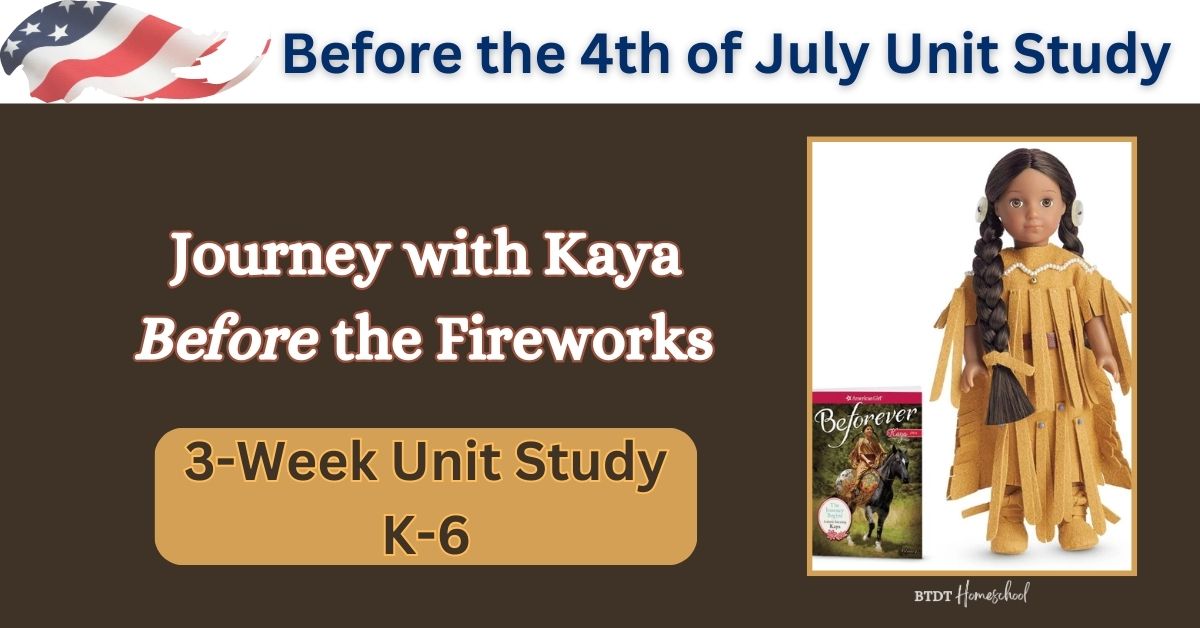
FREE Unit Study: Before the 4th of July

Before the 4th of July Unit Study
This 3-week Unit Study is an American Girl history exploration with Kaya to help your child understand what it was like to live as a Native American in the 1700’s.

As we gather to celebrate the Fourth of July, it’s crucial to recognize that the roots of this significant occasion extend far beyond the year 1776 when the colonists declared their independence. The land we now call America was and continues to be inhabited by a remarkable and diverse array of Indigenous peoples, whose vibrant cultures and deep connections to the land shaped the very fabric of this nation. Within this context, we embark on a captivating journey with Kaya, an extraordinary American Girl doll who represents the rich tapestry of Native American heritage.

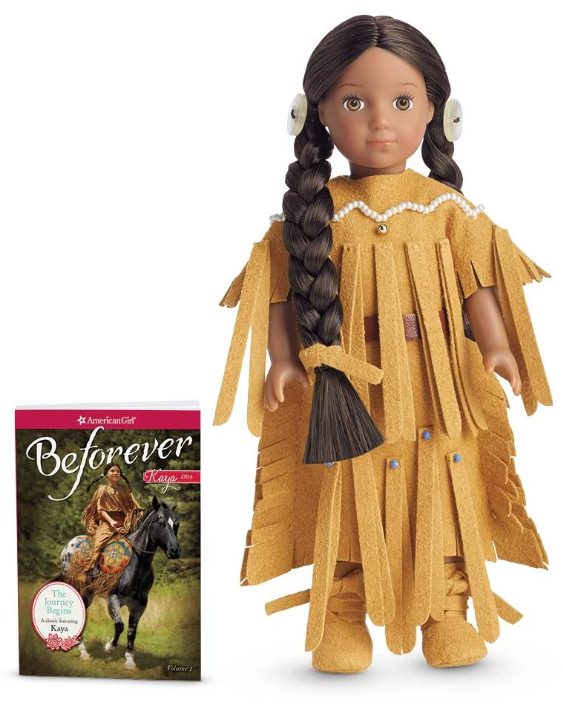
Kaya 2014 Mini Doll & Book (American Girl)

Kaya stands as a unique figure among the American Girl dolls, as she embodies the spirit and resilience of the Indigenous peoples who inhabited this land long before European settlers arrived. As we explore Kaya’s life, it’s important to remember that the sight of a European person in her world would have been an unexpected and unfamiliar encounter. Through the exploration of her story, we gain a profound understanding of the profound influence Indigenous cultures have had on America’s history and identity.

Throughout this homeschool unit study, we will begin on an enlightening adventure, honoring the legacy of the Indigenous peoples while celebrating the significance of the Fourth of July. We will discover the intricacies of Kaya’s life and the astonishing diversity of Indigenous cultures that thrived and continue to thrive across this vast land. By understanding and appreciating the Indigenous heritage that predates the birth of the United States, we deepen our connection to the collective narrative that shaped this nation.

Join us as we journey through the pages of history, weaving together the stories of Indigenous peoples, the struggles for freedom, and the rich cultural tapestry that makes America truly unique.

START HERE:

Begin to read Kaya: An American Girl: 1764:

You don’t need to complete all the books before beginning this unit study. Read 1-2 chapters a day to your children. There’s a good chance they may love them so much that they want to keep reading all the way through the 8-book set. This set will take you and your children on an incredible journey through history as you explore Kaya’s life and learn about elements of Nez Perce customs and language.

Incorporate Play:

Kaya’s Paper Dolls

Have fun with Kaya and her friends with outfits to cut out and scenes to play:

6 pc Horse Play Set

Have fun with these detailed miniature toy horses while you read about Kaya’s life.

The narrative of the story immerses readers in Kaya’s character, providing an authentic depiction of her Native American culture in the year 1764. As the story unfolds, Kaya undergoes significant personal growth, evolving into a compassionate individual who gains wisdom from her errors. Her cherished horse assumes a vital role, symbolizing an inseparable bond with Kaya’s existence. Ultimately, “Meet Kaya” imparts a valuable lesson about transcending youthful arrogance and discovering redemption through acts of selflessness. The very source of pride, embodied by the swift and magnificent horse, becomes the catalyst for a remarkable rescue.

Week 1

  1. Map: Mark Kaya’s home on the map. Explain that, unlike later girls, we don’t know exactly where Kaya lived. In fact, she probably didn’t have homes in the traditional sense, since the Nez Perce were a nomadic people who moved around to follow hunting opportunities. Explore an interactive map of Native American tribes across the United States.
  2. Timeline: Find 1764, as well as 1754, the year Kaya was born and record in the Book of Centuries. Check out the internet to find other events happening in America at about that time and record those too. The most significant of these for Kaya would have been more and more European settlers coming to the Northwest. Discover important events in Native American history on this timeline and record them in your Book of Centuries to help gain perspective of these events.
  3. Craft: Choose a craft to work on while you’re studying Kaya. Consider either a leather craft or beading, both of which would have been popular among the Nez Perce. Remind your child that beads would have been very valuable and obtained by trading with European settlers. So much of the beautiful beading was so intricate and may be difficult for your young child. This natural clay bead kit would be a good alternative for young hands.
Leather Bag Craft Kit

BTDT Homeschool was created with a heartfelt mission: to empower and give back to the secular homeschool community.

Through our informative podcasts, blog posts, daily inspiration, and a wide range of free printable tools, we aim to empower you on your homeschooling journey.

New to Homeschooling>>>

Week 2

  1. Introduce the Founding Fathers, the Founding Mothers, and their contributions. Remind your child that Kaya would not have heard of these people.
  2. Explore and Learn about the Lewis and Clark Expedition from an Indigenous perspective. Remind your child that Kaya may have heard of Lewis and Clark, who came through the Northwest when Kaya was much older. Go outside and explore and teach your child to respect the natural world they encounter.
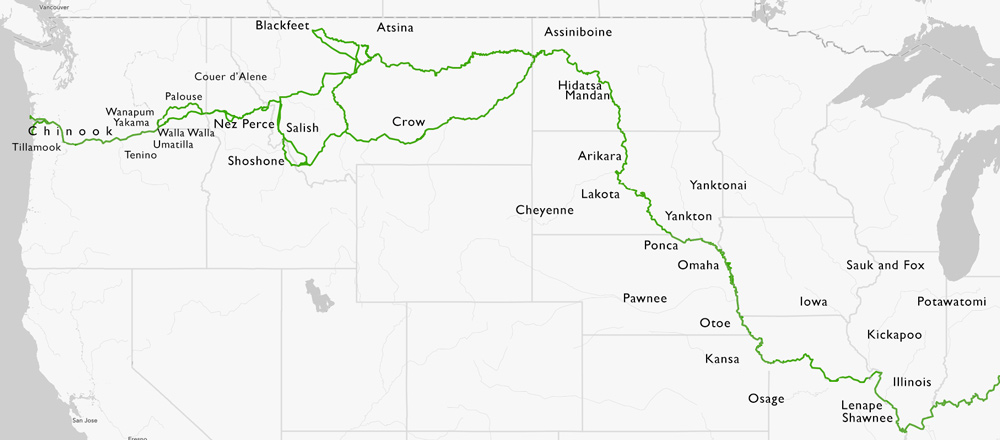
  3. Native Nations: Explore this map and all the Native American Nations that were encountered on the Lewis and Clark expedition.
  4. Act It Out: Have your children choose a scene or event from one of the books to act it out together.
Explore Native American Nations encountered by Lewis and Clark

Week 3

  1. Animals: Animals were a very important part of Kaya’s life. Have you child consider how the life of your pet is different from the animals in Kaya’s tribe. Learn about the unique relationship between Native Americans and their animal counterparts.
  2. Video: Watch this 2 min YouTube video on How Appaloosa Horses Keep Nez Perce Traditions Alive. See their horses and meet a a Nez Perce Family and see their traditional clothing and the pride of a young girl wearing her great grandmother’s dress.
  3. Nez Perce Today: Learn more about the Nez Perce Tribe and the Nimiipuu people that live in north-central Idaho with more that 3,500 citizens.
  4. Learn More: Visit The Nex Perce Museum in person or on their website and learn more about the objects they made and used over the past 10,000 years. Basketry, beadwork, ceremonials, toolmaking, language, their daily rhythms and cycles and how they were attuned to the land, and more!
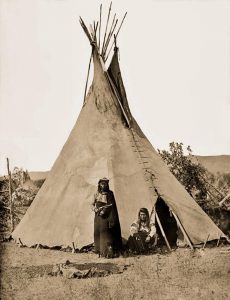
Nez Perce Dugout Canoe and Tipi
20 Best Tips for Teaching Reading and Spelling

Homeschool Lesson Planner and Ultimate Organizer

BTDT Homeschool Lesson Planner and Ultimate Organizer

We’re excited to introduce the BTDT Homeschool Lesson Planner & Ultimate Organizer—your go-to companion for a smoother, more organized homeschooling experience! With 187 pages designed to adapt to your unique needs, this planner is all about making your homeschooling journey more manageable and enjoyable.

Think of this planner as your personal assistant, crafted specifically for homeschooling families like yours. Whether you’re teaching one child or juggling a bustling household, this tool helps you stay organized and track your progress with ease.

No more scattered records or forgotten tasks! Our planner brings everything together in one place, so you can access all your important information throughout the school year. It’s user-friendly and flexible, whether you prefer a child-led unschooling approach or a more scheduled routine.

With our planner, you can focus on what really matters—educating your children—while staying on top of your homeschooling schedule. It’s designed to help you track anything and everything, from your lessons and grades to extracurricular activities and budget, giving you a clear overview of your children’s progress every step of the way.

See a Video Walk-Through:

Page by Page view of the BTDT Homeschool Lesson Planner & Ultimate Organizer

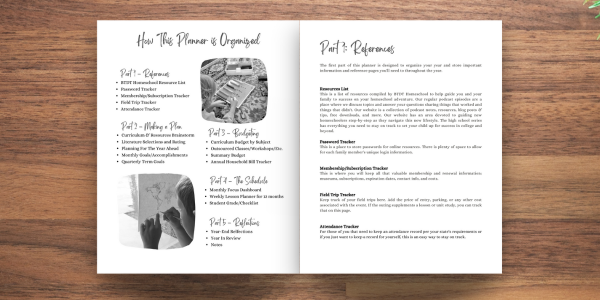
What is included in this planner?

We’ve taken the time to include detailed instructions on how to use this planner effectively, but let me give you a friendly overview of how it’s organized: 

PART 1: REFERENCES  

  • Resources list – Including: Homeschool Podcast Episodes, 10 steps to Getting Started, Tips & Inspiration, 12 Steps to Homeschooling High School, Free Downloads including Transcript Templates, and more to help in your homechool journey.  
  • Password Tracker 
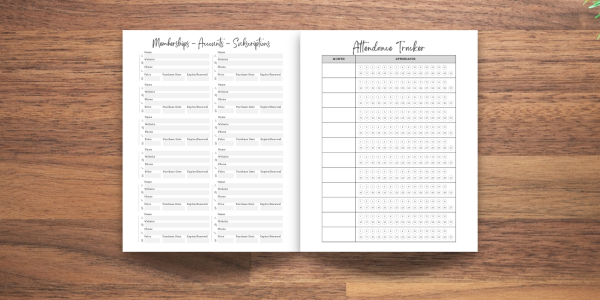
  • Membership/Subscription Tracker 
  • Field Trip Tracker 
  • Attendance Tracker 

BTDT Homeschool was created with a heartfelt mission: to empower and give back to the secular homeschool community.

Through our informative podcasts, blog posts, daily inspiration, and a wide range of free printable tools, we aim to empower you on your homeschooling journey.

New to Homeschooling>>>

APPLESPOTIFYAMAZONYOUTUBE

PART 2: MAKING A PLAN  

  • Curriculum & Resources Brainstorm 
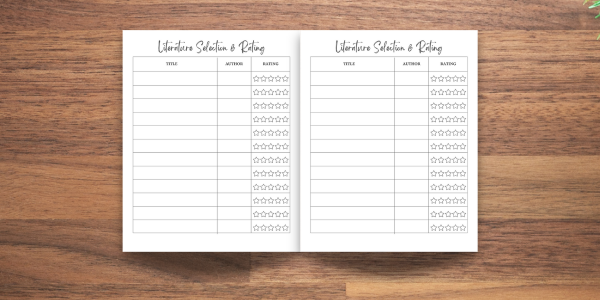
  • Literature Selections and Rating 
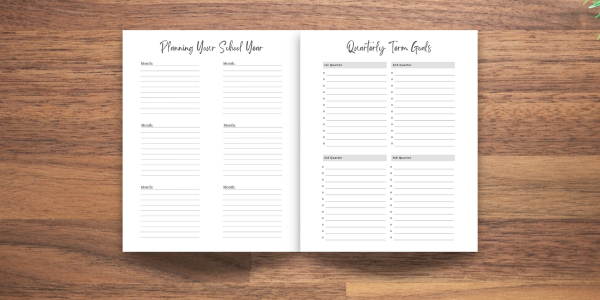
  • Planning For the Year Ahead 
  • Monthly Goals and Accomplishments 
  • Quarterly Term Goals 

PART 3: BUDGETING  

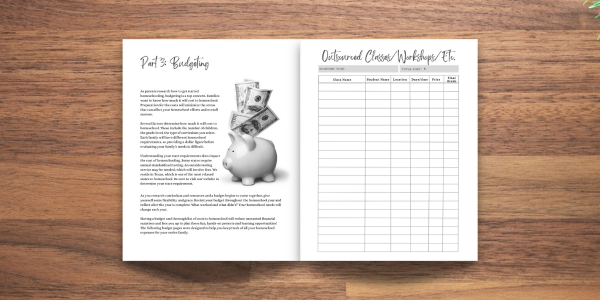
As parents research how to get started homeschooling, budgeting is a top concern. Families want to know how much it will cost to homeschool. Preparation for the costs will minimize the stress that can affect your homeschool efforts and overall success.  

Several factors determine how much it will cost to homeschool. These include the number of children, the grade level, the type of curriculum you select. Each family will have different homeschool requirements, so providing a dollar figure before evaluating your family’s needs is difficult. Your Homeschool Budget is listed in an organized way so you can stay on track and not bust the bank:  

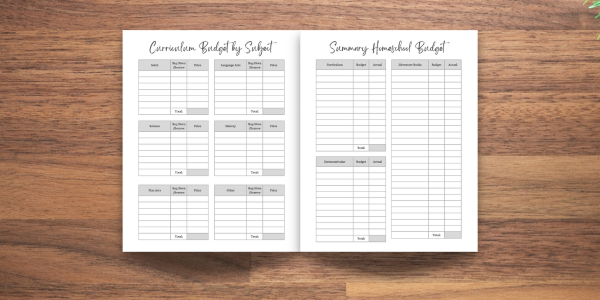
  • Curriculum Budget by Subject  
  • Outsourced Classes/Workshops/Etc.  
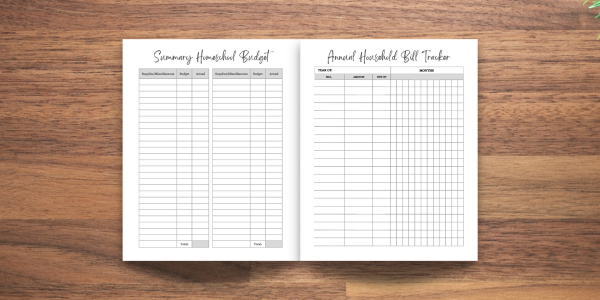
  • Summary Budget  
  • Annual Household Bill Tracker  

PART 4: THE SCHEDULE  

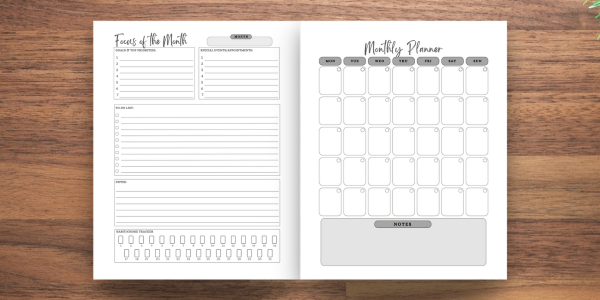
  • Monthly Focus Dashboard 
  • Monthly Schedule 
  • Weekly Lesson Planner for 12 Months 
  • Grade Tracker/Student Checklist 

PART 5: REFLECTIONS  

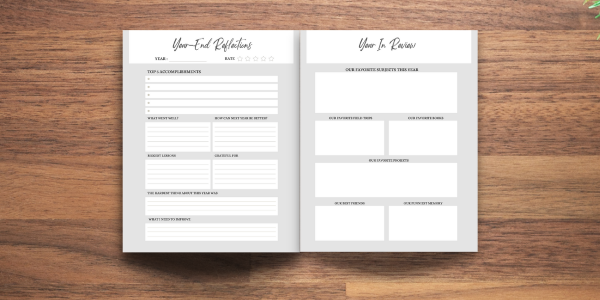
  • Year-End Reflections 
  • Year In Review 
  • Notes 

Get yours today!

Transform your homeschooling journey by staying organized and on track with the ultimate organizer! With 187 pages, staying on top of your schedule has never been easier, giving you the freedom to focus on what truly matters – educating your children.

Homeschool Lesson Planner and Ultimate Organizer

$11.95

LGBTQ+ History

LGBTQ+

LGBTQ+ History

Teaching LGBTQ+ history, inclusion, and celebrating differences in your Homeschool

Are you just starting your homeschooling journey? We’re here to help! Begin with our Get Started in Homeschooling page and Homeschooling FAQ to make the transition smoother. If you’re guiding a young child, explore our How to Homeschool Kindergarten. to make those first steps special. For middle schoolers, don’t miss our Middle School page packed with tips and advice. And if you’re heading into the high school years, our Essential Steps to Homeschool High School will guide you every step of the way!

The LGBTQ+ population is often left out of history curricula. It’s a fact that LGBTQ+ History is documented as far back as 9,000 BCE!

World History Timeline of LGBTQ+ History

LGBTQ+ people are everywhere, and it’s important for children to grow up seeing them as normal people. As homeschool parents, we have a responsibility to provide our children with a full and inclusive education. With almost 8 billion people in the world, diverse in skin color, language, culture, and life experiences, it’s essential to equip our children with the knowledge and vocabulary to understand and respect others.

Embracing Differences

Exposing young children to diversity teaches them about kindness and inclusivity. This can be a natural part of everyday living as children develop relationships outside their family. Another way to ensure diversity in children’s lives is by choosing toys, books, and media that reflect all types of people. Ensure that these include images of people with various backgrounds, ages, abilities, and characters that break stereotypes.

Use art supplies that come in a wide range of skin, eye, and hair colors.

Addressing LGBTQ+ Inclusivity

It’s disappointing that the LGBTQ+ community is often overlooked in educational curricula. However, as parents, we have a wonderful opportunity to teach our children about this essential topic in a warm and age-appropriate way. Inclusivity, diversity, and respect are values that can shape the next generation. Join us as we explore simple ways to help your child become a world citizen and LGBTQ+ ally.

Incorporating toys like this Inclusive Doll Set help children become more aware of differences from an early age

Strategies for Teaching Inclusivity

1. Open and Honest Conversations

  • Create a safe space where your child feels free to ask questions about differences openly and honestly as they arise.
  • Answer their questions truthfully, and if you don’t know the answers, seek them out together.
  • Use language and relatable examples that suit their age.
  • Emphasize the importance of treating everyone with respect and kindness, regardless of gender identity or sexual orientation.

2. Introduce LGBTQ+ Inclusive Books

3. Celebrate LGBTQ+ History and Achievements

  • LGBTQ+ history is often overlooked, but we can bring its stories to life for our children.
  • Highlight LGBTQ activists, artists, and leaders who have made positive impacts on our world.
  • For older children, offer LGBTQ history reference books that provide valuable insights and can serve as references for research projects.

BTDT Homeschool was created with a heartfelt mission: to empower and give back to the secular homeschool community.
Podcasts, Blog posts, Daily Inspiration, and a wide range of Free Resources

New Episode every Thursday!

Latest Episode:

4. Encourage Active Support and Allyship

  • Empower your child to become an active ally. Teach them to challenge stereotypes, stand up against discrimination, and support their LGBTQ+ peers.
  • Emphasize the importance of embracing diversity, fostering inclusivity, and creating a world where everyone feels valued and accepted.

You have the power to guide your children to become compassionate and informed Global Citizens. Help them shape a future where everyone is embraced and respected for exactly who they are.

Many parents want to raise children who are LGBTQ+ allies, but it isn’t always clear how to do that, particularly for non-LGBTQ+ families. This can feel difficult, especially if you weren’t taught that in your own household growing up. This Age-Appropriate Booklist will help your child gain the tools they will need. Teaching your children to be an effective ally is about teaching them to listen to others. Her’es my youngest ally getting ready for a Pride Parade:

Raising Allies!

Recommended Books

The following collection of books will help your children learn about the struggles and triumphs of the LGBTQ+ community. They promote respect for diversity, teach about bias and prejudice, and encourage social action. Below, you’ll find age-appropriate recommendations, including both fiction and nonfiction, as well as historical resources.

Categories:

Recommended Books:
Ages 4-8

This is the perfect age to normalize LGBTQ+ people and relationships. Consider how you speak about relationships with your kids as well. Use neutral and inclusive language as much as possible. This way your kids are accepting of other people they will meet, but it will also help them accept themselves if they are LGBTQ+.

Heather Has Two Mommies is a great read for children of two mommies, two daddies, or for any kid whose parents want their child to learn about families different from their own.

Non-Fiction

  1. This Day in June
  2. When You Look Out the Window: How Phyllis Lyon and Del Martin Built a Community
  3. Pride: The Story of Harvey Milk and the Rainbow Flag (also download the FREE Pride discussion guide pdf)
  4. Sewing the Rainbow
  5. Stonewall: A Building. An Uprising. A Revolution
  6. Who Are You?: The Kid’s Guide to Gender Identity
  7. It Feels Good to Be Yourself: A Book About Gender Identity
  8. I Am Jazz

Fiction

  1. Heather Has Two Mommies
  2. Love Makes a Family
  3. And Tango Makes Three
  4. Stella Brings the Family
  5. Uncle Bobby’s Wedding
  6. Papa, Daddy, and Riley
  7. Prince & Knight
  8. Maiden & Princess
  9. King & King
  10. When Aidan Became a Brother
  11. Red: A Crayon’s Story
  12. A Day in the Life of Marlon Bundo
  13. A Day of Pride
  14. From the Stars in the Sky to the Fish in the Sea
  15. Sparkle Boy
  16. Julian is a Mermaid
  17. Love is Love
  18. Rainbow: A First Book of Pride
  19. A Family is a Family is a Family
  20. In Our Mother’s House
  21. We Are Family
  22. The Bravest Knight Who Ever Lived
  23. Promised Land Tales Series

Ages 9-12

Ages 9 to 12 is the time when lots of people start to realize they are part of the LGBTQ+ community. It’s so important to continue to provide your kids with stories with diverse characters.

George is a sweet book that has helped a lot of kids struggling to understand identity. When conflict arises and George feels like everything is falling apart for her, she isn’t sure where to turn, so she turns to her friend Kelly, who is supportive, caring, and compassionate with George. She doesn’t judge or care about what others will say – she encourages George to be herself.

Non-Fiction

  1. Gay & Lesbian History for Kids: The Century-Long Struggle for LGBT Rights, with 21 Activities
  2. Queer Heroes: Meet 53 LGBTQ Heroes from Past & Present!
  3. Rainbow Revolutionaries: Fifty LGBTQ+ People Who Made History
  4. The Stonewall Riots: Coming Out in the Streets
  5. Pride: Celebrating Diversity & Community
  6. You Be You! The Kid’s Guide to Gender, Sexuality, and Family

Fiction

  1. Rick
  2. They She He Me: Free to Be!
  3. George
  4. Better Nate Than Ever
  5. Drama
  6. Ivy Aberdeen’s Letter to the World
  7. The Mighty Heart of Sunny St. James
  8. Star Crossed
  9. The Whispers
  10. Drum Roll, Please
  11. Gracefully Grayson
  12. Lily and Dunkin
  13. King and the Dragonflies
  14. Lumberjanes
  15. The Misadventures of the Family Fletcher
  16. The Family Fletcher Takes Rock Island
  17. This Would Make a Good Story Someday
  18. Middle School’s a Drag, You Better Werk!
  19. The Misfits Series
  20. Hurricane Child
  21. The Mysterious Edge of the Heroic World
  22. The Parker Inheritance
  23. Witch Boy Graphic Novel Series
  24. Snapdragon
  25. The Tea Dragon Society
  26. The Moon Within

Ages 13+

Non-Fiction

  1. This Book Is Gay
  2. LGBTQ: The Survival Guide for Lesbian, Gay, Bisexual, Transgender, and Questioning Teens
  3. Beyond the Gender Binary
  4. The New Queer Conscience
  5. Queer Games Avant-Garde: How LGBTQ Game Makers are Reimagining the Medium of Video Games
  6. Out!: How to be Your Authentic Self
  7. David Bowie Made Me Gay: 100 Years of LGBT Music

Fiction

  1. How to Make a Wish
  2. Darius the Great Series
  3. Aristotle and Dante Discover the Secrets of the Universe
  4. Simon Snow Trilogy
  5. Cemetery Boys
  6. The Gentleman’s Guide to Vice and Virtue
  7. The House in the Cerulean Sea
  8. I Wish You All the Best
  9. If I Was Your Girl
  10. Simon vs The Homo Sapiens Agenda
  11. Leah on the Offbeat
  12. The Mermaid, the Witch, and the Sea
  13. Odd One Out
  14. The Stars and the Blackness Between Them
  15. Yesterday is History
  16. History is All You Left Me
  17. Juliet Takes a Breath
  18. Like a Love Story
  19. We Are Totally Normal
  20. The Dangerous Art of Blending In
  21. The Handsome Girl & Her Beautiful Boy
  22. The Miseducation of Cameron Post
  23. As The Crow Flies
  24. Not Your Sidekick
  25. Anger Is a Gift: A Novel
  26. The Summer of Jordi Perez (And the Best Burger in Los Angeles)
  27. You Should See Me in a Crown
  28. Like Water
  29. Beautiful Music for Ugly Children
  30. The Stars Beneath Our Feet
  31. The Priory of the Orange Tree
  32. Elatsoe
  33. The Invisible Life of Addie LaRue
  34. The Black Flamingo
  35. Heartstopper Series

LGBTQ+ History Books

A Queer History of the United States for Young People thoughtfully explores identities and social norms and discusses LGBTQ icons in American history, as well as already famous individuals whose sexualities or identities were only recently made public.
  1. The Gay Revolution: The Story of the Struggle
  2. Making Gay History: The Half-Century Fight for Lesbian and Gay Equal Rights
  3. The Lavender Scare: The Cold War Persecution of Gays and Lesbians in the Federal Government
  4. Pride: The Story of the LGBTQ Equality Movement – you’ll want a hard copy of this. It’s very visual and the ebook just doesn’t work quite right.
  5. Stonewall: Breaking Out in the Fight for Gay Rights
  6. We Are Everywhere: Protest, Power, and Pride in the History of Queer Liberation
  7. Our Gay History in Fifty States
  8. The Book of Pride: LGBTQ Heroes Who Changed the World
  9. A Queer History of the United States for Young People
  10. Gay & Lesbian History for Kids: The Century-Long Struggle for LGBT Rights, with 21 Activities
  11. A Little Gay History: Desire and Diversity Across the World
  12. Understanding and Teaching U.S. Lesbian, Gay, Bisexual, and Transgender History  (for teaching high school)
  13. Love Wins: The Lovers and Lawyers Who Fought the Landmark Case for Marriage Equality
  14. Transgender History, second edition: The Roots of Today’s Revolution
  15. The Stonewall Reader
  16. A Desired Past: A Short History of Same-Sex Love in America

1924 – The Society for Human Rights is founded by Henry Gerber in Chicago. It is the first documented gay rights organization.

1950 – The Mattachine Society is formed by activist Harry Hay and is one of the first sustained gay rights groups in the United States. The Society focuses on social acceptance and other support for homosexuals.

April 1952 – The American Psychiatric Association’s diagnostic manual lists homosexuality as a sociopathic personality disturbance.

April 27, 1953 – President Dwight D. Eisenhower signs an executive order that bans homosexuals from working for the federal government, saying they are a security risk.

September 1955 – The first known lesbian rights organization in the United States forms in San Francisco. Daughters of Bilitis (DOB). They host private social functions, fearing police raids, threats of violence and discrimination in bars and clubs.

July 1961 – Illinois becomes the first state to decriminalize homosexuality by repealing their sodomy laws.

September 11, 1961 – The first US-televised documentary about homosexuality airs on a local station in California.

June 28, 1969 – Police raid the Stonewall Inn in New York City. Protests and demonstrations begin, and it later becomes known as the impetus for the gay civil rights movement in the United States.

1969 – The “Los Angeles Advocate,” founded in 1967, is renamed “The Advocate.” It is considered the oldest continuing LGBTQ publication that began as a newsletter published by the activist group Personal Rights in Defense and Education (PRIDE) in 1966.

June 28, 1970 – Community members in New York City march through the local streets to recognize the one-year anniversary of the Stonewall riots. This event is named Christopher Street Liberation Day and is now considered the first gay pride parade.

1973 – Lambda Legal becomes the first legal organization established to fight for the equal rights of gays and lesbians. Lambda also becomes their own first client after being denied non-profit status; the New York Supreme Court eventually rules that Lambda Legal can exist as a non-profit.

January 1, 1973 – Maryland becomes the first state to statutorily ban same-sex marriage.

March 26, 1973 – First meeting of “Parents and Friends of Gays,” which goes national as Parents, Families and Friends of Lesbians and Gays (PFLAG) in 1982.

December 15, 1973 – By a vote of 5,854 to 3,810, the American Psychiatric Association removes homosexuality from its list of mental disorders in the DSM-II Diagnostic and Statistical Manual of Mental Disorders.

1974 – Kathy Kozachenko becomes the first openly LGBTQ American elected to any public office when she wins a seat on the Ann Arbor, Michigan City Council.

1974 – Elaine Noble is the first openly gay candidate elected to a state office when she is elected to the Massachusetts State legislature.

January 14, 1975 – The first federal gay rights bill is introduced to address discrimination based on sexual orientation. The bill later goes to the Judiciary Committee but is never brought for consideration.

March 1975 – Technical Sergeant Leonard P. Matlovich reveals his sexual orientation to his commanding officer and is forcibly discharged from the Air Force six months later. Matlovich is a Vietnam War veteran and was awarded both the Purple Heart and the Bronze Star. In 1980, the Court of Appeals rules that the dismissal was improper. Matlovich is awarded his back pay and a retroactive promotion.

1976 – After undergoing gender reassignment surgery in 1975, ophthalmologist and professional tennis player Renee Richards is banned from competing in the women’s US Open because of a “women-born-women” rule. Richards challenges the decision and in 1977 and the New York Supreme Court rules in her favor. Richards competes in the 1977 US Open but is defeated in the first round by Virginia Wade.

January 9, 1978 – Harvey Milk is inaugurated as San Francisco city supervisor, and is the first openly gay man to be elected to a political office in California. In November, Milk and Mayor George Moscone are murdered by Dan White, who had recently resigned from his San Francisco board position and wanted Moscone to reappoint him. White later serves just over five years in prison for voluntary manslaughter.

1978 – Inspired by Milk to develop a symbol of pride and hope for the LGBTQ community, Gilbert Baker designs and stitches together the first rainbow flag.

October 14, 1979 – The first National March on Washington for Lesbian and Gay Rights takes place. It draws an estimated 75,000 to 125,000 individuals marching for LGBTQ rights.

March 2, 1982 – Wisconsin becomes the first state to outlaw discrimination based on sexual orientation.

1983 – Lambda Legal wins People v. West 12 Tenants Corp., the first HIV/AIDS discrimination lawsuit. Neighbors attempted to evict Dr. Joseph Sonnabend from the building because he was treating HIV-positive patients.

October 11, 1988 – The first National Coming Out Day is observed.

November 30, 1993 – President Bill Clinton signs a military policy directive that prohibits openly gay and lesbian Americans from serving in the military, but also prohibits the harassment of “closeted” homosexuals. The policy is known as “Don’t Ask, Don’t Tell.

November 1995 – The Hate Crimes Sentencing Enhancement Act goes into effect as part of the Violent Crime Control and Law Enforcement Act of 1994. The law allows a judge to impose harsher sentences if there is evidence showing that a victim was selected because of the “actual or perceived race, color, religion, national origin, ethnicity, gender, disability, or sexual orientation of any person.”

September 21, 1996 – President Clinton signs the Defense of Marriage Act, banning federal recognition of same-sex marriage and defining marriage as “a legal union between one man and one woman as husband and wife.”

December 3, 1996 – Hawaii’s Judge Chang rules that the state does not have a legal right to deprive same-sex couples of the right to marry, making Hawaii the first state to recognize that gay and lesbian couples are entitled to the same privileges as heterosexual married couples.

April 1997 – Comedian Ellen DeGeneres comes out as a lesbian on the cover of Time magazine, stating, “Yep, I’m Gay.”

April 30, 1997 – DeGeneres’ character, Ellen Morgan, on her self-titled TV series “Ellen,” becomes the first leading character to come out on a prime-time network television show.

April 1, 1998 – Martin Luther King Jr.’s widow, Coretta Scott King, asks the civil rights community to help in the effort to extinguish homophobia.

October 6-7, 1998 – Matthew Shepard is tied to a fence and beaten near Laramie, Wyoming. He is eventually found by a cyclist, who initially mistakes him for a scarecrow. He later dies due to his injuries sustained in the beating.

October 9, 1998 – Russell Henderson and Aaron McKinney from Laramie, Wyoming, make their first court appearance after being arrested for the attempted murder of Shepard. Eventually, they each receive two life sentences for killing Shepard.

June 2003 – The US Supreme Court strikes down the “homosexual conduct” law, which decriminalizes same-sex sexual conduct, with their opinion in Lawrence v. Texas. The decision also reverses Bowers v. Hardwick, a 1986 US Supreme Court ruling that upheld Georgia’s sodomy law.

May 17, 2004 – The first legal same-sex marriage in the United States takes place in Massachusetts.

September 6, 2005 – The California legislature becomes the first to pass a bill allowing marriage between same-sex couples. Governor Arnold Schwarzenegger vetoes the bill.

October 25, 2006 – The New Jersey Supreme Court rules that state lawmakers must provide the rights and benefits of marriage to gay and lesbian couples.

May 15, 2008 – The California Supreme Court rules in re: Marriage Cases that limiting marriage to opposite-sex couples is unconstitutional.

November 4, 2008 – Voters approve Proposition 8 in California, which makes same-sex marriage illegal. The proposition is later found to be unconstitutional by a federal judge.

August 12, 2009 – Milk is posthumously awarded the Medal of Freedom by President Barack Obama.

October 28, 2009 – Obama signs the Matthew Shepard and James Byrd Jr. Hate Crimes Prevention Act into law.

September 20, 2011 – “Don’t Ask, Don’t Tell” is repealed, ending a ban on gay men and lesbians from serving openly in the military.

May 9, 2012 – In an ABC interview, Obama becomes the first sitting US president to publicly support the freedom for LGBTQ couples to marry.

September 4, 2012 – The Democratic Party becomes the first major US political party in history to publicly support same-sex marriage on a national platform at the Democratic National Convention.

November 6, 2012 – Tammy Baldwin becomes the first openly gay politician and the first Wisconsin woman to be elected to the US Senate.

June 26, 2013 – In United States v. Windsor, the US Supreme Court strikes down section 3 of the Defense of Marriage Act, ruling that legally married same-sex couples are entitled to federal benefits. The high court also dismisses a case involving California’s proposition 8.

October 6, 2014 – The United States Supreme Court denies review in five different marriage cases, allowing lower court rulings to stand, and therefore allowing same-sex couples to marry in Utah, Oklahoma, Virginia, Indiana and Wisconsin. The decision opens the door for the right to marry in Colorado, Kansas, North Carolina, South Carolina, West Virginia and Wyoming.

June 9, 2015 – Secretary of Defense Ash Carter announces that the Military Equal Opportunity policy has been adjusted to include gay and lesbian military members.

April 28, 2015 – The US Supreme Court hears oral arguments on the question of the freedom to marry in Kentucky, Tennessee, Ohio and Michigan. On June 26 the Supreme Court rules that states cannot ban same-sex marriage. The 5-4 ruling had Justice Anthony Kennedy writing for the majority. Each of the four conservative justices writes their own dissent.

July 27, 2015 – Boy Scouts of America President Robert Gates announces, “the national executive board ratified a resolution removing the national restriction on openly gay leaders and employees.”

May 17, 2016 – The Senate confirms Eric Fanning to be secretary of the Army, making him the first openly gay secretary of a US military branch. Fanning previously served as Defense Secretary Carter’s chief of staff, and also served as undersecretary of the Air Force and deputy undersecretary of the Navy.

June 24, 2016 – Obama announces the designation of the first national monument to lesbian, gay, bisexual and transgender (LGBTQ) rights. The Stonewall National Monument will encompass Christopher Park, the Stonewall Inn and the surrounding streets and sidewalks that were the sites of the 1969 Stonewall uprising.

June 30, 2016 – Secretary of Defense Carter announces that the Pentagon is lifting the ban on transgender people serving openly in the US military.

August 5-21, 2016 – A record number of “out” athletes compete in the summer Olympic Games in Rio de Janeiro. The Human Rights Campaign estimates that there are at least 41 openly lesbian, gay and bisexual Olympians – up from 23 that participated in London 2012.

November 9, 2016 – Kate Brown is sworn in as governor of Oregon, a day after she was officially elected to the office. Brown becomes the highest-ranking LGBTQ person elected to office in the United States. Brown took over the governorship in February 2016 (without an election), after Democrat John Kitzhaber resigned amidst a criminal investigation.

April 4, 2017 – The 7th Circuit Court of Appeals rules that the Civil Rights Act prohibits workplace discrimination against LGBTQ employees, after Kimberly Hively sues Ivy Tech Community College for violating Title VII of the act by denying her employment.

June 27, 2017 – District of Columbia residents can now choose a gender-neutral option of their driver’s license. DC residents become the first people in the United States to be able to choose X as their gender marker instead of male or female on driver’s licenses and identification cards. Similar policies exist in Canada, India, Bangladesh, Australia, New Zealand and Nepal.

June 30, 2017 – The US Department of Defense announces a six-month delay in allowing transgendered individuals to enlist in the United States military. Defense Secretary Jim Mattis writes that they “will use this additional time to evaluate more carefully the impact of such accessions on readiness and lethality.” Approximately a month later, President Donald Trump announces via Twitter that the “United States Government will not accept or allow Transgender individuals to serve in any capacity in the US Military…”

November 7, 2017 – Virginia voters elect the state’s first openly transgender candidate to the Virginia House of Delegates. Danica Roem unseats incumbent delegate Bob Marshall, who had been elected 13 times over 26 years. Roem becomes the first openly transgender candidate elected to a state legislature in American history.

February 26, 2018 – The Pentagon confirms that the first transgender person has signed a contract to join the US military.

March 4, 2018 – Daniela Vega, the star of Oscar-winning foreign film “A Fantastic Woman,” becomes the first openly transgender presenter in Academy Awards history when she introduces a performance by Sufjan Stevens, whose song “Mystery of Love” from the “Call Me By Your Name” soundtrack, is nominated for best original song.

March 23, 2018 – The Trump administration announces a new policy that bans most transgender people from serving in military. After several court battles, the Supreme Court allows the ban to go into effect in January 2019.

November 6, 2018 – Democratic US Representative Jared Polis wins the Colorado governor’s race, becoming the nation’s first openly gay man to be elected governor.

June 30, 2019 – New York Governor Andrew Cuomo signs a law banning the use of the so-called gay and trans panic legal defense strategy. The tactic asks a jury to find that a victim’s sexual orientation or gender identity is to blame for a defendant’s violent reaction. New York follows California, Rhode Island, Illinois, Nevada and Connecticut as the sixth state to pass such a law.

September 22, 2019 – Billy Porter becomes the first openly gay Black man to win the Emmy for best lead actor in a drama series.

February 10, 2020 – The 9th Circuit Court of Appeals upholds a ruling that the state of Idaho must provide gender confirmation surgery for Adree Edmo, an inmate in the custody of the Idaho Department of Correction. The ruling marks the first time a federal appeals court has ruled that a state must provide gender assignment surgery to an incarcerated person. According to the court opinion, “the gender confirmation surgery (GCS) was medically necessary for Edmo, and ordered the State to provide the surgery.” In July 2020, Edmo receives her gender confirmation surgery and a May 2020 appeal by Attorney General of Idaho, Lawrence Wasden, is denied as moot by the US Supreme Court in October 2020.

June 15, 2020 – The Supreme Court rules that federal law protects LGBTQ workers from discrimination. The landmark ruling extends protections to millions of workers nationwide and is a defeat for the Trump administration, which argued that Title VII of the Civil Rights Act that bars discrimination based on sex did not extend to claims of gender identity and sexual orientation.

August 26, 2020 – The 4th Circuit Court of Appeals rules in favor of former student, Gavin Grimm in a more than four-year fight over restroom policies for transgender students. The ruling states that policies segregating transgender students from their peers is unconstitutional and violate federal law prohibiting sex discrimination in education. The decision relies in part on the Supreme Court’s decision in June 2020, stating that discrimination against people based on their gender identity or sexual orientation violates Title VII of the Civil Rights Act of 1964. In 2021, the Supreme Court chooses not to review the opinion by the 4th US Circuit Court of Appeals.

November 3-4, 2020 – The general election results in three legislative firsts. Sarah McBride wins the Senate race for Delaware District 1, and will become the nation’s first person who identifies as transgender to serve as a state senator. Ritchie Torres and Mondaire Jones, elected to serve New York’s 15th and 17th districts, will become the first Black men elected to Congress who identify as gay. Mauree Turner wins the race for Oklahoma state House for District 88, and will become the first nonbinary state legislator in US history and first Muslim lawmaker in Oklahoma.

January 25, 2021 – President Joe Biden signs an executive order repealing the 2019 Trump-era ban on most transgender Americans joining the military. “This is reinstating a position that the previous commanders and, as well as the secretaries, have supported. And what I’m doing is enabling all qualified Americans to serve their country in uniform,” Biden said, speaking from the Oval Office just before signing the executive order.

February 2, 2021 – Secretary of Transportation Pete Buttigieg becomes the first openly gay Cabinet member confirmed by the Senate.

March 24, 2021 – Dr. Rachel Levine, assistant secretary for health in the Department of Health and Human Services becomes the first out transgender federal official to be confirmed by the Senate.

June 21, 2021 – Carl Nassib, a defensive lineman with the Las Vegas Raiders, becomes the first active NFL player in league history to announce that he is gay.

June 30, 2021 – The State Department announces it will be updating its procedures to allow applicants to self-select their sex marker for passports and that it “will no longer require medical certification” if an applicant’s self-selected sex marker doesn’t match the sex listed on other official identity documents.

October 27, 2021 – The State Department announces that the US has issued the first US passport with an X gender marker. “As the Secretary announced in June, the Department is moving towards adding an X gender marker for non-binary, intersex, and gender non-conforming persons applying for a U.S. passport or CRBA,” State spokesperson Ned Price says in a statement.

October 19, 2022 – The Social Security Administration announces that people can now choose their gender marker in their Social Security records.

LGBTQ is an acronym meaning lesbian, gay, bisexual, transgender and queer or questioning. The term sometimes is extended to LGBTQIA, to include intersex and asexual groups. Queer is an umbrella term for non-straight people; intersex refers to those whose sex is not clearly defined because of genetic, hormonal, or biological differences; and asexual describes those who don’t experience sexual attraction.

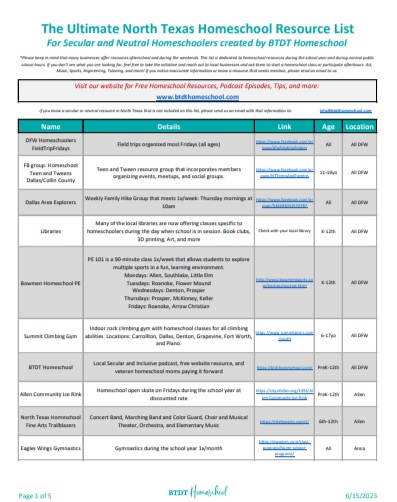
For more information about teaching inclusivity in your homeschool or becoming more politically active, visit HRC (Human Rights Campaign)

error

Listen to our latest episode & follow us :)

Scroll to Top