planning

035. Best and Worst Homeschool Buys

The Best and Worst Homeschool Buys

Best and Worst Homeschool Buys

The Best and Worst Homeschool Buys

We interviewed hundreds of seasoned homeschool moms with real stories and real advice. Tune in as we spill the beans on what worked, what didn’t, and how to make your homeschool budget count!

What do you regret buying early in your homeschool journey?
-What do you wish you purchased earlier?
-What are your best homeschool buys?

Episode 035:

Scroll Down for your FREEBIE:

Are you just starting your homeschooling journey? We’re here to help! Begin with our Get Started in Homeschooling page and Homeschooling FAQ to make the transition smoother. If you’re guiding a young child, explore our How to Homeschool Kindergarten. to make those first steps special. For middle schoolers, don’t miss our Middle School page packed with tips and advice. And if you’re heading into the high school years, our Essential Steps to Homeschool High School will guide you every step of the way!

Show Notes

Most homeschoolers are on a pretty strict budget. Many are in a single income household and don’t want to break the bank with curriculum and school supplies.

As a single mom on an extremely strict budget, I need to be very deliberate about what I spend my money on. I’m sure my budget is even tighter than most.

In a previous episode, we discussed whether or not you can afford to homeschool and we gave a lot of tips and tricks for saving money and cutting corners.  Homeschooling on a Budget. And it’s great to save money but you’re not really saving money if you’re buying things that you really don’t need. Sometimes we buy things that we really don’t need or wish we bought something different that would’ve worked better in our home school and spent our money more wisely. 

So in this episode, we went to the source and asked hundreds of seasoned homeschool parents how they *wish* they had spent their money better. What do they wish that they never bought? What do they wish they had bought sooner? Or which item that they bought did they maybe wish they bought a different version of? We discuss real tips from hundreds of real homeschoolers that have been there, done that. These are real parents with real advice, but we wanted to give them their privacy, so we have numbered each parent for anonymity. 

What do you regret buying early in your homeschool journey?  (5:18)

Mom 1

So many of the moms that we talked to said that they wished they never bought a full box curriculum.  Time and time again they said they wished they waited to see what worked best for their children and for themselves. Over and over again they said they would have saved 100s of dollars. A lot of people are super excited at the prospect of homeschooling but also overwhelmed at the same time and these nice shiny, full curricula packages can look like the answer to your prayers, but often, they don’t work for every child, or a child who is learning things at different levels.  
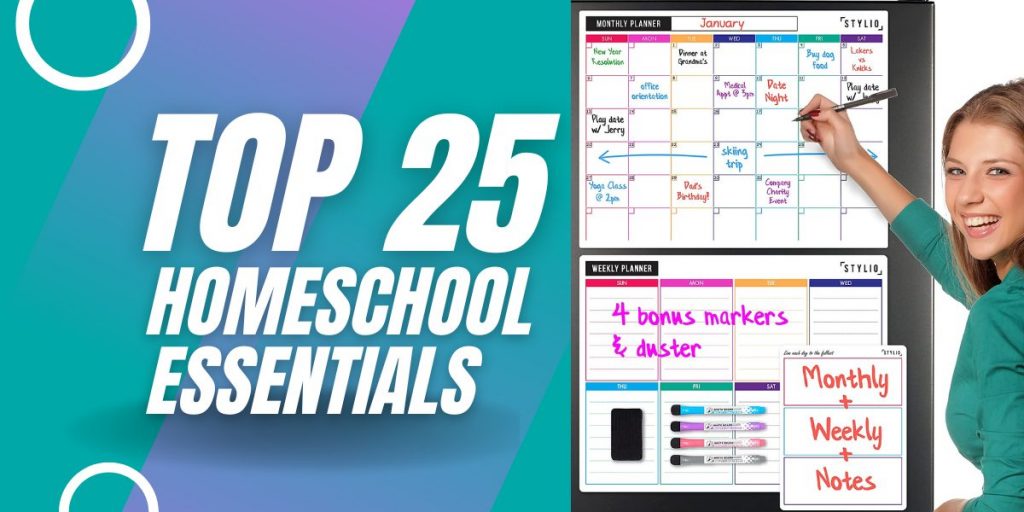
Top 25 Homeschool Essentials
Our TOP 25 Homeschool Essentials List that you should incorporate in your homeschool space to kick off your school year! Also, get your FREE Planner Templates!

Mom 2

Another mom was super excited about the curriculum she bought but later it turned out that her child hated workbooks and basically sitting still….ever! She laughs about it now, because she said the thing she bought first was something they never used. A lot of people think that workbooks and worksheets are the answer because that’s what they’ve seen coming home from school as homework, but those are often busywork.  Some kids do a lot better being more hands on or project based or by reading and verbally narrating what they’ve learned.

She said she wished she took more time to figure out the best way for them to structure their days and find out what her kids like best.  She said she learned that homeschooling doesn’t have to look like “school.”  There’s a reason that your child isn’t in school and that’s because it didn’t work for them or your family, so replicating public school at home doesn’t make sense. Creating your own space and structure is a major advantage of homeschooling but for a lot of people it really takes a mental switch! We have an episode called “what is a homeschool lifestyle” that we’ve gotten a lot of great feedback about that has helped so many new homeschoolers rethink education and what they want for their child and family so I would encourage you to listen to that. 

Mom 4

She regrets getting subscriptions and apps that say they claim they’ll be an easy solution and your child will learn everything they need to know. She said her child lost interest, and refused to do them. Anything with ‘easy’ in the title or description should be approached with caution. A lot of those programs are again filler and busywork- it looks like they are functional, but they aren’t.

Mom 5

She also regrets purchasing an AIO (All in One) curriculum.  She felt like she was capable and good at planning homeschooling for her preschool and elementary aged kids but got nervous about middle school and made a big purchase that bombed.

Trust your strengths!  There’s often not a whole lot different than these older grade levels and you know your kids by now if you have been homeschooling a while.  If you are new, consider trying before buying so you can figure out what style best matches your student. Many of them have sample lessons you can download for free and give it a go. Or possibly you could borrow a curriculum for a week from a friend and give it a trial run. 

There is all this talk about dry erase markers, but I find them incredibly difficult to wipe off laminated sheets or pockets. I prefer wet-erase markers that way, I can wipe them off completely clean with a damp cloth.
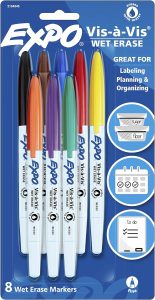
Mom 6

She regretted spending money on books without checking the library first or making sure they really loved them (like were they going to be well loved?).  We know as homeschoolers, we quickly run out of book space.  And when you have too many, it can be distracting and keeps you from finding the one you want sometimes.

She also recommended not purchasing things that could be obtained from her local buy nothing group- ask big, you never know what people are willing to share. This mom said that she wished that she asked more from her ‘buy nothing’ group because she later found out that there were so many people unloading books for free that she could’ve easily used. 

Buy Nothing Groups

Also, a homeschool group here in North Texas we’ve been a part of for many years has a lending library, and they lend everything! Microscopes, science kits, musical instruments, curriculum, hobby supplies, everything! Many people don’t take advantage of it. A lot of these things were donated by older members to use and help out. Homeschoolers are notorious for helping each other, so take advantage of that and pay it forward when it’s your turn. 

Mom 7

She bought all of these small baskets and classroom organizers. She said they just take up space now because they keep everything, they need each week in a laundry basket.

Mom 8

She said when her kids were 4 and 5 years old, she got a couple of school-desks (you know, seat + desk attached, with a rack under the seat for books) at a surplus store. She said her kids loved them, but never, not once, used them for anything truly “school work-ish. They ended up being outside toys eventually. 

Our kids learn so much about different countries and cultures with
Universal Yums!

Mom 9

She said that she regrets buying a full curriculum, classroom decorations, and coloring books. I am totally with her on the coloring books.  We somehow had a million- mostly because grandparents and other people love to give them, but my kids never wanted anything to do with them.  

Mom 10

She regrets buying a million cheap plastic pencil sharpeners and random Costco workbooks.  She also regrets buying a preschool curriculum for her oldest.  It’s easy to get swept up in getting started, but your later kids will benefit from not starting formal work so early and they end up learning all the same things anyway.
Episode 006. What Should Your Preschooler Know?
Download your FREE Preschool Routine Charts!

What do you wish you’d purchased earlier? (18:02)

Mom 1

She also wished that she had purchased a large, detailed map of the world and US first. She said it was the single most thing that I had been the most helpful when teaching. That and/or a globe are really helpful and much younger kids really get more out of these than we think they will. It’s a great reference when talking about geography, history, and science. Around the World in Your Homeschool

This is one of our favorite Maps to see all those details:
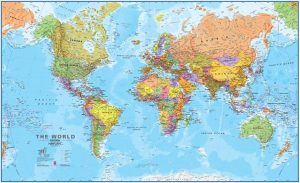
Laminated Giant Map of the World (46 x 80)

Mom 3

I wish I would have done more play based and adventures with my oldest back in Kindergarten and first grade versus curriculum/seated work. She also said that she wished she found like-minded secular homeschoolers early on in her journey. That’s one of the things that we have listed in our 10 Things episode– finding your people is really a key part of homeschooling.  You definitely need support and tapping into a local group early on can mean everything.

Mom 6

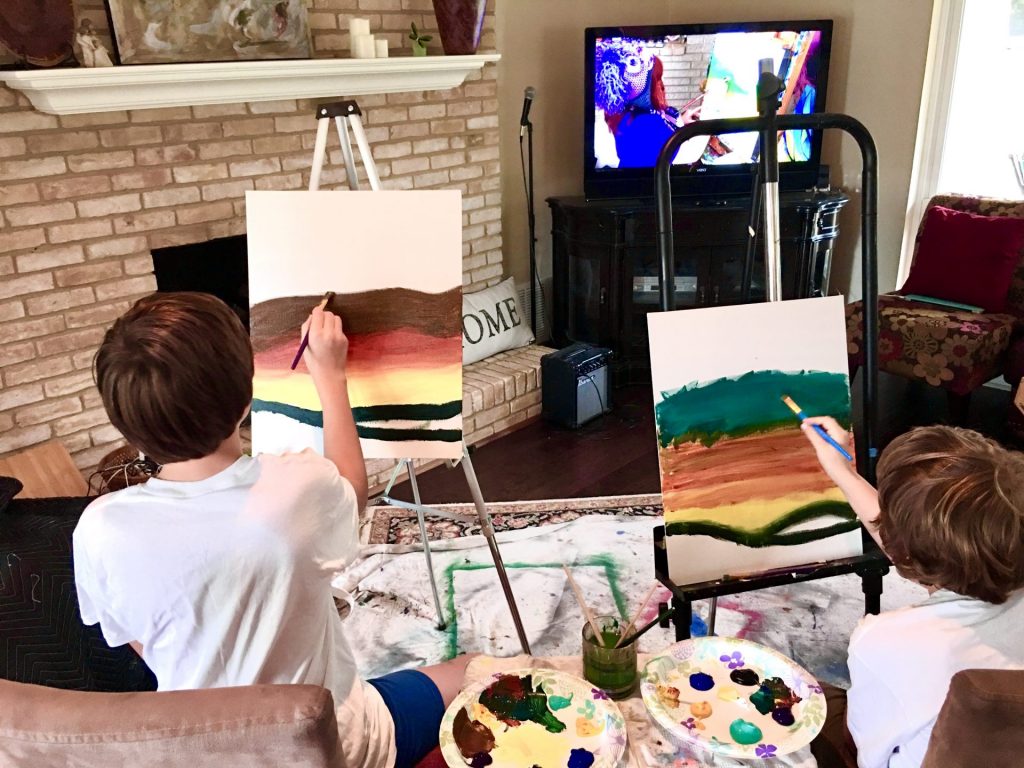
She said she wishes that she had encouraged her children’s love of learning and done more field trips, and always had science and art supplies on hand for those spurs of the moment projects.  This is something we’ve talked about in multiple episodes! We love field trips.  We’ve also talked a lot about making an art area somewhere in your house, where kids can just make things whenever the creativity strikes them.

Mom 10

She said she wished she had gotten sooner: electric pencil sharpener- is this a theme or what?  

Mom 11

She wished she had gotten school work display options earlier- she said she somehow thought they would have less items since they weren’t in school anymore and she quickly got overwhelmed.  She felt she was prouder of the things they created at home and really looked for a way to showcase those things.

She also mentioned library cards- not everyone knows your kids can get library cards when they are little.  They are usually free and part of your parent account.

Analog clocks and analog watches are really po;ular. A lot of times we don’t realize every clock in our house is digital until we start learning how to tell time.

Analog clocks and analog watches are really important to teach time. A lot of times we don’t realize every clock in our house is digital until we start learning how to tell time.
Timex Kids Watches

Analog Clocks kind of go along with Math Manipulatives, in general.  We are both big fans of lots and lots of math manipulatives for learning all kinds of concepts from counting to money. Check out of Top Math Games!

I’d also recommend Headphones- these can be great for listening to music or audiobooks for your kids or can be used to tune other family members out.  We are all together a lot so sometimes not having to hear a chatty sibling or someone eating can help preserve peace in your home.

These headphones were recommended by my teenager’s music appreciation professor at the local college and we LOVE THEM!
Sony MDR-ZX310AP ZX Series Wired On Ear Headphones with mic

What are your best homeschool buys? (28:24)

Mom 5

She said the 3 things she’s so happy she purchased day one and has used everyday are her printer, book binder and laminator. 

Homeschoolers that have this BOOK BINDER unanimously agree it was one of their favorite purchases:
MAKEASY Binding Machine, 21-Hole, 450 Sheets, Book Binding Materials Kit
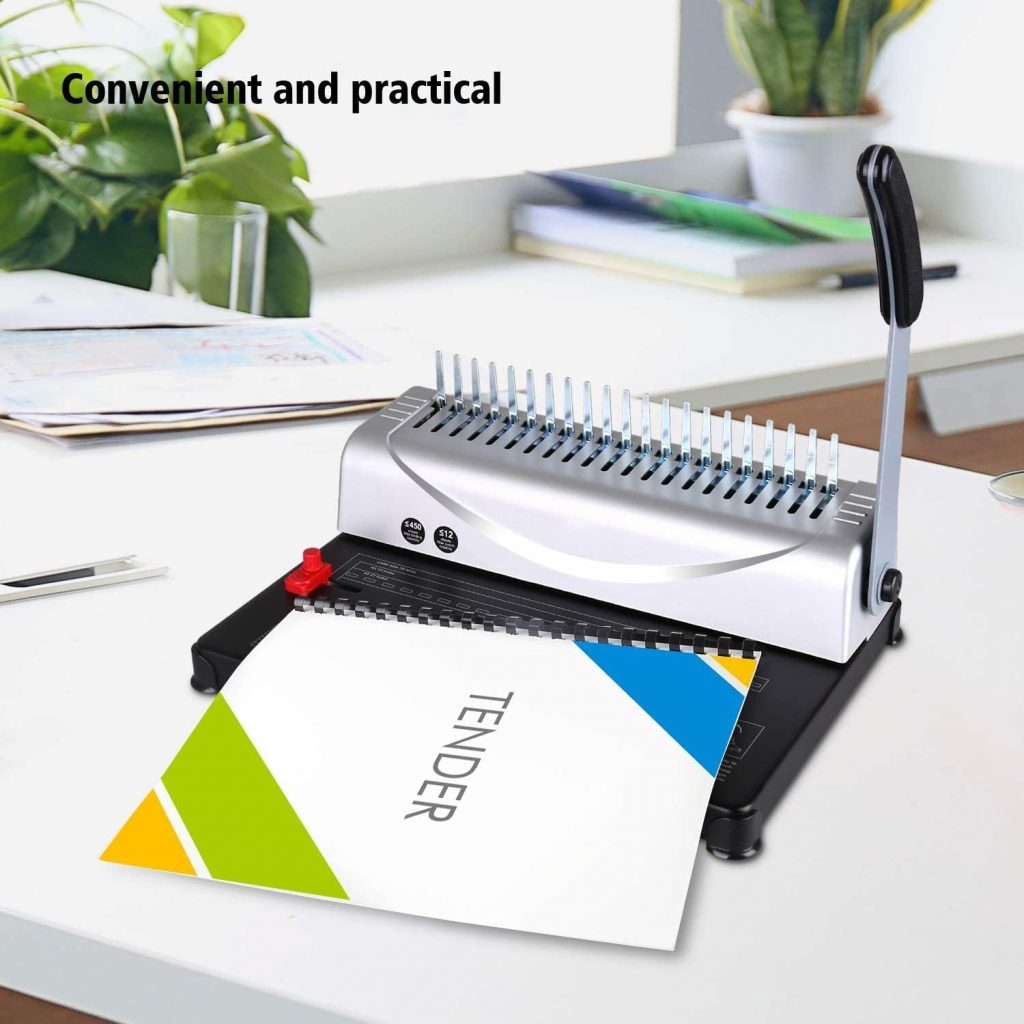
If you do not want to bind yourself, you can also take books to Office Depot and have them cut the binding off and 3-hole punch or spiral bind. 

She also said that she wished she would have purchased PDFs of everything when available instead of hard copies. She said she learned it can be a lot easier to print from a pdf and use between multiple kids and now she’s stuck scanning and printing pages from her hard copy curriculums. You can also laminate or put consumable pages in plastic sleeves so that you can use dry erase and then clean off for the next kid.

She also said she recommends anything that encourages their love of learning/makes it easier for you to continue, like field trips and science/art supplies to have on hand for spur of the moment learning.

Mom 9 

She wishes she bought earlier: good printer, piano, sewing machine, and memberships everywhere. Memberships are a great gift, too- that’s an option for grandparents to give for gifts when we definitely don’t need more toys! And we talked about museum reciprocal programs in our field trip episode, so it really is the gift that keeps on giving.  

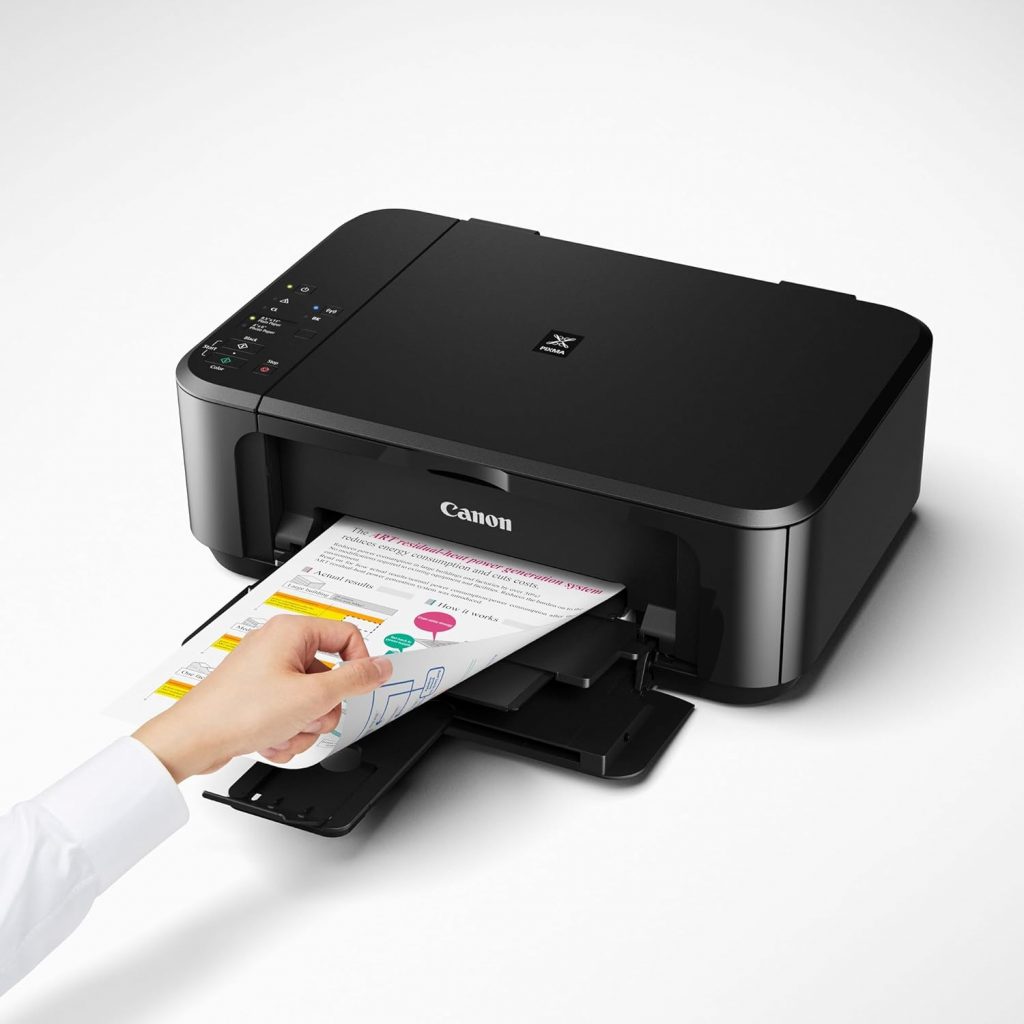
I use my printer every single day. Having a good printer is a must for me and the Cannon Pixma is one has been really good to us. I even use it to print photos – our first day of school phots goes in the book right after I take it! I save a ton of money on ink by buying the generic version and it lasts forever.

Canon Pixma MG3620 Wireless All-in-One Color Inkjet Printer with Mobile and Tablet Printing. A cost-effective reliable printer we have used and been very happy with
Mom 11

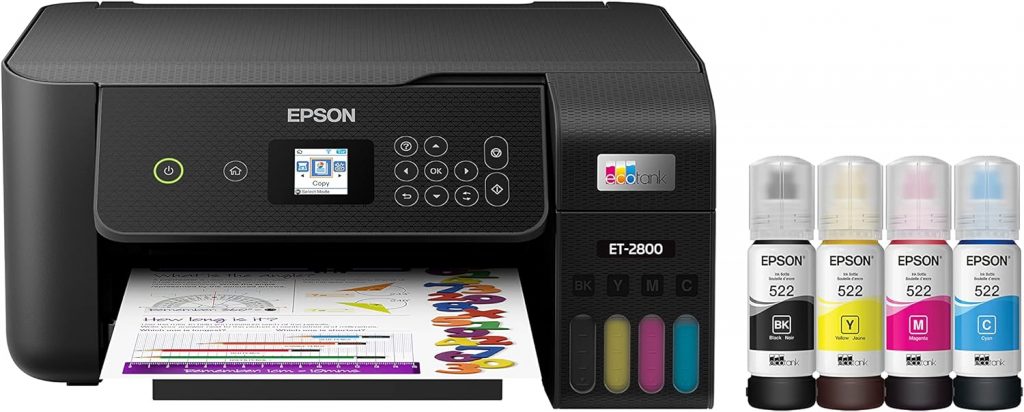
I’m super glad I bought an Ecotank printer, a laminator, and rolling carts! See- printers and laminators may be all you need!  I also love a great rolling cart- we have that on our homeschool essentials list.

EcoTank Wireless pringers are a favorite among homeschoolers. This one specifically was recomentd by numerous moms:
Epson EcoTank ET-2800 Wireless Color All-in-One Cartridge-Free Supertank Printer with Scan and Copy
Mom 12

Functional storage is necessary! This mom talked about having her husband put in fancy floating shelves everywhere only to realize that books are heavy, and they had a lot of them.  Some really great bookshelves and storage systems were what she really needed instead.  Ikea has great, handy systems that are cheap and easy, and shelves are also often a great item you can find free or cheap at moving sales or on marketplace.

She also mentioned having a CD player or Alexa.  I know most of us stream music now, but a lot of secondhand curricula still includes cd’s so having a player is handy.  Some newer cars don’t have them anymore either.  

When our kids were little, they loved having their own CD players in their rooms. We have this one and it’s lasted a long time:
Magnavox MD6924 Portable Top Loading CD Boombox with AM/FM Stereo Radio-CD-R/CD-RW Compatible, LED Display, AUX Port, Programmable CD Player

We hope these real tips from real homeschoolers that have been there, done that, will help you keep a tighter rein on your budget and save you from making regrettable purchases.

This Week’s Freebie

We don’t have a specific FREE resource that goes with this week’s topic, but we created these FREE resources to help bring fun to your homeschool over the summer.. Enjoy!
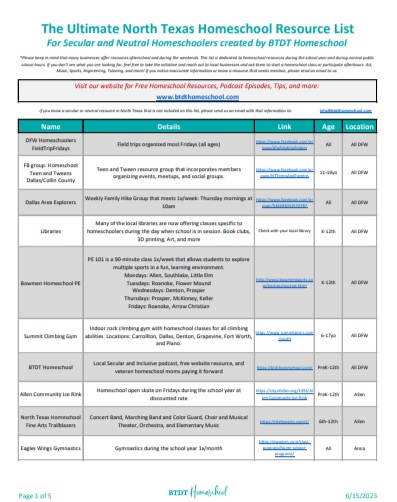
The Ultimate North Texas Homeschool Resource List

BTDT Homeschool North Texas Resources

BTDT Homeschool North Texas Resources

Maria and Nicole at BTDT Homeschool are thrilled that our podcast, website, books and free downloads, and blog posts have been an inspiration and resource for thousands of homeschoolers. As an effort to continue to pay it forward to our own community in North Texas, we decided to create this resource list dedicated to helping our local families find secular resources that align with their family values. This evolving list is a work in progress, and we encourage you help us to continue to update it with accurate information.

Check back frequently as this list will be updated frequently. We will do our best to ensure accuracy. If you know a secular or neutral resource in North Texas that is not included or a correction, please send us an email with that information to: info@btdthomeschool.com

Keep in mind that many businesses offer resources afterschool and during the weekends. This list is dedicated to homeschool resources during the school year and during normal public-school hours or a specific resource beloved and catering to homeschoolers. If you don’t see what you are looking for, feel free to take the initiative and reach out to local businesses and ask them to start a homeschool class. There is a good chance that you could create a new resource in your community: Art, Music, Sports, Engineering, Tutoring, and more.

Stay proactive and be your child’s advocate!

BTDT Homeschool was created with a heartfelt mission: to empower and give back to the secular homeschool community.

Through our informative podcasts, blog posts, daily inspiration, and a wide range of free printable tools, we aim to empower you on your homeschooling journey.

New to Homeschooling>>>

APPLESPOTIFYAMAZONYOUTUBE

What are some reasons to choose a Secular Resource?

Choosing a secular resource may be the right fit for you. It may surprise some people but there are Religious and non-Religious families that seek out secular resources. It isn’t just atheist homeschoolers who are looking for these resources for their children. Families usually chose secular resources or choose a secular curriculum for the following reasons:

1. You aren’t religious

There are many homeschool families who homeschool for non-religious reasons.  There is a growing body of homeschoolers who do not follow any sort of religion. These families usually homeschool due to schedule issues, or because they believe their children can get a better education at home. Some homeschoolers may have been raised in a religious home and want to move away from a religion they see as harmful, but still have a personalized faith they want to teach their children on their own terms.

2. Maybe you are religious but not Evangelical Christian

Many homeschoolers of faith are Islamic, Jehovah’s Witness, Jewish, Wiccan, Catholic, Mormon, or follow some another religion. Many homeschool resources follow traditional Evangelical Christian beliefs, which may not be a fit for your family when you follow another religion.

3. You don’t follow the young earth theory

The most common reason homeschoolers seek out secular curriculum and local resources is that they do not believe in the Young Earth science theory. Young Earth theory states that the entire world is somewhere between 6,000 and 10,000 years old, with the world just getting started with the first recorded stories from the Bible. Current scientific theory refutes this claim offering evidence that the earth was formed somewhere around 4.5 billion years ago.

4. You may have a special circumstance

For many families that have a child with special needs or learning differences, homeschooling may be the best choice.

5. You may want to prepare your children like a traditional school

The traditional school system is secular. Religion is not taught in most public schools and universities. Some parents would rather keep religious instruction separate from other subjects in school or teach all world religions equally.

Top 25 Homeschool Essentials
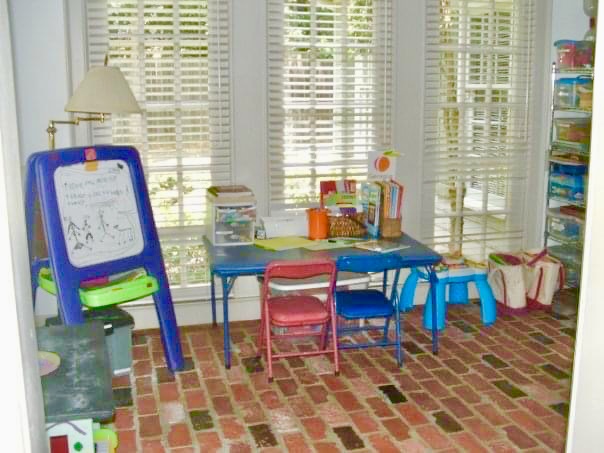
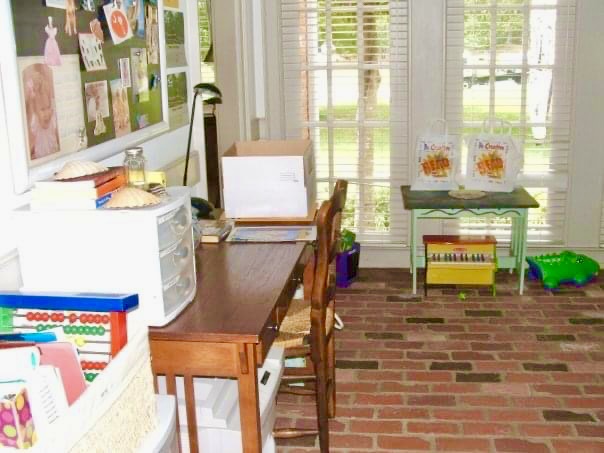
See photos of our homeschool room over the years>>

The Ultimate North Texas Homeschool Resource List
For Secular and Neutral Homeschoolers

The Ultimate North Texas Homeschool Resource List

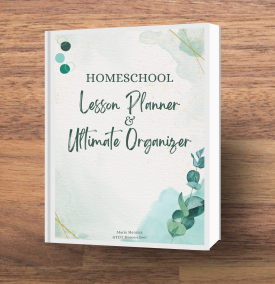
Learn more: Homeschool Lesson Planner & Ultimate Organizer
Learn more: Book of Centuries for the Secular Homeschooler

Homeschool Lesson Planner and Ultimate Organizer

BTDT Homeschool Lesson Planner and Ultimate Organizer

We’re excited to introduce the BTDT Homeschool Lesson Planner & Ultimate Organizer—your go-to companion for a smoother, more organized homeschooling experience! With 187 pages designed to adapt to your unique needs, this planner is all about making your homeschooling journey more manageable and enjoyable.

Think of this planner as your personal assistant, crafted specifically for homeschooling families like yours. Whether you’re teaching one child or juggling a bustling household, this tool helps you stay organized and track your progress with ease.

No more scattered records or forgotten tasks! Our planner brings everything together in one place, so you can access all your important information throughout the school year. It’s user-friendly and flexible, whether you prefer a child-led unschooling approach or a more scheduled routine.

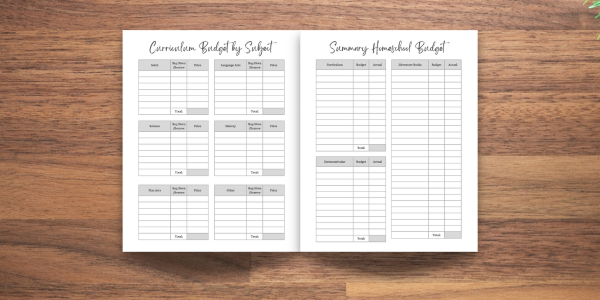
With our planner, you can focus on what really matters—educating your children—while staying on top of your homeschooling schedule. It’s designed to help you track anything and everything, from your lessons and grades to extracurricular activities and budget, giving you a clear overview of your children’s progress every step of the way.

See a Video Walk-Through:

Page by Page view of the BTDT Homeschool Lesson Planner & Ultimate Organizer

What is included in this planner?

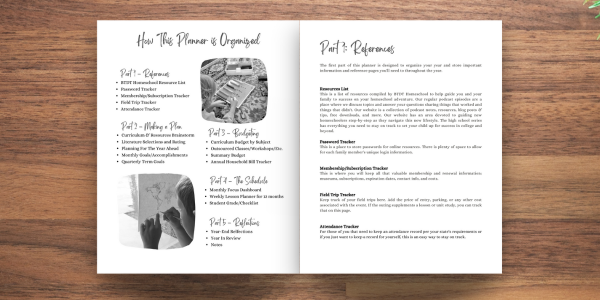
We’ve taken the time to include detailed instructions on how to use this planner effectively, but let me give you a friendly overview of how it’s organized: 

PART 1: REFERENCES  

  • Resources list – Including: Homeschool Podcast Episodes, 10 steps to Getting Started, Tips & Inspiration, 12 Steps to Homeschooling High School, Free Downloads including Transcript Templates, and more to help in your homechool journey.  
  • Password Tracker 
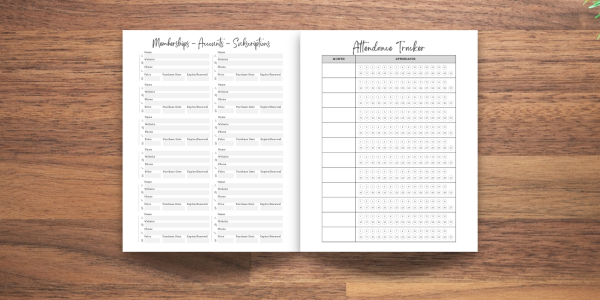
  • Membership/Subscription Tracker 
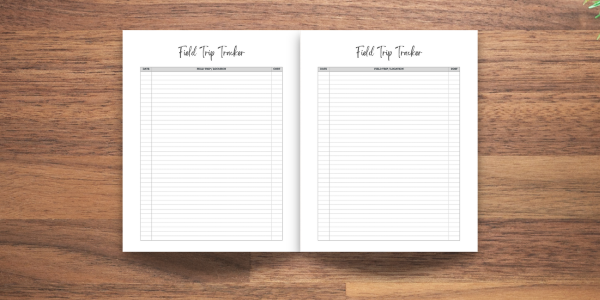
  • Field Trip Tracker 
  • Attendance Tracker 

BTDT Homeschool was created with a heartfelt mission: to empower and give back to the secular homeschool community.

Through our informative podcasts, blog posts, daily inspiration, and a wide range of free printable tools, we aim to empower you on your homeschooling journey.

New to Homeschooling>>>

APPLESPOTIFYAMAZONYOUTUBE

PART 2: MAKING A PLAN  

  • Curriculum & Resources Brainstorm 
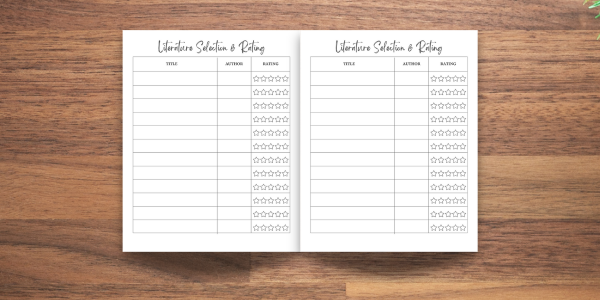
  • Literature Selections and Rating 
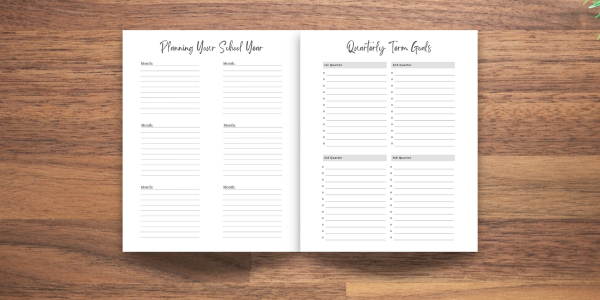
  • Planning For the Year Ahead 
  • Monthly Goals and Accomplishments 
  • Quarterly Term Goals 

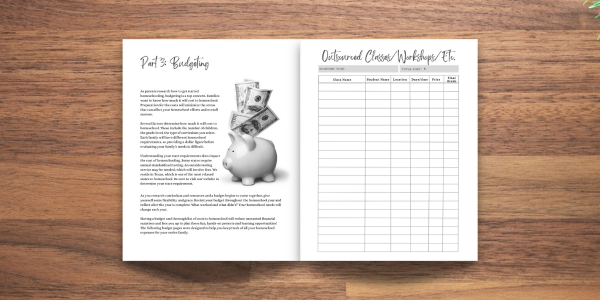
PART 3: BUDGETING  

As parents research how to get started homeschooling, budgeting is a top concern. Families want to know how much it will cost to homeschool. Preparation for the costs will minimize the stress that can affect your homeschool efforts and overall success.  

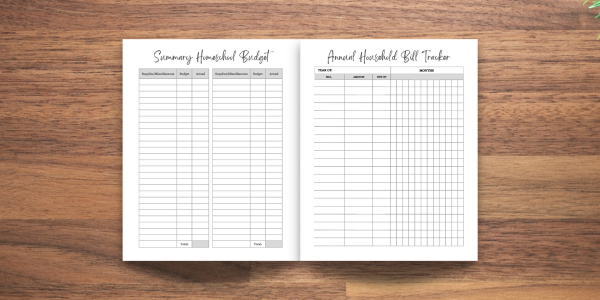
Several factors determine how much it will cost to homeschool. These include the number of children, the grade level, the type of curriculum you select. Each family will have different homeschool requirements, so providing a dollar figure before evaluating your family’s needs is difficult. Your Homeschool Budget is listed in an organized way so you can stay on track and not bust the bank:  

  • Curriculum Budget by Subject  
  • Outsourced Classes/Workshops/Etc.  
  • Summary Budget  
  • Annual Household Bill Tracker  

PART 4: THE SCHEDULE  

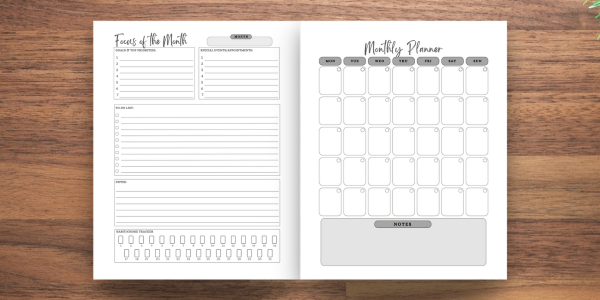
  • Monthly Focus Dashboard 
  • Monthly Schedule 
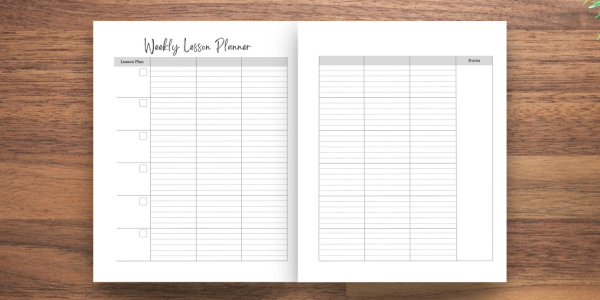
  • Weekly Lesson Planner for 12 Months 
  • Grade Tracker/Student Checklist 

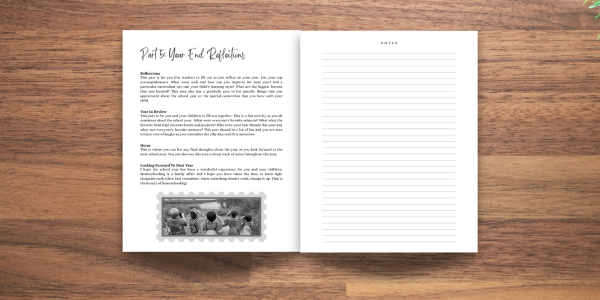
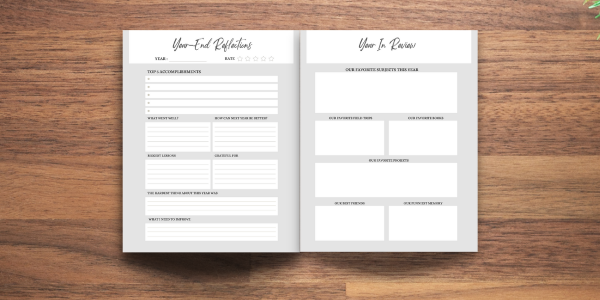
PART 5: REFLECTIONS  

  • Year-End Reflections 
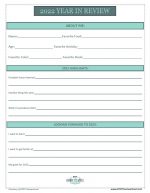
  • Year In Review 
  • Notes 

Get yours today!

Transform your homeschooling journey by staying organized and on track with the ultimate organizer! With 187 pages, staying on top of your schedule has never been easier, giving you the freedom to focus on what truly matters – educating your children.

Homeschool Lesson Planner and Ultimate Organizer

$11.95

031. Planning Your Homeschool Year

Planning Your Homeschool Year

Episode 031:

Are you just starting your homeschooling journey? We’re here to help! Begin with our Get Started in Homeschooling page and Homeschooling FAQ to make the transition smoother. If you’re guiding a young child, explore our How to Homeschool Kindergarten. to make those first steps special. For middle schoolers, don’t miss our Middle School page packed with tips and advice. And if you’re heading into the high school years, our Essential Steps to Homeschool High School will guide you every step of the way!

Show Notes

We are getting to that time of year! Some of us are bored with our current curriculum or program and ready to move on to the next level or try something new. Some of you might be brand new to the idea of homeschooling and organizing your school year. If you follow a traditional homeschool schedule, you may be counting down the days until summer break. Some of us may be stressed out because our friends are asking which class we all want to do together in the fall, and we are still thinking about next week.

Top 25 Homeschool Essentials
TOP 25 Homeschool Essentials List that you should incorporate in your homeschool space to kick off your school year.

Homeschool planning can seem like an overwhelming endeavor—especially if you’re not sure where to start. In this episode, we are going to help you to feel confident as you embark on your homeschool journey and help you to organize your year. We’ve compiled some helpful insights to make this process more simple and stress-free to create a solid homeschool plan for the upcoming school year.

 Here are some great ways to jump into your planning in a simple, non-stress way:

1. Create a Mission Statement

Before you dive deep into creating an entire homeschool plan, we encourage you to reflect on the reason you chose homeschooling for your family. From there, you should develop a mission statement, which is a long-term overarching vision for your homeschooling journey. This statement should be rooted in your key values and apply to everyone involved. For example: “To instill creativity, curiosity, and a love of learning through meaningful educational experiences both at home and in the world.”

2. Set Student Goals

Now that you’ve established your “why” for homeschooling, you can move on to setting goals for each child. Goals are more specific, measurable, and time-bound objectives that you want your kids to accomplish in the year ahead. It’s easy to become overly ambitious when homeschool planning. Having goals will help you prioritize your lessons and keep your students on the right track. 

BTDT Amazon Wishlist
We’ve compiled all our favorite things:
Complete BTDT Homeschool Amazon Wishlist>>

Here are a few quick tips for successful goal-setting:

* Focus on each child’s individual strengths, weaknesses, and interests

* Pick no more than three goals to pursue (too many can get overwhelming)

* Be sure to track progress and revisit goals on a regular basis

Knowing your goals will help you with the next phase of homeschool planning—selecting subjects.

How do you create lifelong learners? How do you create habits that work for the entire family? How do you create an environment that inspires learners? Learn How to Create A Complete Learning Lifestyle

3. Choose Your Subjects

Once you have your goals in mind for each student, you’re ready to choose which subjects to focus on this year. While this may be dictated by the homeschooling laws in your state, there’s usually some room for discretion. Using your state’s regulations and your goals as a guide, write down a list of the subjects you plan to teach each student.

Some people like to stick to the basics: reading, writing, and arithmetic and build from there.  If you have high schoolers, you may want to go back to look at your 4 year plan and check off credits.  

4. Select Materials

The next step in the homeschool planning process is deciding what educational materials you’re going to use. Before you opt for the first curriculum a friend or group recommends, though, be sure to consider your mission statement, your homeschool style, and your child’s learning style. Having these in mind will help you find the best fit for your family.

7 Steps to Choosing Curriculum
Choosing the right curriculum can be overwhelming. Avoid wasting time and money on materials that don’t fit your family. Follow our 7 STEPS to Choosing Curriculum to find what works best and set your homeschool up for success.

We’re going to be diving into choosing curriculum and walking you through that process, but for today as we discuss making a plan and organizing your school year, these are basic things to consider before settling on any school materials: 

  • Would you prefer a prepackaged, “open-and-go” curriculum from a single publisher?
  • Do you work from home? How much parent involvement does the curriculum require?
  • What is your child’s learning style? Does your child work well independently? Are they easily distracted and need you there to refocus them?
  • Will you find free resources from the internet or library, or adopt an eclectic approach?
  • Are there outside opportunities, such as a co-op, online class, or college dual-enrollment that would be a good fit for your child?
  • Are you looking for an online school versus traditional homeschooling? This is a good fit for some people.  But it can also be restrictive if you want a more flexible schedule to do some of those daytime homeschool activities with friends when you need to be online. Most younger children are typically going to learn better with hands-on interactive learning so you may want to consider limiting too much computer time with those younger years. 
  •  If you are new, you also want to consider your worldview as well as homeschooling style, this will help narrow down choices immensely.  We talk about this in our getting started episode.
  • If you really want to see the curriculum in person, see if local friends have it, visit a homeschool store. Most people have a lot of luck on YouTube. Almost every curriculum has a YouTube review or you can see it up close
We wish we had known so much when we started homeschooling. If you’re a new homeschooling parent, navigating this journey can feel overwhelming. When we began, we knew nothing about homeschooling, which made it daunting.
Top 10 Things We Wish We Knew Before Homeschooling.

Remember, if you feel that a certain curriculum doesn’t meet your child’s needs, feel free to switch to something out at any point during the school year! You don’t have to stick with any materials that aren’t working for you. We also suggest choosing flexible curricula so that you can modify the materials however you see fit. I’ve often skipped parts of a lesson that I know was a skill already mastered. So don’t waste time on unnecessary filler. And on the flipside, when something from the lesson really piques your child’s interest, run with it! Spend extra time on that and dive deeper. They are going to enjoy learning and retain information when they are really interested. Remember, one of our ultimate goals is to create lifelong learners. Those moments of curiosity are opportunities. 

5. Organize Your Supplies

One of the biggest hindrances to a smooth-running school day is having to waste time looking for necessary supplies. The key to avoiding this? Have a specific spot where all of your school materials are neatly organized.

We encourage you to pick a place in your home that can be the designated “school supply area.” This can be an office space, closet, or even just a corner of the dining room. Then, get a shelf and storage bin for each student so they can easily grab their materials at the start of each day and return them once finished.

6. Develop a Schedule

Creating a schedule is another key aspect of homeschool planning. This ensures that you stay on track and maintain consistency throughout the year. There are a number of questions that you should ask yourself while developing your schedule, including:

  • Do you plan on homeschooling year-round, following a traditional academic year, or doing something else entirely?
  • How many days will you be schooling each week? Five days? Four?
  • Will you be teaching all subjects each day or adopting a loop schedule?
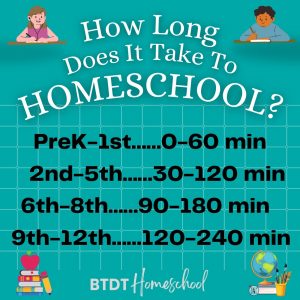
  • How many hours do you want to spend doing school work each day? Most people with a traditional school setting tend to be overly ambitious with this. When you have such a small student/teacher ratio you don’t have to spend as much time schooling.

We recommend:

how long does it take to homeschool

Keep in mind any important obligations, like extracurricular activities or jobs, when establishing your homeschool schedule. Be sure to make room for your non-negotiable fun things, like park days or clubs.  Consider your schedule’s big picture, too.  I knew that I was always going to have a hard time reining kids in after hiking group or co-op, so those days needed to be otherwise clear, or have one easy thing after.  The beauty of homeschooling is having that ability to manage your own time.  If you want to stack Monday and hit it hard in order to have a better week, go for it. 

7. Embrace Spontaneity

One of the greatest gifts that homeschooling offers is the flexibility to adjust your schedule as you wish. That said, it’s helpful to plan for spontaneity by allocating some breaks in your homeschool plan. Last-minute opportunity for a trip? Go for it! Kids feeling burnt out? Play some hooky and get back into schooling tomorrow—or even next week!  If you plan ahead for those spontaneous scenarios, it will allow you the freedom to enjoy some time off or handle unexpected life events without school-related stress.  This is one of the reasons that I really love to do school year round.  There is no pressure to stick to a calendar.

100 Awesome Homeschool Field Trip Ideas
Download your FREE Field Trip Pack

When should I plan for the next school year? (13:21)

The great news is that your homeschool plan doesn’t have to be fully fleshed out before you can get started. Of course, your goals should be planned before the start of the school year, but try not to get too hung up on this. You are the administrator and can adjust as circumstances change. Having your subject and curriculum plan in advance is also ideal, as it gives you time to become comfortable with your materials. On the other hand, one of the main benefits of homeschooling is having the ability to add or change subjects and curriculum during the school year. So, if you haven’t found that perfect writing program yet, just wait and add that subject in a bit later rather than make an impulsive decision.

When the actual lesson planning happens is a personal decision and that’s up to you. While it isn’t necessary to plan all of your lessons for the year in advance (as things will undoubtedly change), having a rough idea of what you want to cover at certain points throughout the year can be helpful. We suggest doing the actual lesson planning one week in advance. That way, you can easily make adjustments based on appointments, friend hang-outs, field trips, extracurriculars, and so on. 

My family is really project-based. Whether I created a curriculum myself or bought it, I always kept a running list of supplies that will be needed on my phone. Sometimes you’ll be too busy to pre-organize and there’s nothing worse than sitting down Sunday night to quickly write out your week and realize that you’re short of an ingredient or a supply for a project or activity. So when I’m at the store, doing my normal shopping, I will glance at my list to make sure I didn’t forget a supply for the upcoming week. 

I’m an all or nothing person- sometimes if I plan too much in advance and then get off schedule, I am likely to bag the whole thing!  So, rather than do too much and then get all frazzled, taking things in smaller chunks is a better method for me.  And you can have a long term plan and short term plan.. Whatever works for you.

The point is, don’t let homeschool planning be a source of anxiety. Take a deep breath and take it one step at a time. One week at a time. You’ve got this!

If you are new to homeschooling, you do have a couple considerations to make as you begin planning.  The first thing you’re going to need to do is familiarize yourself with your state’s homeschool requirements.  Are there subjects that you are required to teach?  Do you need to keep records or work towards an end of year test or portfolio evaluation?  Some states have strict requirements, some like ours are very vague.  

So you will need to decide if you will (or need to) follow the state’s curriculum outlines or do your own thing. 

Are you new because you have an up and coming homeschooler? As you planned, obviously the age of your child is going to matter. If you have a very young student (3-5), learning happens through life and play. This age should be non-pressure, non-stress for learning and is ideal to pick some simple goals – things like life skills, language development, large motor skills (climbing on the playground) and some basic fine motor skills (how to hold a crayon.). 

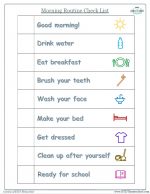
If you’ve not checked out our preschool page, be sure to do that. From there, you can listen to our preschool episode and the page has tons of ideas for facilitating learning through play in your home. We also have a lot of free resources you can download including morning and evening, routine charts, a nature scavenger hunt, and more!

Next, regardless of age or experience, consider putting together a general overview of what you will teach and learn throughout the year. Consider what subjects you want to make sure you cover – like core subjects-math, reading, and writing and what things you personally consider as extras. Involve  your child! Ask them and consider their interests and curiosities.

Think about what topics you would like to learn through a unit study. Unit studies are a great alternative, or a complement to a curriculum. They give you an opportunity to pursue an interest or curiosity to wherever it takes you, and this is where some of the best learning happens. I have always favored unit studies. We would incorporate them through the school year but before high school we have always schooled year round with short days and lots of breaks. When our main curriculum was complete, we would deep dive into all kinds of topics. Over the years, some of the unit studies we’ve done: 

penguins, civil rights leaders, volcanoes, the light spectrum, space, native American tribes, human anatomy, and more.  

Make sure that your goals are developmentally appropriate and personalized to your child. A vision board can be a great way to plan in a creative way and get your kids involved. A lot of homeschoolers like to create a vision board for the year. Involve your kids in this activity! Your child can cut/paste pictures or words of things they want to accomplish or attempt throughout the year. If you don’t want to do a vision board, just brainstorm together on a whiteboard or piece of paper. You can divide it up into sections to focus on, like academics, unit studies, social, physical fitness, financial, personal, etc. This is a great way to see what their goals are, and to help them figure out what steps they need to take to get there. If your child is needing inspiration, they can go to outschool.com and look through courses. 

You can go to our electives page on our website and look through some of the “out of the box” ideas for electives. Write a list of favorite topics or subjects they are curious about, then see how you can use these in your school year. 

What kind of extracurriculars do you want to be involved in? Board game group, scouts, co-ops, music, lessons, robotics club, book clubs. Does your teenager want to get their driver’s license, a part-time job, a volunteer job? What about an apprenticeship? What about social meet ups? And friend time? 

Sometimes I like to do a theme for the entire year. I talked about unit studies a minute ago and this is like an entire school year of unit study. One year we I did an entire American music history year. We learned about American music from the early native, to swing and ragtime to modern hip-hop. We made a leather skinned drum, read books about the Beatles and Scott Joplin, watched Jamie Foxx in the motion picture Ray and visited the rock ‘n’ roll Hall of Fame and Graceland. It was an entire year of a unit study I put together. We still did math, but almost everything else we learned was themed for the year. It’s by far our favorite school year ever. 

Homeschooling offers the opportunity to approach learning and teaching differently than the traditional school system. There are lots of educational methodologies that we can choose from – even that we can mix and match from – to provide a very well rounded, thorough learning experience for our child. 

Choosing curricula is the one step that tends to overwhelm, panic, and stress people out and can be one of the hardest steps to take while homeschool planning. There are SO many choices out there. There can be too many choices. Going online and searching homeschool curriculum is going to give you over one million results. That’s why we really recommend having some things (like worldview, homeschool style, what kind of materials you prefer) locked down in advance.  This will definitely help narrow your options.

We are going to have an episode specifically guiding you on how to choose curricula and we’re also going to be spending a lot of time reviewing and making curriculum suggestions. But in today’s episode, we really want to focus on organizing your calendar and setting up your child for success throughout the school year. You want to spend time figuring out WHAT you want to teach and HOW you want to teach it and this can help narrow down those options.

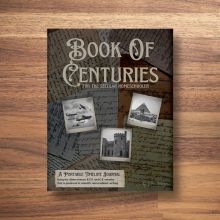
Timelines have long been used as a visual representation of historical events. Relate subjects together and view historical events as interrelated in your homeschool with our Book of Centuries and Timeline Figures. They are the perfect combination to make history come alive!

book of centuries
Book of Centuries

Get creative with their courses, projects and hands-on learning. There are also a lot of amazing classes and programs, digital and printable resources, and other unique options to choose from like Outschool or in your community.  

We have our own super cool Book of Centuries and timeline figures– those can be a fun way to add in history.  On our website, you can find all kinds of resources to help you plan from reading logs, to field trips writing review sheets, and high school documents. Most of it is totally free.

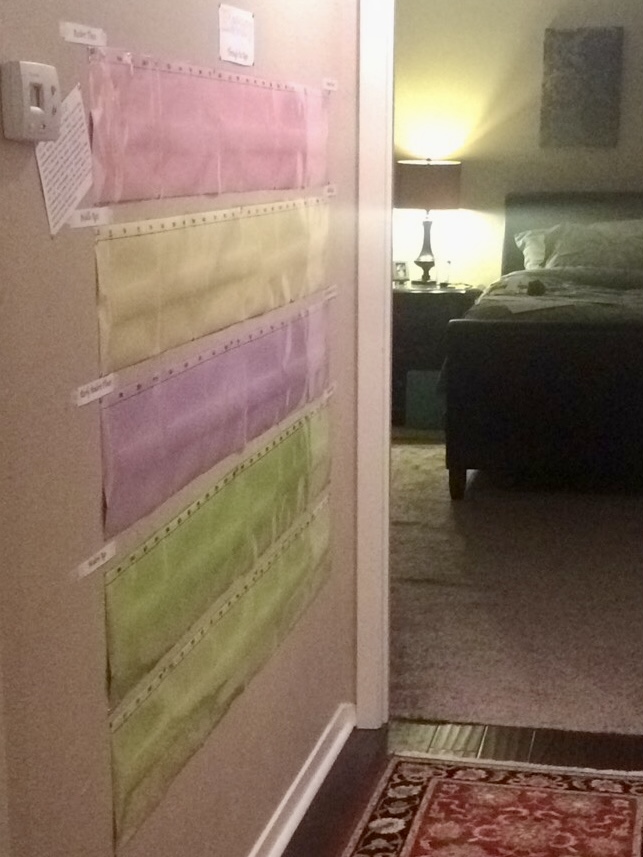
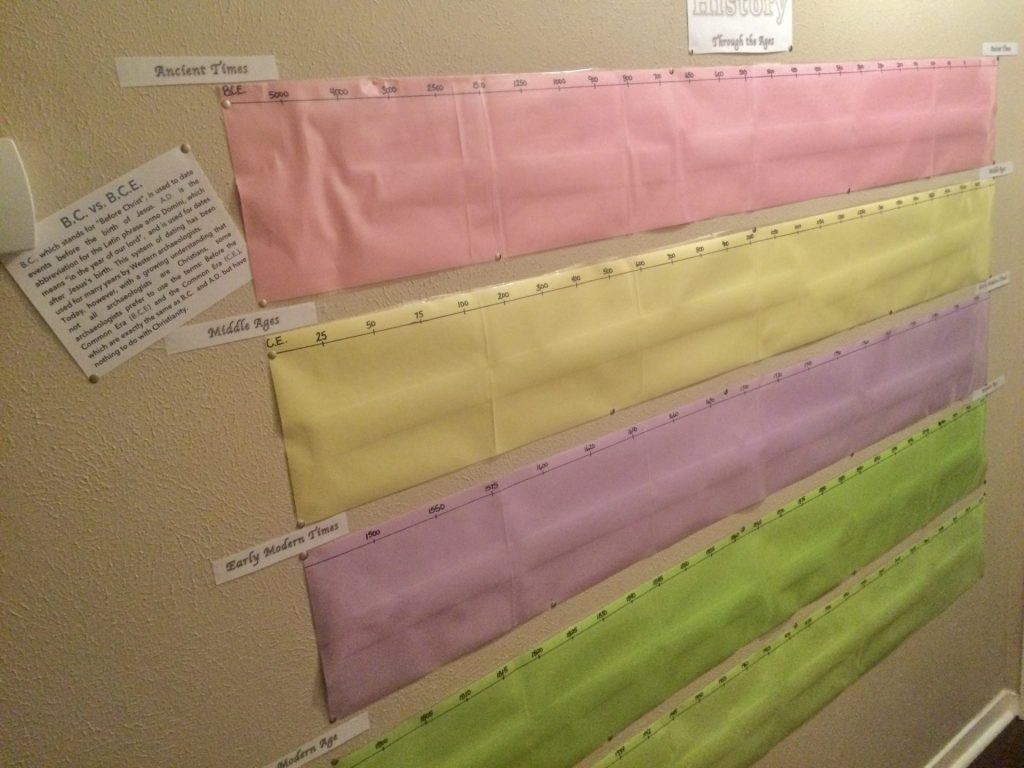
Maria’s Homemade Timeline:

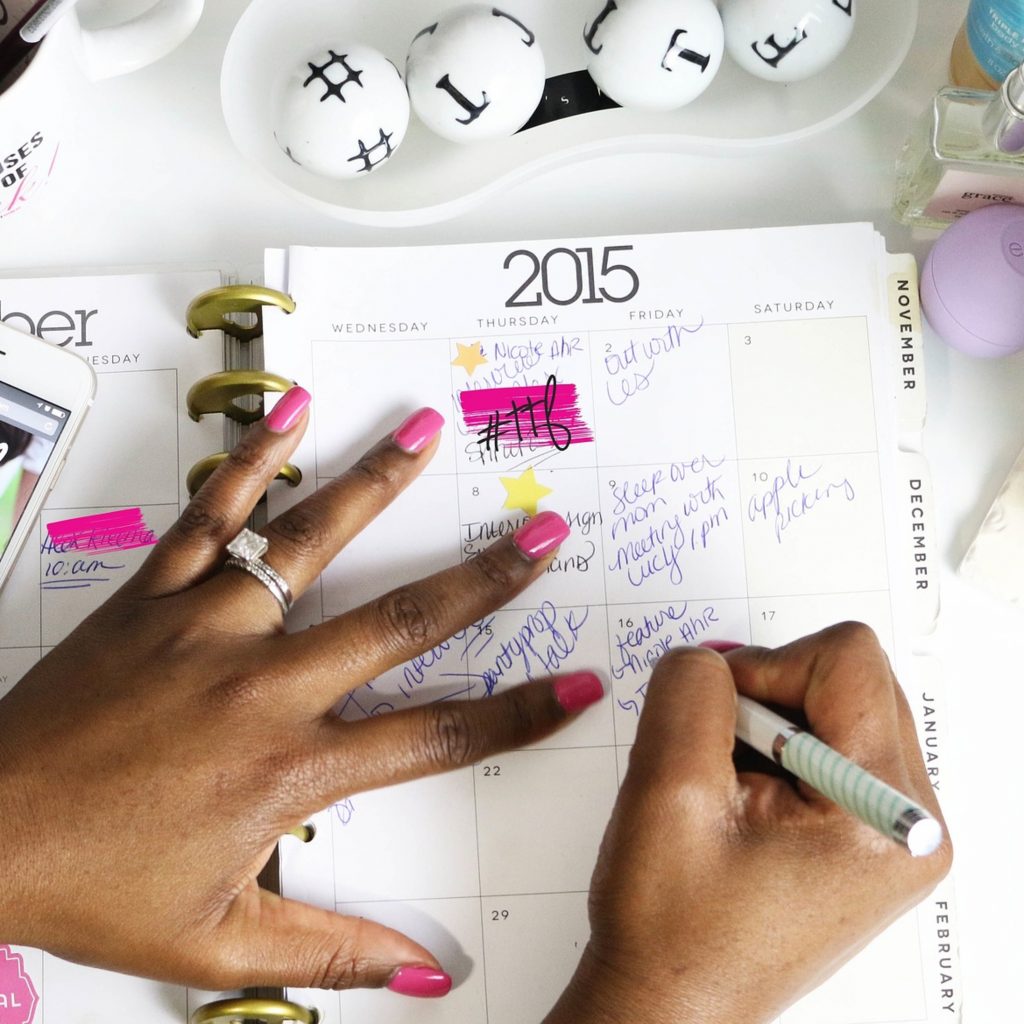
Let’s also talk for a sec about physical planners. I like to spend my Sundays making my Blueprint for a beautiful week~that’s when I lay out my schoolwork, look over our activities and obligations, make my menu plan and grocery list, etc.  You can do this anyway you want. And we’ve talked about letting your older kids find the method that works best for them.  Our kids are growing up in a much more digital age than we did.  They may totally cringe at the idea of a paper system, so be flexible.

Planner

Homeschool planet

Trello

Google Keep

Cozi family calendar

Do I have to teach all subjects? (28:20)

People often ask if they need to teach every subject to their child. Again, you need go back to your state’s requirements.  Are there subjects that you are required to teach?  Do you need to keep records or work towards an end of year test or portfolio evaluation?  Most states allow you to make a lot of these decisions, but there are a few that have strict requirements. 

Some people also like to keep an eye on what public school standards are for each grade level.  We didn’t do this, but it may be something you want to do if you think your child may return to school at some point or if you just want a general idea or where you are.

Here is a very General Overview of what subjects are typically covered in school:

  • Languages –English language arts:  including reading, writing, grammar, poetry, prose, literature, creative writing, report writing as well as developing oral presentation and reporting skills.

Foreign languages: while typically introduced in high school, you can opt to begin these at any time in your homeschool.  We talk about this in our Q&A episode.

  • Mathematics – including the basics (adding, subtraction, multiplication, division, fractions, decimals), algebra, geometry, trigonometry, calculus.
  • Science – including Biology (plants, animals, human body), Physical sciences (physics, chemistry)
  • History – state history, world history and country specific history.
  • Geography – including earth sciences, astronomy, regional/cultural studies, map work and weather.
  • Technology – including product development, using/interacting with technology (PC, internet, home and kitchen appliances etc.), programming/software.
  • Economic sciences – including money management, entrepreneurship, investment, business and management skills (time management, project management).
  • Arts – including the practical application (painting, drawing, playing an instrument, theater, dance), appreciation and history of the arts and music environment.
  • Life skills – this can include everything else one needs to properly survive in the world e.g. Home maintenance, health and nutrition, first aid, safety skills, relationship skills, communication, conflict handling, study skills, etc.

Some of these subjects you are going to find repeat in some form or fashion every year.  There may be specific ones that you save for a certain age or level. 

Don’t waste a ton of time trying to teach something to a kindergartener that you can spend 5 minutes explaining to a second grader

So you do not need to teach all subjects, every year.  Pick and choose the things that you need to cover, the things you want to cover, and build your overall plan from there.

How do I organize my homeschool room? (33:33)

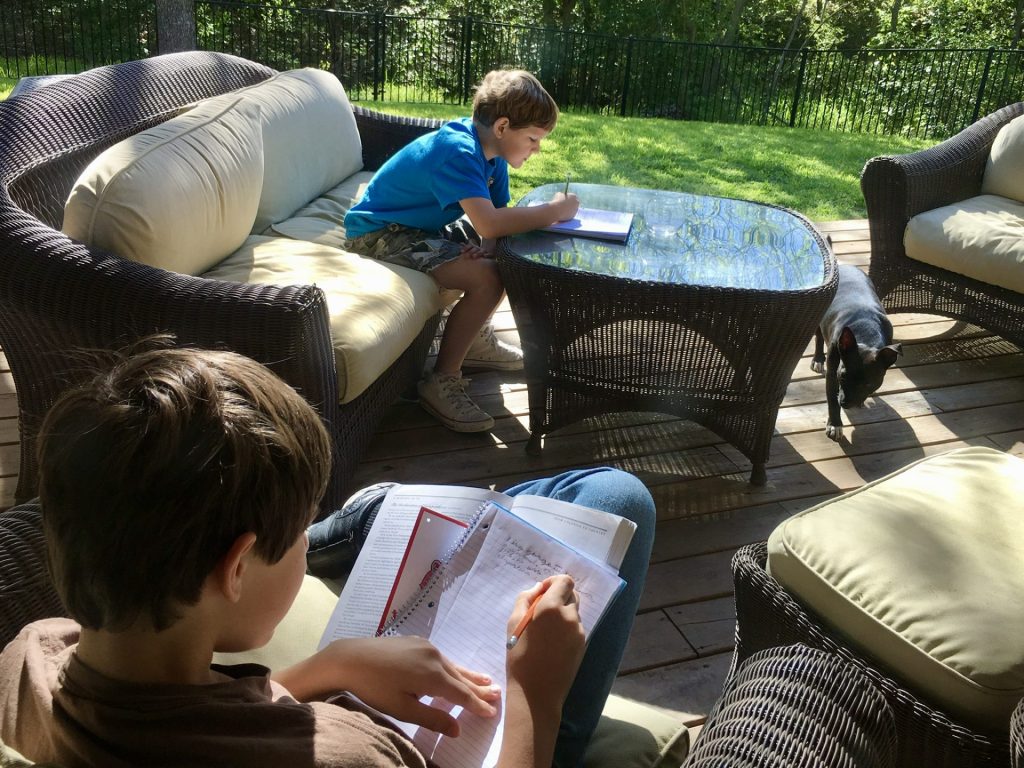
We have said many times that you really do not need a physical classroom or the perfect pinterest homeschool space to facilitate learning at home.  There are all kinds of ways that people creatively fit their homeschooling books and supplies into small spaces and learning does not at all have to happen at a desk or table. Ours often happens on the couch, or in bed. In fact, we’d caution against trying to replicate a school classroom in your home.  That can be a waste of time and money.  Instead, concentrate on things like making supplies accessible all the time for when inspiration hits. It’s just another way to keep learning fun. Remember, learning doesn’t stop when you close the curriculum, children are learning all the time.

Your learning space will depend on several factors. It will depend on the size of your homeschool space if you have it, how many children you have, and the type of homeschooling you and your family participate in. Check out our TOP 25 Homeschool Essentials:

One of the things I recommend, as well, especially if space is a concern, is having only the items out that you are using in that school year.  For a lot of us managing different aged or leveled children, this could mean you have a lot of books and resources going just for that year.  Do yourself a favor and stash stuff you are saving for later, or hand me down items for a younger sibling somewhere else and make it part of your yearly planning to rotate things in and out.

Top math Games
Games are a great way to learn math or take a break from boring worksheets. Our games are categorized to help master each math concept with fun! Check out our TOP MATH GAMES

Hopefully this episode has put you at ease and has inspired you to start planning your next homeschool year.  Homeschool planning does not need to be stressful but it can seem like an overwhelming endeavor.  We want you to feel confident as you embark on your homeschool journey.

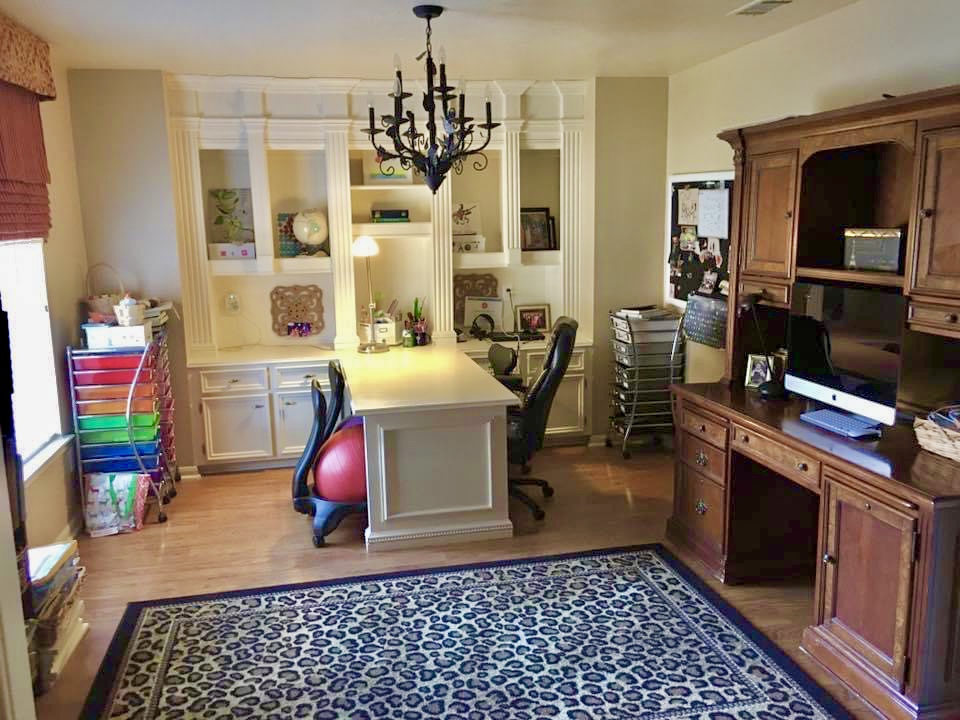
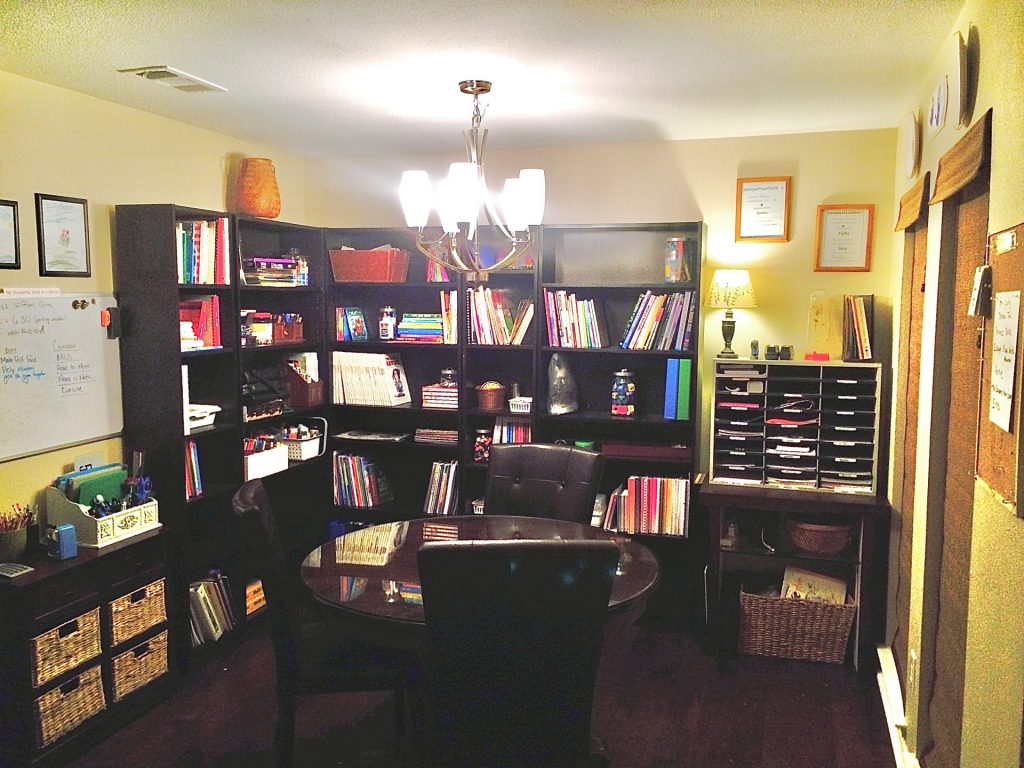
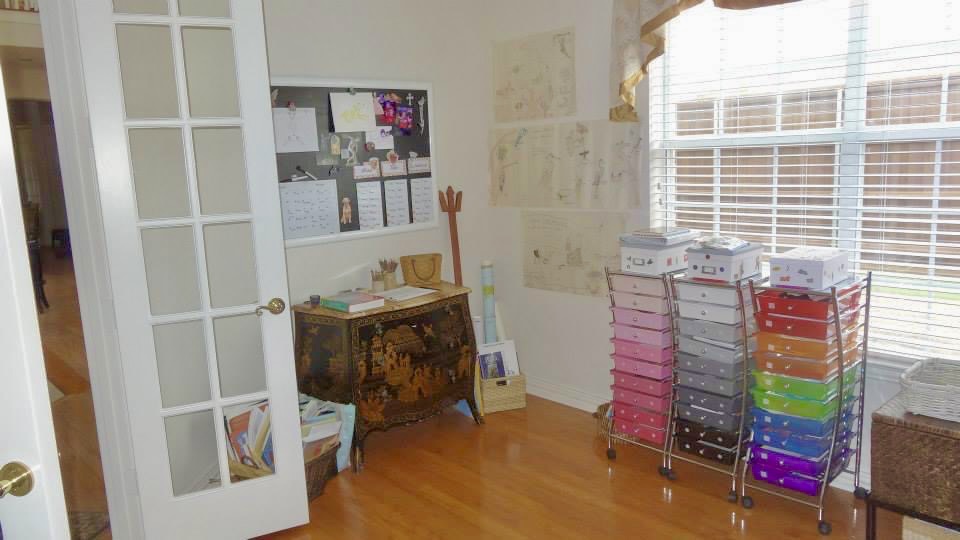
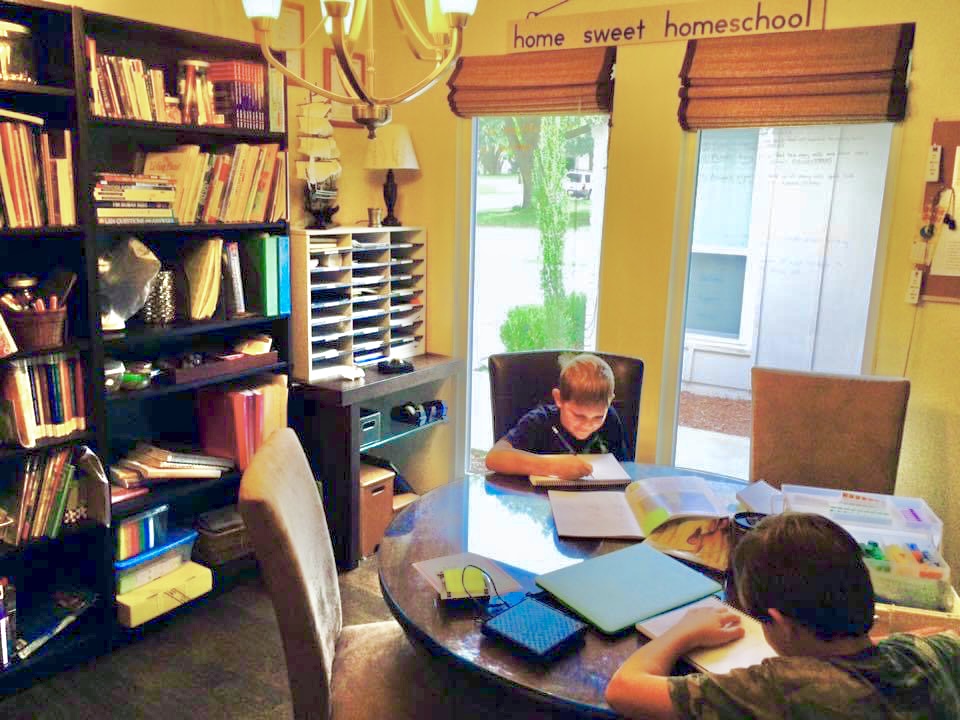
Peek into Nicole and Maria’s homeschool rooms through the years:

This Week’s Freebie:

Top 25 Homeschool Essentials

Top 25 Homeschool Essentials

.

The new school year is right around the corner! Whether you’re a traditional homeschooling parent or diving into remote instruction for the first time this fall, creating an inviting and inspiring learning space at home is essential.

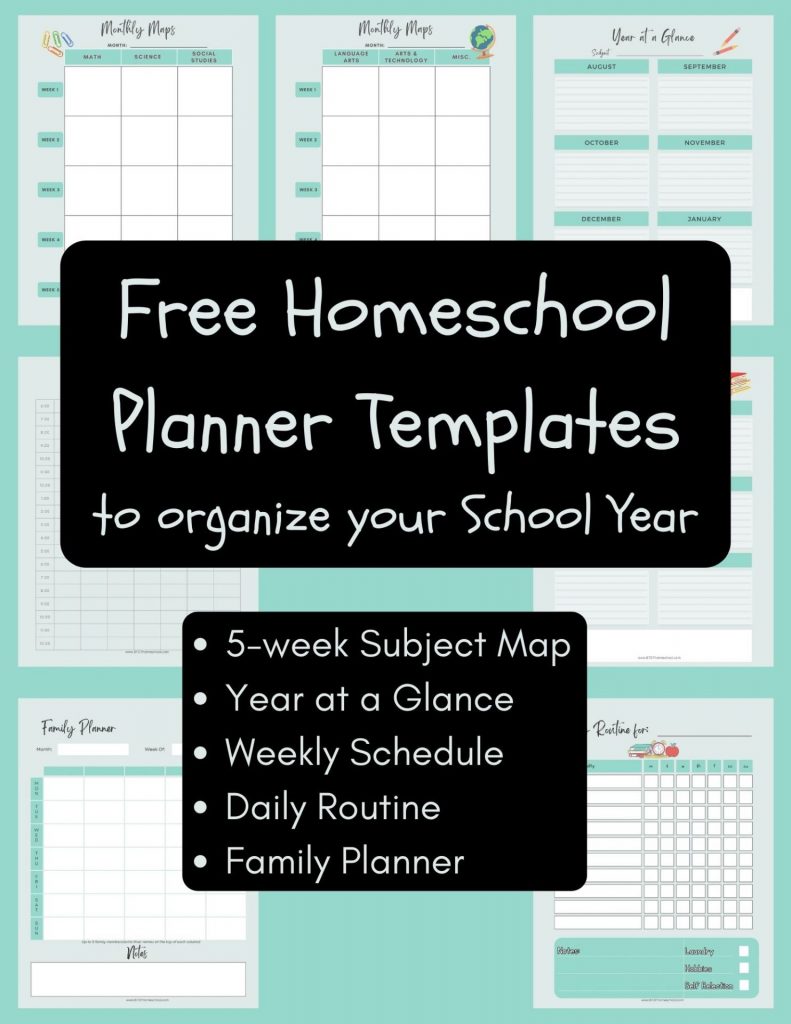
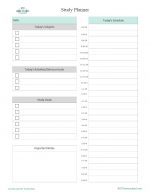
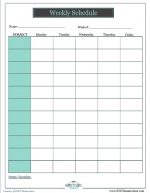
With important decisions to make about curriculum, homeschool schedules (scroll down to download our FREE printable Homeschool Planning Templates), and yearly calendars, the importance of setting up a dedicated learning environment can sometimes be overlooked.

For more tips on setting up your space and planning your homeschool year, visit our page and listen to our podcast episode, “Planning Your Homeschool Year.”

The good news is, you don’t need an entire room or even a large space to create an effective learning environment. If you have a spare room, fantastic! If not, that’s completely fine too. Consider making a room multi-purpose. A playroom can double as a homeschool space, or a rarely used formal dining area can be transformed into the perfect learning hub.

BTDT Homeschool was created with a heartfelt mission: to empower and give back to the secular homeschool community.

Through our informative podcasts, blog posts, daily inspiration, and a wide range of free printable tools, we aim to empower you on your homeschooling journey.

New to Homeschooling>>>

BTDT Homeschool Podcat
Create an Inviting Space

Feel free to transform the area where your learn-at-home adventures take place into an organized and beautiful space. While not essential, many homeschoolers find it both important and fun to create a color scheme. Take your kids to the paint store and explore color ideas together. Involve them in the process! If they’re anything like Our kids, they’ll definitely have some color preferences. Plus, the act of redoing a room can be a learning experience in itself!

Peek into Nicole and Maria’s Homeschool Spaces Over the Years:

Your homeschool room is your education hub, which means you can keep all books, supplies, arts, crafts, and other activities organized in one place. Be sure to teach your children to clean up after themselves. When they finish a project or activity, be sure it is clear to them where everything goes to make cleaning up easier for them and help you keep your sanity!

School Year Planner
Free Planning Templates

Top 25 Homeschool Essentials

With over 30 years of homeschooling experience, we’ve definitely made some bloopers when it comes to building the ideal learning environment for our families. We’ve bought things that were a waste of money (and space). There are also a lot of things we wish we incorporated early on which would have made our lives so much easier.

View Our complete wish list:

BTDT Amazon Wishlist
Complete BTDT Homeschool Supply Wish List

TOP 25 Homeschool Essentials for you to kick off your school year that you may want to incorporate or keep on hand or in your homeschool space:

1. Desk/Table

Desk/Table: Some kids very much need a workspace to function- so consider if you need a dedicated space for a desk or table that you can spread out on for bigger activities.  For many, that may also be your kitchen or dining room table.  If your table is doing double function, I recommend having a space nearby for stashing stuff so that your homeschool supplies don’t take over your space.

2. Maps & Posters

Include a world map, a variety of historical maps, specific country, state, or city map – depending on what you’re studying this year. Framing your map will make it look more attractive on your walls and we’ve also used a wet erase marker on our glass framed maps as reference points.

This is one of our favorite Maps to see all the details:
Laminated Giant Map of the World (46 x 80)

3. Globe

A globe is an indispensable homeschool essential that you will use more often than you think.  So many subjects have ties into geography and you will find yourself reaching for it several times a day. Since I’ve graduated high school, we’ve lost a planet and gained an ocean so be sure to find an up to date globe!

13″ World Globe with Stand, 720° Swivels in All Directions with Stainless Steel Stand

4. Bookshelves

Every homeschool space must have bookshelves. Whether they are used to store art supplies, books, games or other learning materials, shelves are essential to homeschooling organization.

Take a peek at our favorite low-cost Bookshelves. These are an important part of your homeschool space. Organize everything here. Everything should have a home.

5. Storage

Classroom space of any size needs plenty of storage. Rolling carts for supplies, workboxes, built-in cabinets and drawers, or cubby spaces with removable drawers. Baskets and buckets are great for being able to tote your work to other rooms.

Rolling Storage Cart and Organizer with 12 Drawers

6. Math Manipulatives

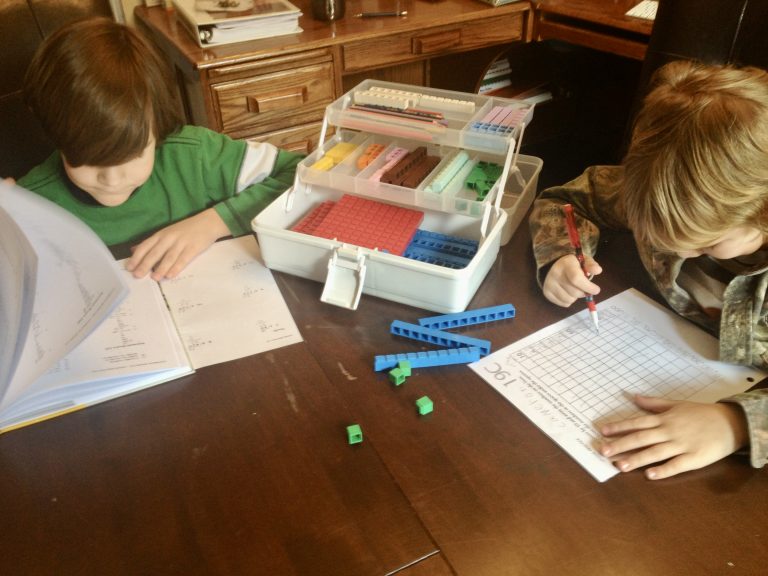
Linking cubes, counting bears, games, dice, rulers, compasses, locks, bears, anything really could work as a manipulative. I love this math set with tons of options for supporting our lessons.

Base Ten Blocks for Math – Place Value Blocks, Base 10 Math Manipulatives

Also, consider have math games on hand when you need a break from your curriculum:

Top math Games
Games are a great way to learn math or take a break from boring worksheets. Our TOP MATH GAMES are categorized to help master each math concept with fun! Plus get your FREE Multiplication Wheels

7. Magnetic White Board and Calendar

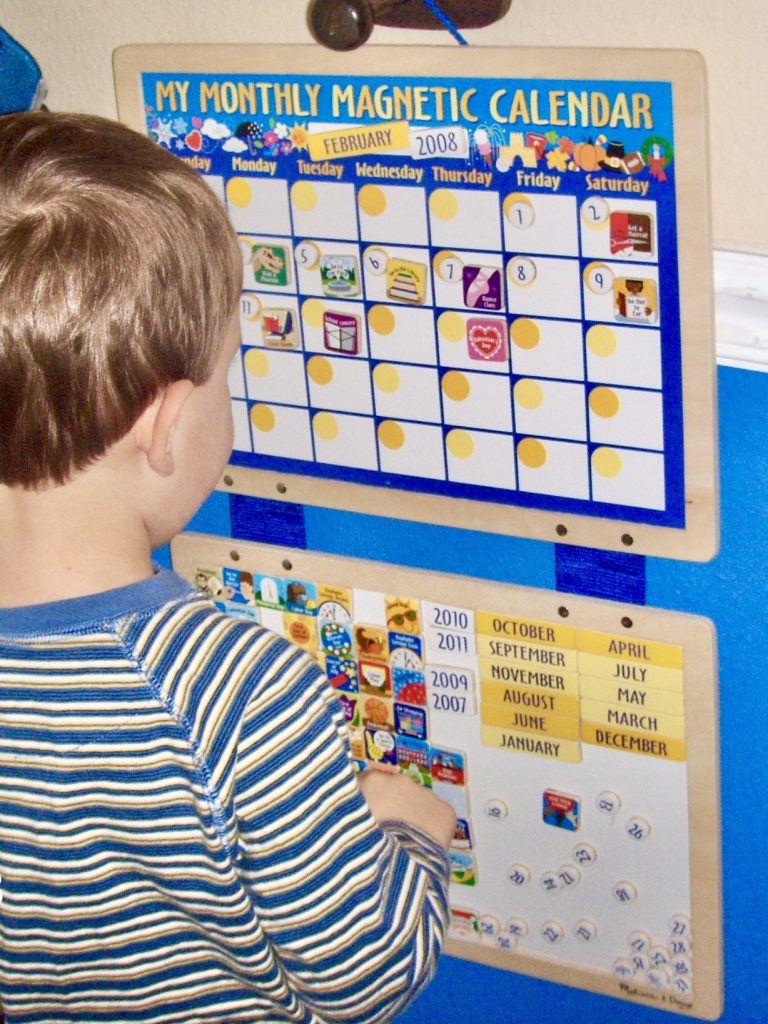
The calendar board is perfect for everyone to see what’s going on at a glance. Thie large board comes in handy when you are trying to explain a lesson, or your kid want to make silly drawings for you to find!

Dry Erase Calendar Whiteboard Set of 3 Magnetic Calendars for Fridge: Monthly, Weekly Organizer & Daily

Magnetic Dry Erase White Board, 36 x 24-Inch: The magnetic feature is a great bonus, allowing me to attach notes and memos directly to the board. However, the included marker and eraser are not up to par and we recommend purchasing higher-quality WET Erase Markers.

8. Timeline

There are so many benefits of using a timeline in your homeschool. It is a powerful tool that can make our lives a lot easier and make history more fun for our kids. If you don’t have the space for an entire timeline wall, many homeschoolers opt to use a Book of Centuries which is a portable timeline you can store on your bookshelf. It can help them visualize how history connects together. Learn more about Timelines and Book of Centuries

Maria’s Homemade Timeline:

9. School Supplies

We always like to keep these necessary supplies accessible. Pencils, tape, sharpie, highlighters, scissors, clipboard, and paper (printer/construction/cardstock/photo)

10. Library Card

Whether it’s getting new books to read, resources for a research paper, or literature for read aloud time – the library is the place to be! You can even get free books, media, and resources right to your Kindle for FREE!

Kindle Fire is a favorite and cost-effective way for downloading free books from the library.
> View our Top 50 Books for New Readers
> Favorite Middle School Books
> Top 10 Books Every Homeschooler Should Read

11. Printer

I use my printer every single day, so having a good one is a must. I even print photos, like our first day of school pictures, right after I take them!

We highly recommend this Canon Wireless All-in-One Color Inkjet Printer. It’s cost-effective and perfect for mobile and tablet printing—something we’ve used and been very happy with.

If you print a lot and are tired of high ink costs, check out the Epson EcoTank. This printer is incredibly reliable and one of the best value options on the market. Plus, printing directly from your phone is super handy!

12. Laptop / Computer / Tablet

Even if you are not doing school online, we live in a technology age and having access to it is essential. You can research a topic, put books on hold at the library, download resources, supplement your instruction with a video, teach software and computer skills, and typing. Technology is an essential part of our world.

The HP Stream 11 is a solid cost-effective laptop running Window 11

13. Laminator

Although not essential for some, we use our laminator all the time! For student and teach IDs, special documents, reusable worksheets (use with a wet erase marker!), weekly meal plan, and more! One year, my kids made an elaborate boardgame and laminated all the pieces and it has stood the test of time. The Scotch Thermal Laminator, 2 Roller System is a great cost-effective choice for everyday or occasional use.

14. Wet Erase Markers

Despite all the talk about dry erase markers, I find them incredibly difficult to wipe off laminated sheets or pockets. I prefer wet-erase markers; with a damp cloth, I can wipe them off completely clean.

There is all this talk about dry erase markers, but I find them incredibly difficult to wipe off laminated sheets or pockets. I prefer WET ERASE MARKERS that way, I can wipe them off completely clean with a damp cloth.

15. Electric Pencil Sharpener

You won’t regret getting one of these. From regular #2 pencils to colored map pencils, a Bostitch electric pencil sharpener will save hours of your life (and sanity!)

16. Art Supplies

We always like to have accessible items to inspire art projects and creativity. Art supplies like different mediums, beads, playdough, colored pens and pencils, markers, crayons, paints, collage supplies, glue, pipe cleaners, popsicle sticks, tape, or any other supplies for specific projects complement your studies.

17. Art Cart

We love our Rolling Utility Cart with Hanging Cups & Hooks! Another thing we use every single day. You can use it as a portable art creation station or fill it with your kid’s favorite art and craft supplies or use it as a morning cart with your start of the day activities read-alouds and more. I like to rotate things in and out of the cart regularly and the kids are always excited to see what’s in the cart every morning.

18. School Activity / Art Display

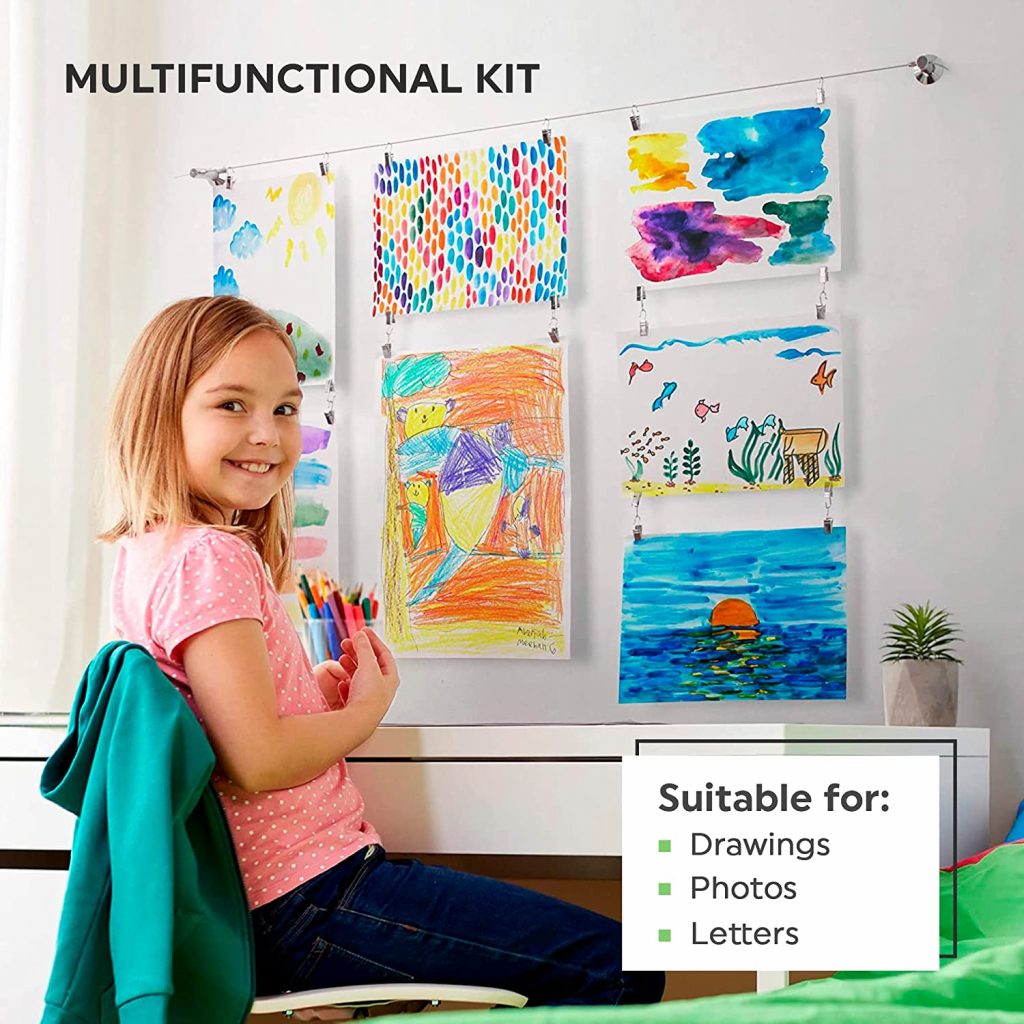
Both you and your child will want to see their work recognized and cherished, making the Kids Artwork Picture Frame with Hinge a must-have. We love this frame and the ease of changing out their creations. As you dive into your homeschool year, you’ll quickly find that assignments and projects can take over your house. Display the current creations and replace them when new ones are made. (Psst… keep a bin in a closet or the garage to store them after display, and go through the bin at the end of the year).

19. Science Tools / Activities

Science tools like saved nature items, resources guides, and items for experiments and STEM learning like this Microscope Kit and Binoculars made for kids. Spark your children’s curiosity and imagination by creating an environment filled with hands-on exploration. How do you ignite a love and wonder for STEM in your homeschool? What are our favorite experiments? How do you create young critical thinkers? There are a lot of ideas and supply suggestions in our Hands-On Science Ideas Page. Plus, get 3 FREE Science Freebies!

20. School Supply Organizer

As you start to gather all of your school supplies, you are going to need a functional place to store and use them. This Desktop Storage Caddy is our favorite.

21. Bluetooth Speaker

Whether it’s playing music, listening to an audio lesson, or listening to your literature book while you multi-task and tend to the baby or prep dinner, having a speaker to play from your phone is very handy. This Anker Bluetooth Speaker is a favorite that packs a lot of punch without the high price tag!

22. Headphones

Sometimes, while you’re working with one child, another might be working independently on an online math or foreign language lesson or listening to music. This can sometimes disrupt other activities in the same space. Interestingly, some children focus better with music, even when it’s loud! I’m always surprised by how my kids can listen to loud music and still concentrate better.

These Sony Headphones come highly recommended by my daughter’s music appreciation professor. They offer excellent sound quality at a fraction of the cost of similar headphones! Under $20 – on sale now!

23. Accessible Outlets and Chargers

Make sure you have plenty of places to plug things in, maybe a charging station set up so that if you are using a device, it is not dead on arrival. Nothing is worse than sitting down for an online resource and find out the battery is out. This 7-Port USB 3.0 Hub, IVETTO Data USB Hub Splitter has allowed us to charge everyone’s device at the same time at our designated “charging station”.

24. Comfy Seating

Whether or not you have room space, consider a cozy corner for reading.  Maybe some fun/comfy seating, or a large fluffy rug. Our Gaiam Classic Balance Ball Chair was a favorite with not only my kids but all their friends when they came over too! Bean Bag Chairs are always a cozy reading spot for kids.

25. Curriculum that fits your family

For most homeschool families, solid curriculum is one of most important homeschool essentials. It’s important to remember that there is no “one size fits all” for every homeschool and I would caution you if someone is promising the “perfect” curriculum. You have to consider your children – how do they learn best? What is your homeschool Philosophy? What about your own personality/teaching style? Learn more about choosing the right fit: 7 STEPS TO CHOOSING CURRICULUM:

7 Steps to Choosing Curriculum

013. Homeschooling on a Budget

013.

Homeschooling on a Budget

Can I afford to homeschool?
What do I need to buy to homeschool?
How much does curricula cost?

Tune in this week while we discuss these topics and more!

Episode 013:

Scroll Down for this Week’s Freebie

Are you just starting your homeschooling journey? We’re here to help! Begin with our Get Started in Homeschooling page and Homeschooling FAQ to make the transition smoother. If you’re guiding a young child, explore our How to Homeschool Kindergarten. to make those first steps special. For middle schoolers, don’t miss our Middle School page packed with tips and advice. And if you’re heading into the high school years, our Essential Steps to Homeschool High School will guide you every step of the way!

Show Notes

The holidays are over and we once again overspent even though we said we wouldn’t, and now it’s the new year.  We are all fresh off our downward holiday spiral and riding that new year motivational high.  So let’s start the year financially savvy.  If you haven’t already, creating a household budget in general with line items for things like homeschool supplies, memberships, educational classes, and activities/travel can help you stay on track.

Can I afford to homeschool? (3:06)

Real life is messy, no matter how your family looks. Home education is as diverse as the families involved! The beauty of homeschooling is the flexibility—it can fit any individual, lifestyle, or family type. 

Whether you are dual income,single income, or single parenting, most of us probably need to be mindful of whether we can actually afford to homeschool.  Sometimes it is simply not going to be realistic for this season of your life, and that’s ok.  We’ve discussed some other options to having your child at home that aren’t necessarily homeschooling in our “Getting Started” episode.  But if you can, let’s talk about some ways to make homeschooling work in your home! Just keep in mind that a low-cost education does not mean a substandard one!

Even if you’re not a single parent, Oftentimes, this is going to involve a shift to a single income. So how can you continue to provide for your family and school your children at home?  Working from home would be the ideal situation. If possible, pursue bringing your job home. Perhaps your boss is open to you working remotely, at least maybe part-time. Since the pandemic, this has become more and more common. 

BTDT Budget Sheet

You may need to do some juggling while you try to balance schooling with different work schedules. One fantastic aspect of homeschooling is that you can do it anytime, from anywhere. Evaluate your family— age, temperament, etc. Can they go to the office/worksite with you? Maybe there’s another family member who can stay with the kids while you work? Could you do school in the evenings and on the weekends? We discussed in our episode about homeschool styles and philosophies that possibly your child may perform better doing school at a different time than a traditional schedule.  You may find that it works for you to hire a nanny or do independent or online schooling? You may have to think outside the box, but that’s what home education is all about!

The good news is homeschooling does not have to be expensive and there are lots of ways to save money, supplement a single income, and school on a budget.

Envelope Budgeting System

Making a very strict budget is one way to be successful. And one of the ways we found to stick to a budget was through an envelope system. Although it’s not a secular financial program, we used an envelope system program suggested by Dave Ramsey. It’s a really practical way to budget and when you’re using a cash system, you cannot overspend, and it’s really important for your children to see the money move.

Ways to save money while homeschooling:

  • Making all your meals at home/packing lunches/ menu planning
  • Shopping dollar stores/dollar bins at Target
  • Garage sales
  • Thrift stores
  • Shopping discounts
  • Hand me downs
  • Gift lists for family- memberships, educational toys, games

Ways to supplement a single income or make money from home:

  • Work from home- build a business
  • Pet sitting  
  • Babysitting  
  • Blogging
  • Picking up kids from school and dropping them off at home or after school program
  • Online tutor 
  • Music lessons
  • Refurbish furniture
  • Work from home- selling
  • Sell online-eBay, Amazon, Facebook marketplace 
  • Sell other people’s stuff  
  • Sell at farmers markets -vegetables or crafts
  • Start Etsy shop  
  • Dropshipping
  • Work from home-online jobs
  • Teach international students English 
  • Virtual assistant 
  • Freelance writer 
  • Virtual Customer service, reservations 
  • Gig work-Door dash, GrubHub, Instacart, Shipt
  • Usborne books
  • Surveys or Studies
  • Secret shopper/studies with UT southwestern, Curion, kid studies

What do I need to buy to homeschool? (13:39)

There are definitely things you want when homeschooling and then the things that you actually need.  You do not need a fabulous Pinterest homeschooling classroom with tons of bookshelves and fancy desks, computers, and beautiful framed inspirational education posters.  Even if you do have that, often your kids are going to want to slump on the sofa or their bed with a pile of library books.  Don’t overcomplicate things.

BTDT Homeschool Free Resources
Homeschooling necessities- what do you really need 
  • Consumable items- paper, pens, markers, crayons, pencils
  • Extra-curriculars- not really necessary, but for a low cost option, you may want to consider rec center, pooling resources with another parent, or a non academic co-op – check all our suggestions below!)
  • Equipment- microscopes, books, project supplies

A great way to get supplies is by attending Curriculum swaps, retiring homeschooler sale, Ebay, Facebook marketplace, and Facebook homeschool sale groups.  You may also check if your town has a homeschool store- we have one in north Texas and they even offer used curricula at a discount. We would also say that once you’re done with curriculum and you’re not going to use it for consecutive children, sell it as soon as possible. It will hold its value better before newer updates are created. A homeschool group we were in for years, had a lending library with curriculum and supplies, including a microscope. Totally free!

If you have multiple kids, you may want to choose reproducible resources.  Or you can make your own reproducible resources (laminating pages and dry erase markers.)  You may want to consider a really good printer or use Office Depot specials to print.  For example, with SOTW, someone turned us on to having Office Depot cut the binding and then having the activity pages spiral bound, while we had the consumable worksheets 3 hole punched.  This allowed the same set to be used for multiple children, and then pass it on to another family afterward.  

Be sure to check with your curriculum to make sure this is actually allowed. Many will have information on that publishing page and you do want to be mindful of copyright rules.  It’s also important to remember that many homeschool curriculum providers are homeschooling parents, as well, and this is their side business that has allowed them to afford homeschooling.  Please be sure to be ethical in your sharing of resources.

How much does curricula cost? (17:31)

There are a ton of free and cheap resources out there, but curricula can also be really expensive.  Again, one of the first things to do when selecting something, is to make sure you know your homeschool style and worldview. It may not be worth it to use a completely free curriculum if it doesn’t align with your family’s belief system or is otherwise problematic. 

And If you’re not completely sure, that’s ok! Just check out episode 4 where we walk you through identifying your homeschool philosophy and worldview. In the show notes on our website, we provided some great information and resources to help you uncover the worldview hidden in curriculum. 

Another tip is to refrain from buying more than a year in advance. It may be tempting when you see some mom selling 5 years of Saxon math on Facebook marketplace to just snap it all up, but that’s not a great idea unless you know for sure that that program is still going to work for your child down the line.  We recommend purchasing  for the next year, sell when done, and roll that into the next year.  

One thing to look into with older students is Clep testing or Dual Credit.  Many times these are offered free or at a discount and can be used for college credit.  This can save an enormous amount of time and money long term.  We’ve mentioned our local community college offers free or discounted dual credit classes and this was a fabulous resource for us both. 

 Look into group buys with sites like Homeschoolers Buyers Club -they also have a lot of free resources, and you can also get free homeschool ids here-we download them every year for the first day of school! They often pool resources to get programs that are otherwise financially out of reach or only available to schools or groups with huge numbers of students.

You can make your own curriculum.  From writing it yourself, or using resources like Pinterest, blogs, homeschool Instagram, YouTube, sites like Enchanted Learning, 123Homeschool4me, homeschool share, or Teachers Pay Teachers.  These may require a membership fee but then allow you access to tons of resources.

Enchanted learning

Teachers pay teachers

123Homeschool4me

Homeschool Share

You can look at publisher’s websites for resources or supplemental material, too. Sites for book or book series like Magic Tree House had a downloadable passport, quizzes, and all kinds of lesson plans and printables that went with each book.  It was such an easy way to make an entire class work on the fly.  And there are several books in this series, readily available at the library or second hand, too.

Audiobooks
Tons of FREE Audio Books

There are so many great apps or online educational streaming resources.  Sometimes you can access passwords from local school districts (or just by googling)- we used Brain Pop this way for many years.  Discovery streaming is also popular.  We LOVED Reading eggs and Starfall. Before buying, Look for free trials to check things out to see if they will work for your family.

The encyclopedia is also awesome and available free online. Using Libby/Overdrive through your local library or in conjunction with Broward County or NYC library systems allows you unlimited audio/digital book options.  Your library can also be a resource for free passes, language classes.

There are also thousands of books available on the public domain and they are available as Ebooks and Audiobooks. Loyal Books.com is a fantastic website and easy to search titles

Scratch is a fantastic free program produced by MIT to teach young children how to code. There’s tons of free YouTube videos, and books you can check out step you through learning. Our  kids started there and eventually programmed a raspberry pie before building their first computer. Also we love John and Hank Greene’s Crash course video series on YouTube. Really, just anything YouTube! What a great free resource!

Khan Academy is a fabulous free website that offers free programming.  It’s great for entire classes or sometimes we may use it to look up videos for things, like math concepts, that we may need additional help with.

We’ve talked at length about co-ops and otherwise pooling resources with other parents.  This can be a huge money and time saver, while also offering a wonderful social outlet for your kids. Along with this, you could also try bartering tutoring with a friend or acquaintance or volunteering your time with another group in exchange for classes or access to resources.

Another way to save money on curricula and supplies is to shop sales. Many curriculum companies have sales multiple times a year.  Be on the lookout for those and plan ahead.  You can also look at office supply rebates, or using teacher discounts, and piggybacking on back to school sales or tax free weekends.

Printing out your own teacher ID can net you some teachers discounts.  These are available at  Barnes and Noble, Half Price Books, Joanns, etc. You can print your a free ID at Homeschool Buyers Club

Scholastic book warehouses are located in several cities and offer huge sales a couple times a year.  You can register as a homeschool teacher and show up and save money on classroom items.  

We also don’t want to forget activities and extra curriculars!  And just because you are on a strict budget does not mean you have to pass these things up.  There are so many cheap and free educational resources out there.

For one, you can look at sites like Groupon, Citipass, or Pogo Pass for discounts to area attractions or activities.  One year, several of us bought Pogo Passes and met up together at various places.  They may have museum entry, or go-carting, or waterpark tickets included. Also, it’s important to know that you can always create your own extracurricular and invite friends! Do you know tennis? Teach a group tennis class! Do you know art? Teach an art group. People are always willing to participate when you’re the one organizing. Pick something that your child has a strong interest in and just do it.Lego club? Book club? Gardening? The possibilities are endless!

Museum family memberships can be a great value if they are a place you visit more than once or twice.  Oftentimes a membership pays for itself in just a couple visits.  These are also great gifts to ask for from extended family.  Many also partner with reciprocal programs.

There is a science museum program (Association of Science and Technology Centers) and an arboretum program (American Horticultural Society).  These are great locally and can be really handy when traveling out of town or planning a family vacation.

If you have access to any State or National Parks nearby, these are a fantastic resource for education.  Many have Junior Ranger programs that are free to access, sometimes you can even do these online without physically visiting a park.  Amtrak also partners with the NPS in the summer and offers programming onboard trains.  The Every Kid Outdoors Program gives all 4th graders a free National Parks Pass. This pass allows access for all children under 16 in the group and up to three accompanying adults (or an entire car for drive-in parks) to most federally managed lands and waters. 

You should also look at local historical sites and places.  Many areas may have local villages, farmsteads or other sites that offer demonstrations, or self-guided/guided tours.   These are often free or very low cost ($5) but may require advanced reservations.

Look at your local museums.  Many offer programming sometimes just for homeschoolers.  Some may also have homeschool days- our zoo and science museums do that as well and it’s a great way to spend a day exploring!

For the arts, you can often find free or low-cost community concerts, or student matinee shows.  For several years we attended our local Opera House’s dress rehearsals for shows.  These were totally free and typically the full show without interruption!  

Check out your local community or rec center for classes, field trips, sports opportunities.  This is a great way to try out an activity with a short commitment or join a specific art or dance class at a great price.  Just having a membership to your local rec center can be a huge value for access to a gym, pool, courts and other rec activities. 

Field trips are often a great way to get free or discounted entry.  Our local Aquarium never has coupons available but you can get a significant discount if you book as a group.  Often, if you are the organizer, you get your entrance for free!  Some government sites are open to the public or offer free tours- the Federal Reserve and US MInt are two, you can also typically tour your state capital this way.  Consider this when traveling (Washington DC has the BEST museums, and they are all free to enter.)

100 Awesome Homeschool Field Trip Ideas
Be sure to Download your FREE Field Trip Bundle

We’ve given you so many tips and ways to save and budget. But honestly, homeschooling does not have to be complicated! Sometimes less is more and it’s important to remember that this is not a race and it’s OK to minimize all of the things. You’re here for the experiences so stay in the moment and teach your children to appreciate and value what they do have.

This Week’s Freebie:

009. Schedules, Routines & Rhythms

Schedules, Routines & Rhythms

Do you feel overwhelmed trying to figure out the best way to organize your homeschool day? Not sure whether you need a strict schedule, a simple routine, or just a gentle rhythm to guide you? This week, we’re talking about these questions and more, exploring different ways to plan your days so they flow smoothly and feel right for your family. Whether you’re craving structure or looking for a bit more flexibility, we’ll share ideas and tips to help you find what works best. Tune in and let’s make homeschooling easier and more enjoyable together!

Episode 009:

Scroll down for 5 FREEBIES this week!

Are you just starting your homeschooling journey? We’re here to help! Begin with our Get Started in Homeschooling page and Homeschooling FAQ to make the transition smoother. If you’re guiding a young child, explore our How to Homeschool Kindergarten. to make those first steps special. For middle schoolers, don’t miss our Middle School page packed with tips and advice. And if you’re heading into the high school years, our Essential Steps to Homeschool High School will guide you every step of the way!

Show Notes:

Like many adults, children thrive with a predictable routine, which helps them develop self-discipline. They like to know what happens next. But there’s no two homeschool days will be exactly the same, and your plans may not always go as expected. So, set yourself up for success by choosing the method that works best for you, while staying flexible and open to reevaluating over time. What works in one season of life might not work in another.

What’s the difference between schedules, routines, and rythms? (3:06)

Schedules

Schedules, for many, implies a rigid system of structured start and end times. When it comes to homeschooling, perhaps this also means adhering to a standard 180 day school year (two 18 week semesters, 36 week school year).

A lot of newer homeschool parents get really ambitious with these, often scheduling out every hour of the day.  This can backfire or be hard to stick to.

Awesome magnetic calendar that my kids loved!

Routines

Routines have less structure to them but give a gentle pattern to your day.  Perhaps you start each day with read aloud, then move on to math and other seat work, then work one on one with a younger child while an older one does some independent work, etc.  Because a routine does not have the rigidity of a strict, time-based schedule, you do not need to feel the pressure of cramming, say a certain amount of problems into a set math time slot, you have the flexibility of reading aloud extra when you are in a good spot in a book, etc. Learn more about Planning Your Homeschool Year.

Rhythms

Rhythms are even more unstructured and may take into account *all* your daily activities- chores, meal prep, meals, hygiene, rest and bed times.  Make a list of everything you do- this is an especially great type of plan to have with babies, toddlers, preschoolers.

How do I organize my day? (5:23)

What is a typical homeschool schedule?

Some states may have an outlined number of hours for daily homeschooling but your typical homeschool day may run for two or three hours.  Homeschoolers also may not do 5 days a week- we often did 4 with a co-op or field trip day.

With your attention only directed to your child, you save more time than when attending to 20+ learners. To help you overcome the challenges of your weekly daily schedules, these points could help.

Be flexible

Learning should be fun and you might need to adjust whenever necessary to fit into the day’s need and challenges because each day brings its trouble. Flexibility could include things like changing your starting time, interchanging subjects, delaying some subjects, and so on.

7 Steps to Choosing Curriculum
Not sure what curriculum to use?
Check out our 7 Steps to Choosing Curriculum
Be routine minded

Following hard rock schedules will bring frustration at some point or the other. Instead of wearing yourself out with schedules, be routine mined, and follow routine patterns that can always be adjusted to fit into the current circumstance.

Have every child in mind

When planning your schedules, consider every child in your home, and bring them onboard smoothly and systematically. You may give time to your younger children first, followed by the older ones.

Have allowances

In your weekly homeschool schedule, be flexible and allow time for unforeseen situations.

The schoolwork part of your day

Time for school! Check out the Jello Cell that we made and get your free Cell Pack
Be Prepared

I learned early on that the more organized and prepared I was, the better our days would flow. If I slept in and tried to wing it, it was always a more stressful day.

If I was running around looking for paper, pencils, or that scrap of paper I jotted down an idea on for science that day, my kids would lose interest or just disappear from the table altogether.

Do yourself a favor and spend some time preparing in the evening before– Spend 10 minutes looking over what you’re doing the next day to gather your materials and make any copies necessary.

I like to also sit down on Sundays and work on my “Blueprint for a Beautiful Week”. I plan out what we are doing for lessons/classes/activities, as well as meal plan and insert our household chores and any big errands we need to squeeze in.

Time for Math! Learn more Math Tips
Check out our favorite Math Games
Make it Fun

Children respond well to fun and games. Create games out of tasks that seem too boring or unstimulating to them. Also make it a point to include fun activities in their routine e.g. playtime. Get your FREE Boardgame Templates to help teach any concept (reading, math, social studies, and more!)

Make it magical

Simple things like lighting a candle at the beginning of read aloud, or having fancy writing implements can take the drudgery out of the things you need to get done.

We loved these Peggy Kaye books and HIGHLY recommend them!
Check them out:

Let Them Have Some Say

By letting your kids have a say in some things they do or in what order they do them, they will be more cooperative and invested in their learning.

Social Time & Outside Classes/Events

To figure out how your routine will go on inside your home each week, you will need to start with what happens outside your home!

When my kids were younger, we would usually structure our school around social activities happening. If there was a field trip at 10 AM, then we would do a school when we got home.  If there’s an afternoon park day, we would be sure to school in the morning.

I’ve always done more outside classes as my kids got older, so a lot of what we did was arranged around those classes. When they were young, we did a park day every Tuesday and Friday morning, hike every Wednesday morning and Board game club every Friday afternoon. Those regular meet ups were not only fun memories for my kids, but they were also for my sanity as well!

Those regular meet ups were not only fun memories for my kids, they were my sanity

  • Hike every Wednesday morning
  • Board game club every Friday afternoon
  • Field Trips were a great additon to our learning
Choose the kind of schedule/routine/rhythm that works best for you

Life happens and we are constantly thrown off that schedule.

Don’t try to do every subject every day

Feel free to alternate days or choose an alternative scheduling method. Everything needs to be done regularly— not daily.

You are never going to squeeze 4 hours of schoolwork into a 4 hours. Something is going to happen — the washing machine will flood, the dog runs out the front door or someone decides this is the day for math tears. You will most likely not get it done, and you will end up frustrated. Plan to do 2 hours of school in a 4 hour tmeslot.

Want to be sure something gets done each day? Then add it on to one of the natural breaks of your day. A natural break is a meal (we all eat) or naptime or a nursing session, etc. Use these set times of things you know you will be doing certain things for important parts of your schedule — reading aloud, math, memory work, art. Move right from your natural break into your subject and soon it will become a habit. Check out our Favorite Books for New Readers.

Short Lessons to Help Stay on Task

The idea of short lessons stems from the Charlotte Mason philosophy. Your child can focus and learn more if you keep the lessons short and end them BEFORE he tires, even though he’s spending less time on his schoolwork.

When my kids struggle with math, I just have them do a few problems, and then we pop over to reading a chapter and then back to math. Or for my musician, have him go practice for 15 minutes and then come back.

Schedule the siblings

Ironically, the most important part of your schedule is probably where there is no school at all. When sitting to plan your routine, the infant to preschool set should probably be considered first, as this will help to create a routine that will run smoothly. Some ideas:

What can you do while nursing?

If baby wants to eat every morning at [8:00], then that is a great time to read aloud to the other kids.  I kept a book basket next to my nursing spot. Since we know reading aloud is important up until your older children leave the home, gather everyone together and enjoy this time. Little ones can play on the floor and everyone can find something to do with their hands. If you can’t read and nurse at the same time due to a wiggly older baby then pop in an audiobook or allow an older sibling to read. In fact, nursing time is also a great time for mom to be read to, so schedule time for reading aloud for emerging readers during nursing time as well. Get Daily FREE Homeschool Resources INSTANTLY on our Facebook group. These resources are a collection from all over the world and we recently posted a FREE morning basket planner we found online.

You can also make toddler care and entertainment part of the bigger kids’ school time. While you work with one, the other’s required task can be to play with little brother or sister and see to their needs for an allotted amount of time.

music, headphones, listening-791631.jpg
Get an AUDIOBOOK for everyone to enjoy!

My kids liked to teach baby sister finger plays and rhymes and we really enjoyed this book:

Put preschoolers first: Often a little one-on-one attention from mom goes a long way towards the little one going off to play alone happily for a while. Schedule in story time and a fun activity for your twos, threes, and fours before you get started with the bigger kids.  Fill their cup! Learn more about Homeschooling Preschool
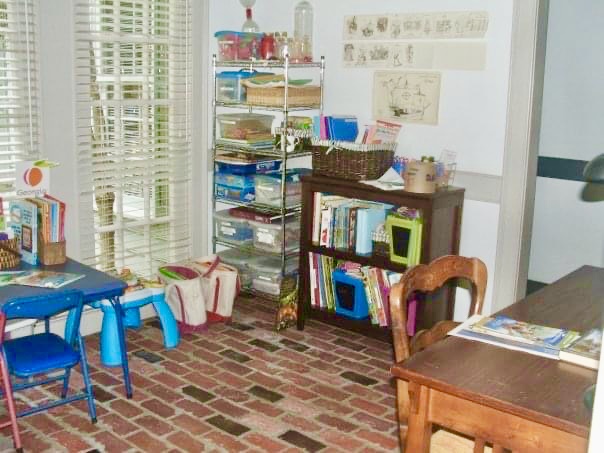
Utilize the nap time. School does not have to start early in the morning. If you have two or three young kids and one or more of them still take a long afternoon nap, then don’t start school until the little ones go down. School can go from 1-3 and can be done peacefully and with less frustration. Schedule the messiest, hardest, or most mom-consuming subjects for nap time.  Even for small children who no longer nap, scheduling a mandatory rest time can be a great way to make your day run smoother and keep everyone happy.

Follow your natural inclinations

If your family does not jump out of bed running in the morning, then resist scheduling an early start to your day. Enjoy the flexibility of homeschooling and work at your times of peak productivity. This also means taking into consideration your children’s natural schedule and the fact that they have variations (which may not match yours!) as well. Got one early riser? Schedule his or her independent work first. Let the others get up right before group time and then do their independent work after.

Do not try to change your life and adapt it around your schedule

That’s a prescription for disaster. First, it’s important to have an understanding of your family’s natural habits. You don’t want to choose a schedule that starts at 7 AM if your kids thrive when they sleep in. Try letting your child do school in the afternoon or evening if he seems to be more alert and functions better. He may be a different student. There is NO law saying school has to start at 8 am! In fact, there’s no law that says it has to be done Monday through Friday.

A Funny Candle School Time

Traditions

Designing a mini prototype of their annual cardboard boat regatta. Check out our Elementary Hands-on Science Ideas

Make sure to include lots of traditions into your schedule or routine.  It gives everyone something to look forward to and makes for happy family memories.

Here’s some ideas of traditions that we both did:

  • Starting back after a holiday break FREEBIE!
  • First Day of School Year
  • Birthday on school day
  • Hike & Pie
  • Saint Patrick’s day hunt
  • MLK day
  • Shakespeare in the park
  • Dog birthday party
  • Homeschool days at different places in town for variety
  • Cardboard boat Regatta
cardboard boat regatta

What are some different planning methods?

Workboxes, Block and Loop Scheduling

Workboxing is a cool planning tool that was all the rage when our kids were little.  It involved using a set of boxes/folders/shelves that a child would work through every day.  Some would include independent work, some might have “work with mom” or “work with sibling” slots.  I loved these- I had 10 drawers, 5 were everyday tasks and the other 5, I switched out, but I had a master weekly schedule, so it was super easy to load the boxes up at night. Learn all about Workboxes and download your Free Workbox Labels.

Loop scheduling doesn’t assign a particular subject to a certain day, but you may have a list of work you do during a certain time period, and when it’s time to work, you just move to the next thing on the list.  A day off for an emergency car repair does not derail.

Block scheduling is for when you may want to devote more time to a certain subject. So you give it a dedicated time period, like several weeks or a semester- this allows you to stay focused and move through material faster.  This is great for elective type classes, but also work with things like science/history.  Math and language arts are typically subjects you want to include every day.  Block scheduling might look more like a college or high school schedule. Download your Free Block Scheduling Template

This Week’s Freebies:

error

Listen to our latest episode & follow us :)

Scroll to Top