004. Homeschool Styles and Philosophies

Homeschool Styles and Philosophies
Schools often rely on workbooks, textbooks, and traditional teaching methods, but homeschooling opens up a world of alternative approaches. It’s essential to identify your worldview, understand the different homeschool philosophies, and recognize your child’s unique learning style. Tune in this week while we discuss these topics and more!

Episode 004:
TWO WAYS TO LISTEN TO THIS EPISODE:
1. Click PLAY Button Above ^^ to listen here.
2. OR Listen on your favorite podcast platform:
Subscribe on Your Favorite Podcast Platform:
Scroll Down for this week’s freebie
Homeschool Reflections Workbook (pdf)
Are you just starting your homeschooling journey? We’re here to help! Begin with our Get Started in Homeschooling page and Homeschooling FAQ to make the transition smoother. If you’re guiding a young child, explore our How to Homeschool Kindergarten. to make those first steps special. For middle schoolers, don’t miss our Middle School page packed with tips and advice. And if you’re heading into the high school years, our Essential Steps to Homeschool High School will guide you every step of the way!
Show Notes
Homeschoolers are not all cut from the same mold. We aren’t all choosing to homeschool for the same reasons and sometimes it’s even the opposite. There are a million options for homeschooling out there so a little decision making on your worldview and style/philosophy is going to go a long way in helping you narrow down curricula choices.

What is my homeschool Philosophy and Worldview?
These terms are often used in homeschooling to personal family ideals and to describe educational and homeschool materials (curriculum, books, movies…)
Authors, curriculum creators, sellers, youtubers, and reviews, don’t always clearly communicate or label materials as Religious/Christian, Neutral/Inclusive, or Secular. Before any purchases and any enrollment, it’s recommended to get further clarification. Check their FAQ page or ask questions.
It’s important to understand your core beliefs and values regarding education. When choosing a curriculum, you need to find one that aligns with your philosophy, values, and worldview. Here are some points to consider:
Secular, Non-religious
You may prefer a curriculum that focuses on academic subjects without any specific religious influence. Secular curriculum is designed to provide a neutral educational experience, free from any particular religious worldview.
There are so many different types of faiths and religions and often the creators and the program don’t align with a family’s beliefs. Those families typically choose a curriculum without religion, and then teach their moral, ethical and religious values outside of a curriculum.
There’s a lot of reasons why families choose Secular Curriculum – even a lot of religious families choose a secular curriculum:
Why Choose Secular Resources?
Choosing a secular resource may be the right fit for you. It may surprise some people but there are Religious and non-religious families that seek out secular resources. It isn’t just atheist homeschoolers who are looking for these resources for their children. Families usually chose secular resources or choose a secular curriculum for the following reasons:
1. You aren’t religious
There are many homeschool families who homeschool for non-religious reasons. There is a growing body of homeschoolers who do not follow any sort of religion. These families usually homeschool due to schedule issues, or because they believe their children can get a better education at home. Some homeschoolers may have been raised in a religious home and want to move away from a religion they see as harmful, but still have a personalized faith they want to teach their children on their own terms.
2. Maybe you are religious but not Evangelical Christian
Many homeschoolers of faith are Islamic, Jehovah’s Witness, Jewish, Wiccan, Catholic, Mormon, or follow some another religion. Many homeschool resources follow traditional Evangelical Christian beliefs, which may not be a fit for your family when you follow another religion.
3. You don’t follow the young earth theory
The most common reason homeschoolers seek out secular curriculum and local resources is that they do not believe in the Young Earth science theory. Young Earth theory states that the entire world is somewhere between 6,000 and 10,000 years old, with the world just getting started with the first recorded stories from the Bible. Current scientific theory refutes this claim offering evidence that the earth was formed somewhere around 4.5 billion years ago.
4. You may have a special circumstance
For many families that have a child with special needs or learning differences, homeschooling may be the best choice.
5. You may want to prepare your children like a traditional school
The traditional school system is secular. Religion is not taught in most public schools and universities. Some parents would rather keep religious instruction separate from other subjects in school or teach all world religions equally.
Faith-based
On the other hand, if incorporating your religious beliefs into your children’s education is important to you, you may opt for a faith-based curriculum. These curricula integrate religious teachings and values into the academic subjects.
Neutral / Inclusive
Materials marketed to everyone.
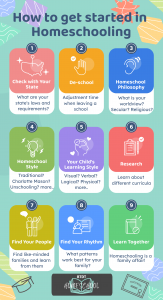
What is my homeschool style?
A curriculum may fit your budget and homeschool values well, but that doesn’t mean it’s the best fit for your student. Every child has a unique learning style, and homeschooling offers the flexibility to tailor their education accordingly. Consider each child’s unique struggles and needs before you select a curriculum. Schools often rely on workbooks and textbooks and traditional group teaching methods, but homeschooling opens up a world of alternative approaches.
Each family has unique preferences and approaches to homeschooling. Familiarize yourself with different homeschooling styles:
Traditional Homeschooling
- Follows a structured and formal education model similar to traditional schools.
- Involves textbooks, workbooks, and teacher-led instruction.
- Focuses on following a predetermined curriculum and meeting specific learning objectives.
Classical Homeschooling
- Draws inspiration from ancient Greek and Roman education methods.
- Emphasizes the development of critical thinking, logic, and rhetorical skills.
- Follows a three-stage model known as the trivium (grammar, logic, and rhetoric).
Charlotte Mason
- Focuses on living books, nature study, and the development of good habits.
- Values a broad and liberal arts education, incorporating subjects like literature, art, music, and nature.
- Utilizes narration and short lessons as common practices.
Montessori Homeschooling
- Emphasizes hands-on learning and self-paced exploration.
- Provides a prepared environment with carefully selected materials that promote independence.
- Focuses on sensorial experiences, practical life skills, and individualized learning.
Waldorf Homeschooling
- Emphasizes a holistic approach to education, nurturing imagination, creativity, and emotional development.
- Incorporates artistic activities, storytelling, crafts, and rhythm into daily lessons.
- Often discourages the use of electronic media especially in the early years.
Unit Studies or Project-based Learning
- Integrates multiple subjects into a themed unit of study.
- Explores a specific topic or concept across various disciplines.
- Allows for an in-depth and comprehensive exploration of a subject.
Eclectic Homeschooling
- Combines various approaches and resources to create a customized learning experience.
- Allows families to pick and choose from different methods, curriculum materials, and teaching styles.
- Offers flexibility and adaptability in designing a personalized education.
Relaxed Homeschooling
- Takes a laid-back and flexible approach to learning.
- Focuses on creating a low-stress environment and allowing children to learn at their own pace.
- Emphasizes fostering a love of learning rather than adhering to a strict schedule or curriculum.
Unschooling
- Emphasizes child-led learning and natural curiosity.
- Encourages children to explore their interests and learn through real-life experiences.
- Learning happens organically through everyday activities and self-directed exploration.
Online Schooling/Outsourcing
- Not really a philosophy, but a delivery method
- Focus is on traditional skills and content but delivered in a more tailored way, allowing for parents to be more hands-off
- Could include live online classes, asynchronous classes, video lectures, or software based learning
Remember, these descriptions provide a general overview of each homeschooling style, and there can be variations and combinations of methods within each approach. Feel free to explore and adapt different approaches to create a homeschooling experience that best suits your family’s needs and educational goals. Some people start off with one method, and totally regroup as their child gets older. Some may even use a variety of methods with different children in their own home. And that’s the beauty of homeschooling: customizing your experience for your student. There is no right or wrong choice when it comes to selecting a style and curriculum. Take a quiz to determine your homeschool style

What is your child’s learning style?
By considering your student’s unique struggles, needs, and preferences, you can select a curriculum that is engaging, effective, and well-suited to their individual learning journey. Don’t be afraid to explore different resources, experiment with various approaches, and adapt the curriculum to create a personalized learning experience that supports your student’s growth and success.
Here are some key points to consider when selecting a curriculum that best suits your student’s learning needs and preferences:
Individual Learning Needs
- Take into account your student’s specific learning needs, strengths, and weaknesses.
- Consider their preferred learning style, whether they learn best through visual, auditory, or hands-on methods.
- Think about any specific learning challenges or areas where they may need extra support or accommodations.
Personal Preferences
- Recognize that what works for one child may not work for another.
- Each child has their own interests, learning pace, and preferred methods of learning.
- Consider their preferences for interactive activities, group work, or independent study.
Age and Developmental Stage
- Keep in mind that what was effective for an older sibling may not be the best fit for a younger one and all kids mature at different ages.
- Consider age-appropriate materials and activities that align with your student’s developmental stage.
- Adapt the curriculum to match their readiness and abilities.
Learning Styles
- Visual (spatial):You prefer using pictures, images, and spatial understanding.
- Aural (auditory-musical): You prefer using sound and music.
- Verbal (linguistic): You prefer using words, both in speech and writing.
- Physical (kinesthetic): You prefer using your body, hands and sense of touch.
- Logical (mathematical): You prefer using logic, reasoning and systems.
- Social (interpersonal): You prefer to learn in groups or with other people.
- Solitary (intrapersonal): You prefer to work alone and use self-study.
Flexibility and Adaptability
- Remember that homeschooling allows you the flexibility to tailor the curriculum to meet your student’s needs.
- Be open to adjusting and customizing the curriculum as you go along, based on your student’s progress and feedback.